Wearable technology has advanced rapidly, moving from basic fitness trackers to advanced smart devices that fit naturally into daily life. As more people rely on digital tools, there is a growing demand for faster, hands-free ways to access information, communicate, and complete tasks efficiently. As people want technology that improves productivity without disrupting their normal movements, demand for wearable technology has increased. In this environment, smart glasses are emerging as a powerful solution that connects the digital and physical worlds through augmented reality and intelligent systems.
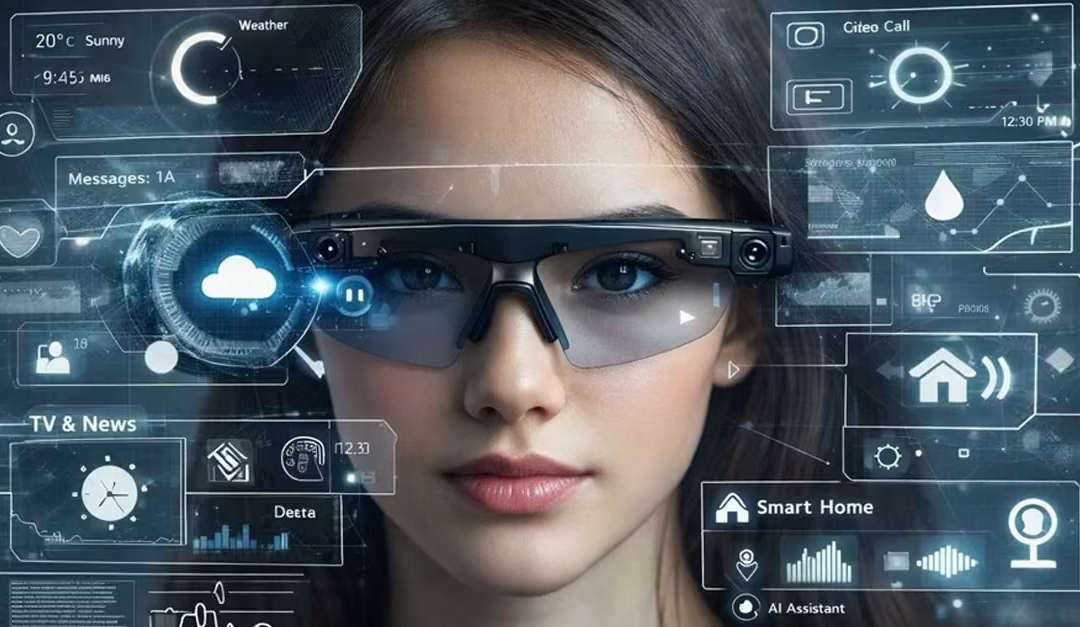
Smart glasses are wearable devices that look like regular glasses. They are equipped with built-in computing features, sensors, cameras, microphones, and a small display screen within the frame. Unlike traditional glasses, which are mainly used for vision correction or even style, smart glasses function as interactive devices that can display digital information, record data, and respond to voice or gesture commands. These glasses can display digital images and information directly onto what the user sees in the real world, without needing to look at a smartphone, using augmented reality (AR).
Understanding Smart Glasses Technology
Smart glasses are wearable technology that look like ordinary eyeglasses but contain built-in digital technology. Despite their appearance, they include small components such as cameras, microphones, speakers, motion sensors, processors, and compact display systems, as per Alecharris (2026). These glasses can display notifications, navigation directions, augmented reality (AR) visuals, and other digital information directly in the user’s field of view, thus creating a smooth connection between the physical world and digital content.
Smart glasses connect wirelessly to smartphones using Bluetooth or Wi-Fi and are controlled through companion mobile applications. This connection allows users to read messages, listen to media, receive calls, and access online services without holding their phones. Advanced models of smart glasses connect directly to cloud-based systems, enabling artificial intelligence (AI) features such as real-time language translation, voice assistance, object recognition, and delivery of relevant information based on the user’s surroundings.
Core Technologies Powering the Smart Glasses
Smart glasses combine several advanced technologies into a small, wearable device. Together, these systems allow smart glasses to process information in real time, communicate with other devices, and create augmented digital experiences. A study by Abhiram (2024) highlights the following technologies used in smart glasses.
a) Display Technology
One of the most important technologies used in smart glasses is their display system. This feature projects digital content into the lenses. Different display technologies are used in smart glasses, as explained below.
- Head-up display-this technology projects images directly into the user’s line of sight. This technology enables the user to view the information without looking away from their surroundings.
- Waveguide technology- this technology uses light guides to project images onto the lens surfaces. The image is reflected multiple times within the lens before reaching the user’s eyes, resulting in a clear, sharp display.
- Holographic Displays- Advanced smart glasses use holographic displays to create 3D images that appear to float in front of the user, providing a more immersive AR experience.
b) Sensors
Smart glasses use a wide range of technologies to recognize gestures, capture images and videos, and track the user’s movements. The following are sensors used:
- Cameras are used to take photos and record videos of the surroundings. They also support computer vision tasks, such as identifying objects.
- Depth Sensors-Depth sensors are used in augmented reality (AR) applications to measure the distance between the smart glasses and surrounding objects. By calculating how far or near objects are, the device can position digital images more accurately within the real world. This ensures that virtual elements—such as 3D models or navigation markers—appear stable and correctly aligned with physical surfaces, creating a more realistic and precise AR experience.
- Accelerometers and Gyroscopes-These motion sensors detect head movement and orientation. They help the smart glasses understand where the user is looking and how their head is positioned. As the user turns or tilts their head, the display automatically adjusts to keep digital content stable and properly aligned with the real-world view. This ensures a smooth and natural augmented reality (AR) experience.
- Environmental Sensors-Environmental sensors in smart glasses can detect factors such as light levels, temperature, and, in some cases, biometric data. Light sensors automatically adjust display brightness to ensure clear visibility in both indoor and outdoor lighting conditions. Temperature sensors can help monitor environmental conditions, while biometric sensors may track health-related metrics such as heart rate. These features allow the device to adapt to its surroundings and, in some models, support basic health monitoring functions.
c) Connectivity
Smart glasses depend on wireless connectivity to communicate with other devices, access the internet, and stream digital content. These connections allow the glasses to function as part of a broader digital ecosystem. Common connectivity options include:
- Bluetooth- is used to connect smart glasses to nearby devices such as smartphones, tablets, or wireless accessories. Through this connection, users can receive calls, messages, and notifications without having to handle their phones directly.
- Wi-Fi-Wi-Fi enables smart glasses to connect directly to the internet. This allows users to stream content, download applications, access cloud-based services, and perform real-time updates without relying solely on a smartphone.
- Near Field Communication (NFC)- allows quick pairing with compatible devices by simply bringing them close to the glasses. This simplifies the connection process and reduces the need for manual setup.
d) Voice Gesture Controls
To enable hands-free interaction, smart glasses often include voice recognition and gesture control technology. These features allow users to operate the device without needing physical buttons or handheld controllers. Users can give voice commands to perform tasks such as taking photos, making calls, or opening applications. This makes the device easier to use, especially when the user’s hands are busy. Gesture control allows users to interact with the display by moving their hands or making specific gestures in front of the glasses. Built-in sensors detect these movements and translate them into actions on the screen, making the interaction more natural and efficient.
e) Battery and Power Management
The advanced features of smart glasses require a dependable power source. Most smart glasses use rechargeable batteries that are built directly into the frame. Battery life depends on how the device is used and which features are active, with many models providing several hours of continuous use on a single charge. To save energy, smart glasses often include power management features such as automatic brightness adjustment and sleep modes. These functions help extend battery life and improve overall efficiency.
How Smart Glasses Work
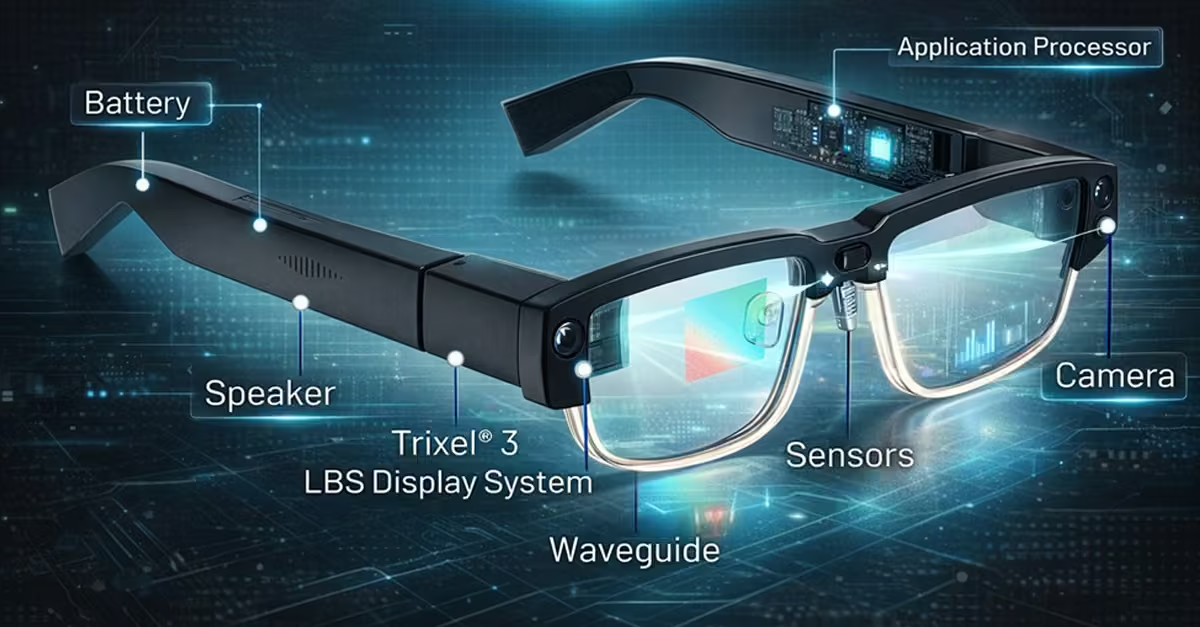
Smart glasses operate by combining very small hardware components with intelligent software inside a wearable frame. They function as compact computers built into a pair of glasses. Inside the frame are cameras, processors, sensors, batteries, and wireless communication modules. These components work together to collect environmental information, process digital data, and display visual content directly in the user’s field of view.
a) Visual and Awareness Systems
The key part of how smart glasses work lies in their camera system, which provides the device with visual awareness. Many smart glasses contain multiple miniature cameras built into the frame. The cameras are used to track eye movements and to capture what’s in front of the user. By combining eye tracking with photo capture, the glasses can determine what the wearer is looking at and display digital information such as facial recognition insights, object detection cues, and gesture recognition. This integrated “awareness system” enables contextual interactions that feel natural.
b) Processing of Information
Smart glasses require processing a large amount of data that is collected from their cameras and awareness devices. They are also required to interpret and respond to sensor input and user commands. For them to do this, they rely on two powerful processors, which include;
- Handling units– This processor serves as the device’s central control system. It manages all operations and ensures that the different components work together smoothly. In many advanced models, the processor includes specialized artificial intelligence (AI) chips that are designed to handle complex tasks quickly and efficiently. These AI chips are built to process large amounts of data, such as audio from microphones, sensor readings, and visual data from cameras. Additionally, the processor is responsible for displaying augmented reality images to the user’s lenses and for understanding voice commands.
- Neural processor units– Managing all these activities requires significant computing power, which would normally drain the battery quickly. To solve this problem, smart glasses use specialized components called neural processor units (NPUs). These processors are specifically designed to handle artificial intelligence (AI) calculations efficiently, enabling the device to perform complex tasks such as image recognition and voice processing with minimal power consumption. Instead of sending data to a distant server for analysis, many smart glasses process information locally. This on-device processing makes the system faster and more responsive, while also improving privacy and reducing dependence on constant internet connectivity.
c) Sensors and Motion Tracking
Smart glasses include a variety of sensors that collect data about movement and the environment. They include the following sensors.
- Inertial measurement units and accelerometers– they are used to track how the glasses move when you turn your head, walk, or change position. This motion data helps the device understand your orientation and movement, allowing it to adjust the display so that digital content remains properly aligned with your view.
- Health sensors- some smart glasses are designed to monitor wellness in real time. These specialized biosensors can measure important signs such as heart rate, blood pressure, and body temperature.
- Locational sensors- these sensors use locational technology like GPS modules to help determine the user’s exact location, and LiDAR technology to create detailed maps of the surrounding environment. These tools improve navigation accuracy and support advanced augmented reality features.
d) Connectivity and Data Flow
Connectivity is key to how smart glasses work. Devices typically use Bluetooth and Wi-Fi to connect with smartphones and the internet. This allows them to offload heavier computing tasks, sync data, stream media, and communicate with cloud platforms. For latency-sensitive applications—such as telemedicine or real-time video consultation—smart glasses may leverage 5G wireless networks to offer secure, high-speed connectivity. Collected data can be transmitted to cloud systems for storage and deeper analysis, providing personalized insights and recommendations based on long-term patterns.
Real-World Uses of Smart Glasses Across Industries
Smart glasses are now being used across many industries to improve efficiency, safety, communication, and decision-making. By combining augmented reality (AR), real-time data processing, and hands-free interaction, these devices are changing how work is performed in both business and everyday environments. Below are some key real-world applications that show their growing practical value, as per Wangfred (2026)
Read Also: Impact of Wearable Tech on Preventive Healthcare
i. Healthcare and Surgery
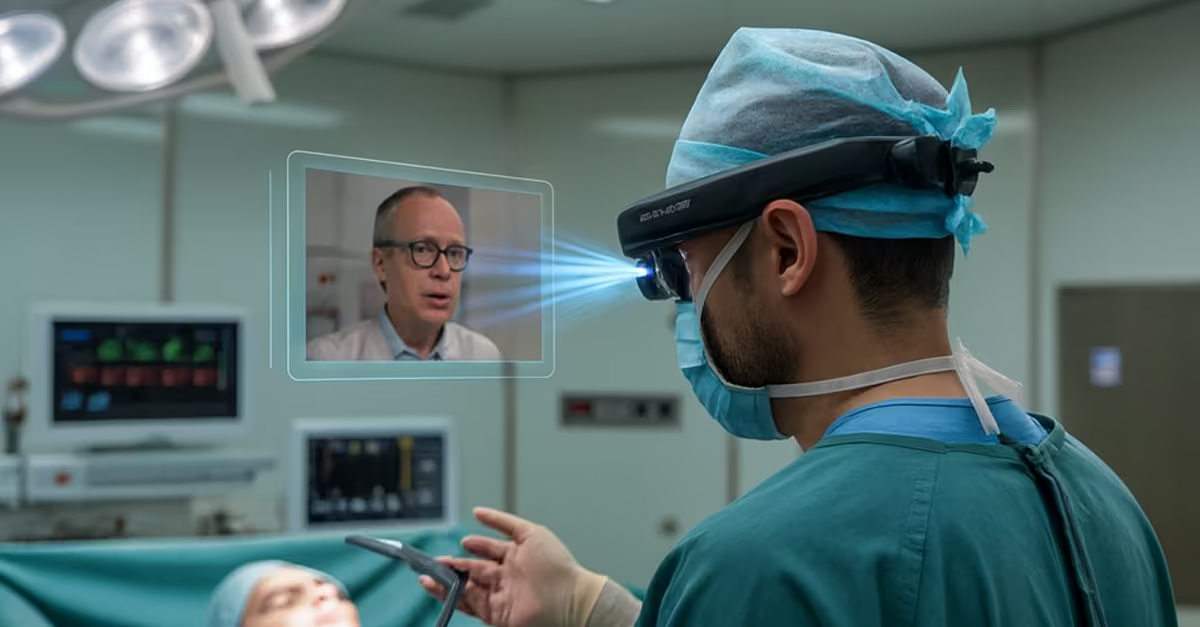
In healthcare, smart glasses help surgeons and medical professionals access important information during medical procedures. Patient data such as vital signs, medical images, and surgical checklists can be displayed directly in the surgeon’s field of vision. This reduces the need to look away from the patient, improving concentration, accuracy, and overall workflow.
Smart glasses also enable remote medical support. Through live video streaming, specialists in other locations can observe procedures in real time and provide immediate guidance. This is especially useful in rural or underserved areas where access to specialized doctors may be limited.
ii. Manufacturing and Field Service
In manufacturing, smart glasses provide step-by-step instructions through AR overlays. Workers can see visual guidance directly in front of them as they assemble products. This reduces mistakes, speeds up training, and improves productivity.
For field service technicians, smart glasses offer hands-free access to important information. Equipment diagrams, maintenance records, and troubleshooting instructions can appear in their field of view while they work. Remote experts can also watch live video feeds and assist with difficult repairs. This reduces downtime and lowers operational costs.
iii. Education and Training
Smart glasses are particularly effective for just-in-time learning, where instructions appear exactly when and where they are needed. Instead of searching through manuals or watching separate tutorial videos, users can receive step-by-step guidance directly within their field of vision while performing a task.
iv. Accessibility and Assistive Use
One of the most impactful applications of smart glasses lies in improving accessibility. The technology has the potential to support individuals with visual, hearing, or cognitive challenges, helping them participate more independently in daily life. It is used in the following ways:
- Visual assistance- Smart glasses can describe nearby surroundings, read printed text aloud, or enhance contrast and brightness to support users with low vision. This can improve navigation and increase personal independence.
- Hearing support- Real-time captions can be displayed during conversations, allowing users with hearing impairments to follow discussions more easily. Some systems may also provide alerts for important environmental sounds.
- Cognitive support-Smart glasses can deliver reminders, prompts, and context-based cues to assist individuals who experience memory or attention difficulties. These features can help users manage daily tasks more effectively.
v. Navigation and Travel
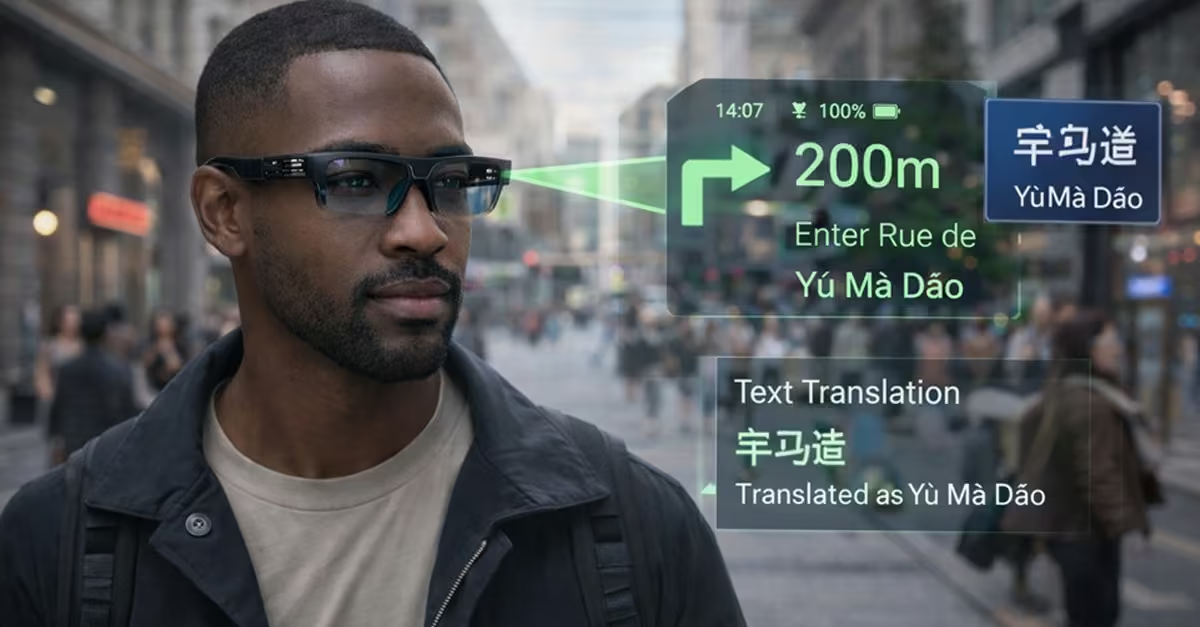
For everyday users, navigation is one of the most practical and easy-to-understand applications of smart glasses technology. Instead of looking down at a smartphone, wearers can view directional arrows and highlighted paths directly overlaid onto sidewalks or roads within their field of vision. Street names and nearby points of interest are clearly visible, along with real-time public transportation updates and estimated walking times. This hands-free guidance is especially useful in unfamiliar cities or in complex indoor spaces such as airports, hospitals, and large campuses. When combined with real-time translation features, smart glasses can further support international travel by displaying translated signs or providing subtitles during conversations, making travel more convenient and accessible.
Read Also: Biometric Technology
Benefits of Smart Glasses Technology
Smart glasses provide clear advantages in both business and everyday use. By combining augmented reality (AR), real-time access to information, and hands-free operation, these devices improve efficiency, increase accessibility, and support modern collaborative work environments. A study by Wangfred (2025) highlights the following benefits to the users.
- Hands-Free Productivity and Efficiency
One of the most immediate benefits of smart glasses is their ability to display information directly in the user’s field of vision without the need to hold a device. Instead of looking down at a phone or tablet, workers can view instructions, diagrams, or alerts while continuing their tasks. This reduces interruptions, lowers mental strain from constant task switching, and improves workflow efficiency across industries such as maintenance, manufacturing, and logistics.
- Enhanced Remote Collaboration
Smart glasses improve remote teamwork by allowing experts to see exactly what a technician sees in real time. By placing voice guidance directly on the user’s view, remote specialists can provide immediate support. For instance, professionals such as architects and engineers can also collaborate using 3D models projected into physical spaces, making planning sessions more interactive and effective than traditional video calls.
- Improved Personal Safety and Navigation
In everyday life, smart glasses can make movement safer and more convenient. They can project turn-by-turn directions directly into the user’s line of sight, reducing the need to look down at a smartphone while walking or cycling. Built-in sensors and real-time alerts also help users stay aware of their surroundings, potentially reducing the risk of accidents in busy streets and public areas.
- Immersive Learning and Creative Expression
Smart glasses also enhance education and creativity by projecting interactive 3D models and contextual information into real-world environments. Students can explore historical events or scientific models more engagingly. At the same time, designers and artists can create and manipulate virtual objects within physical spaces. This combination of digital and real-world elements increases engagement, strengthens understanding, and opens new possibilities for creative work.
- Smooth communication and Social Connectivity
Smart glasses support continuous communication by integrating messaging, voice calls, and notifications directly into the user’s field of vision. With built-in microphones, speakers, and voice assistants, users can send messages, answer calls, or receive updates without reaching for their smartphones. This hands-free connectivity allows people to stay connected while commuting, exercising, or working, thus creating a more natural and less disruptive way to communicate in both personal and professional settings.
Limitations of Smart Glasses
Although smart glasses have advanced rapidly, they still face several technical, structural, and social challenges that affect their adoption. There are concerns regarding the privacy of the collected information, hardware performance, cost, and public perception. The following are the challenges of smart glasses.
a) Privacy Concerns and Data Protection Issues
Privacy is a major concern with smart glasses. Because many devices include cameras and microphones, people worry about being recorded without their knowledge, especially in public or private spaces. This is because smart glasses can record more secretly, which increases ethical and legal concerns. There are also regulatory questions about data collection, biometric tracking, and facial recognition features, particularly regarding how user information is stored, protected, and shared.
b) Battery Life
Battery life remains a major technical limitation for smart glasses. Because the devices must be lightweight and comfortable, they rely on small lithium-ion batteries, yet features such as augmented reality displays, cameras, AI processing, and continuous wireless connectivity consume significant power. As a result, many models operate for only a few hours before needing to be recharged.
c) Cost and Market Adoption Barriers
Smart glasses are often expensive due to advanced optical components, specialized processors, and high research and development costs. This high price limits many people’s ability to adopt these devices, especially in price-sensitive markets. However, businesses are adopting the technology more quickly because productivity gains and operational efficiency can justify the investment.
d) Social Acceptance and Design Limitations
The public perception plays a significant role in the adoption of smart glasses. Early models faced criticism for their bulky designs and privacy concerns, making some users uncomfortable wearing them in public. Although modern versions are more refined, manufacturers must continue to balance advanced technological features with attractive, discreet designs that resemble conventional eyewear.
Conclusion
Smart glasses represent a significant advancement in wearable technology, bringing together augmented reality displays, AI-powered voice assistants, advanced sensors, wireless connectivity, and compact processors within everyday eyewear. These combined features enable hands-free computing, allowing users to access real-time information and collaborate more effectively. This technology is used across a variety of industries, including healthcare, manufacturing, education, retail, and navigation. Despite their benefits, smart glasses have several limitations that hinder widespread adoption. These include high acquisition costs, as they are very expensive to buy, and data privacy, as unauthorized people may access the collected data. The batteries in smart glasses don’t last long, so they need regular replacement, and there are privacy concerns because they can record people without their consent.