In today’s world, a Certificate of Good Conduct is often a key requirement that can open doors to job opportunities, travel approvals, and even academic admissions. Whether you are applying for employment, a visa, or accessing certain government services, this document has become a basic and important requirement.
The document is also known as a Police Clearance Certificate. It is issued by the Directorate of Criminal Investigations and confirms that you do not have a criminal record, thus serving as proof of your credibility and that you have a good legal standing.
In this guide, you will learn:
- Exactly how to apply step by step.
- How to renew the good conduct
- How to check the authenticity of good conduct
- The requirements needed during the application
- Common mistakes to avoid during the application process.
Who Needs a Certificate of Good Conduct in Kenya?
A Certificate of Good Conduct is required in many important areas of life in Kenya, especially where trust, legal compliance, and public accountability are involved. Below are the most common situations where this document is needed, as per TechMag
- Job Applications — All government jobs require it by law, and most private employers also ask for it as part of their background checks.
- Visa Applications — It is needed when applying for study, work, or immigration visas, both within Kenya and abroad, to confirm that you have a clean criminal record.
- Teacher Registration (TSC) — Required by the Teachers Service Commission for all teachers, whether Kenyan or foreign, before they can be officially registered.
- Doctor & Dentist Registration (KMPDC) — Needed by the Kenya Medical Practitioners and Dentists Council as proof of good conduct before issuing licenses.
- Adoption Processes — Listed as a required document under the Children Act 2022 to ensure the safety and suitability of adoptive parents.
- PSV Badge & License (NTSA) — Mandatory for drivers and conductors, and must be uploaded on the TIMS portal managed by the National Transport and Safety Authority.
- Government Tender Bidding — Needed for company directors when applying to supply goods or services to the government, as part of background and due diligence checks.
Requirements for Certificate of Good Conduct
Before starting your application, ensure you have all the required documents ready to avoid delays or rejection. The requirements are generally simple, but they may vary slightly depending on whether you are a Kenyan citizen or a foreign applicant. A study by Jozam (2026) highlights the following documents that are required.
For Kenyan Citizens:
- Original National ID — Used to confirm your identity during fingerprinting
- Copy of National ID — Required when submitting your application
- E-Citizen platform account — Needed to access and complete the online application
- Valid email address — Used to receive notifications and updates about your application
- Active phone number — Required for communication and verification
For Foreign Applicants:
- Passport copy — Used for identity verification
- Valid visa or work permit — Confirms that you are legally staying in Kenya.
- Alien ID (if applicable) — Required for foreign residents who are officially registered in the country
Who Is Eligible for a Certificate of Good Conduct?
A certificate of good conduct is not limited to Kenyan citizens; it also applies to foreigners, certain minors, and other specific groups. The following are eligible.
- Kenyan Citizens
Kenyans aged 18 and above with a valid national ID are eligible and can apply online through the e-Citizen platform. Those living abroad can apply through Kenyan embassies or high commissions, where fingerprints are taken and sent to Nairobi for processing. Applicants without a national ID must provide a birth certificate as proof of identity.
- Foreign Residents
Foreign nationals who have lived in Kenya for at least six months are eligible to apply. They must present valid immigration documents such as a work permit, student pass, visa, or other proof of legal stay. Applications are also submitted through the eCitizen platform.
- Minors (16–17 Years Only)
Only minors aged 16-17 can apply. The application must be submitted using a parent’s or guardian’s eCitizen platform account, and the minor’s birth certificate must be presented during fingerprinting.
- Refugees
Refugees apply through the Refugee Affairs Secretariat instead of the eCitizen system. They are required to provide a passport (if available) and proof of residence in Kenya for at least 6 months.
Must Read: Having a past arrest does not automatically disqualify you. However, the Directorate of Criminal Investigations will carry out a detailed background check. If there is no conviction, you may still be cleared. If a conviction exists, it may be included in the certificate, and the processing time could be longer.
Read Also: How To Apply for KUCCPS Online 2026/27: Step-by-Step Guide (Courses, Requirements & Portal Login)
How to Apply for a Good Conduct Certificate
Applying for a Certificate of Good Conduct in Kenya is done online through the eCitizen platform, followed by a physical fingerprinting process. Below is a clear step-by-step guide to help you complete your application correctly.
Step 1 — Create or Log into Your eCitizen Account
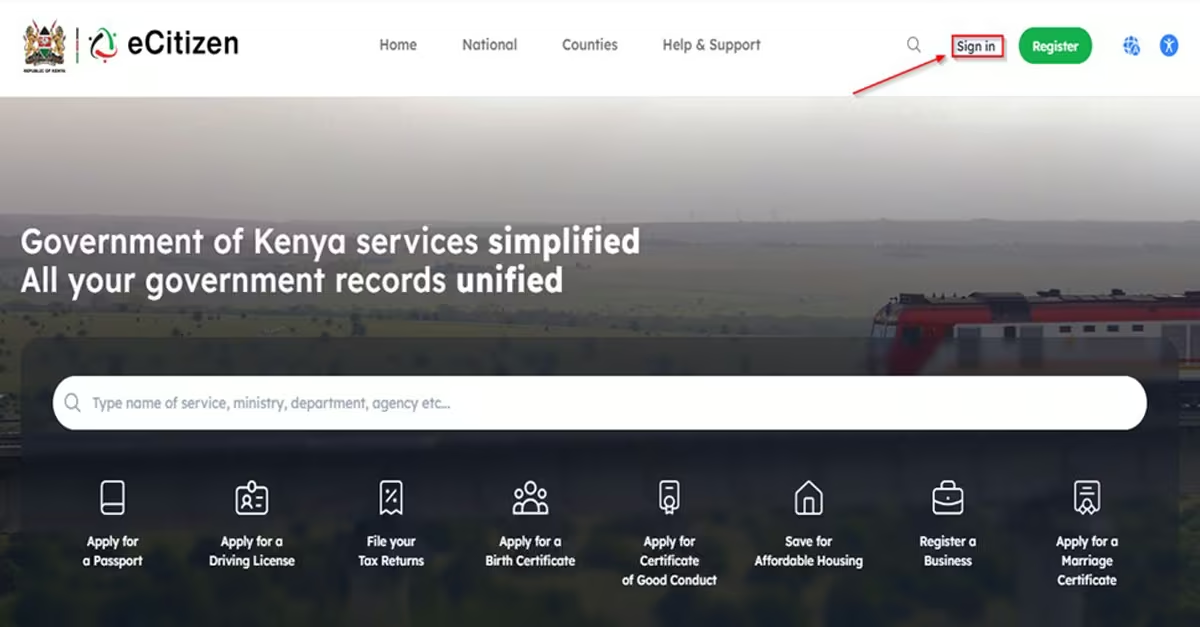
- If you already have an E-citizen account, you will be required to log in with either your ID number or Email and enter your password.
- If you don’t have an account yet, on the E-citizen website, click “Create Account“ and fill in your details.
Step 2 — Verify With OTP
- Once logged in, a One-Time Password (OTP) will be sent to your registered phone number or email. Enter it correctly and click “Next“ to proceed. This is just the system confirming it is really you.
Step 3 — Navigate to the DCI Service
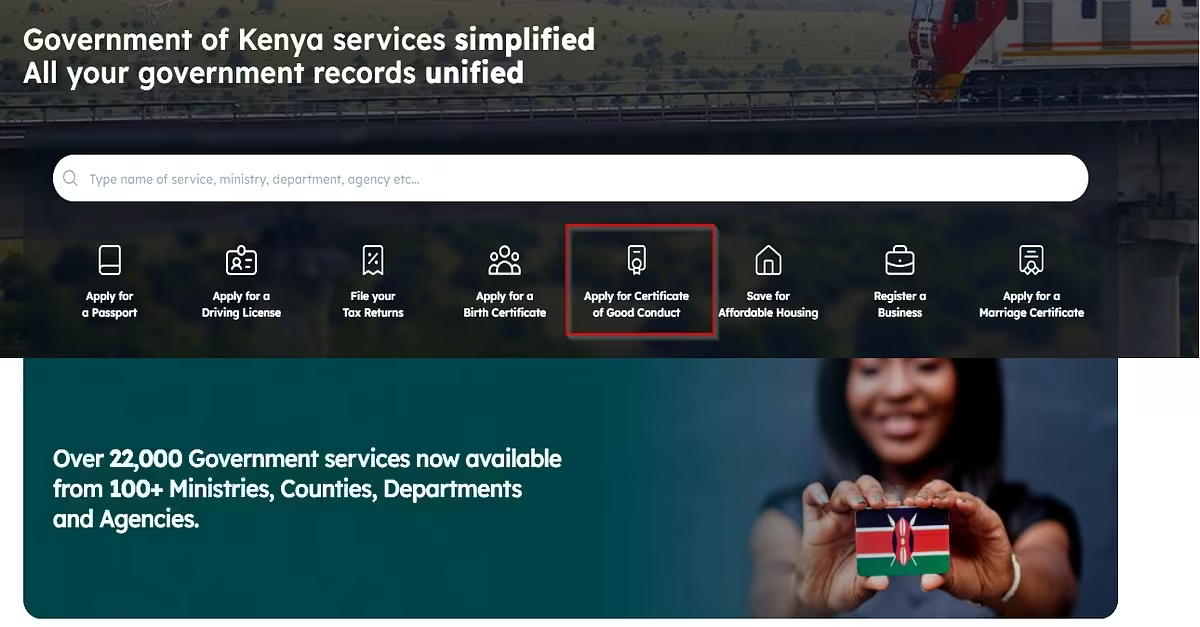
- On your dashboard, go to “Agencies” and select the Directorate of Criminal Investigations.
- A list of government services will appear. Look for and click on “Apply for a Certificate of Good Conduct.“
Step 4 — Who Is the Certificate For?
- Select whether the certificate is for yourself or for a child below 18 years old. Click “Next“ once done.
Quick tip: If applying for a child, note that the minor must be between 16 and 17 years old. The application must be done through the parent’s or guardian’s eCitizen account.
Step 5 — Read the Rules Carefully
- A set of guidelines will appear on your screen. Do not skip this — read through carefully before proceeding. They are short but important.
Step 6 — Confirm You Are Applying for Yourself
- The system will remind you that applications made on behalf of others are automatically rejected. Double-check that you are logged into your own e Citizen account. Also, confirm that your payment funds are ready — you will need them shortly.
Step 7 — Choose Your Fingerprinting Location
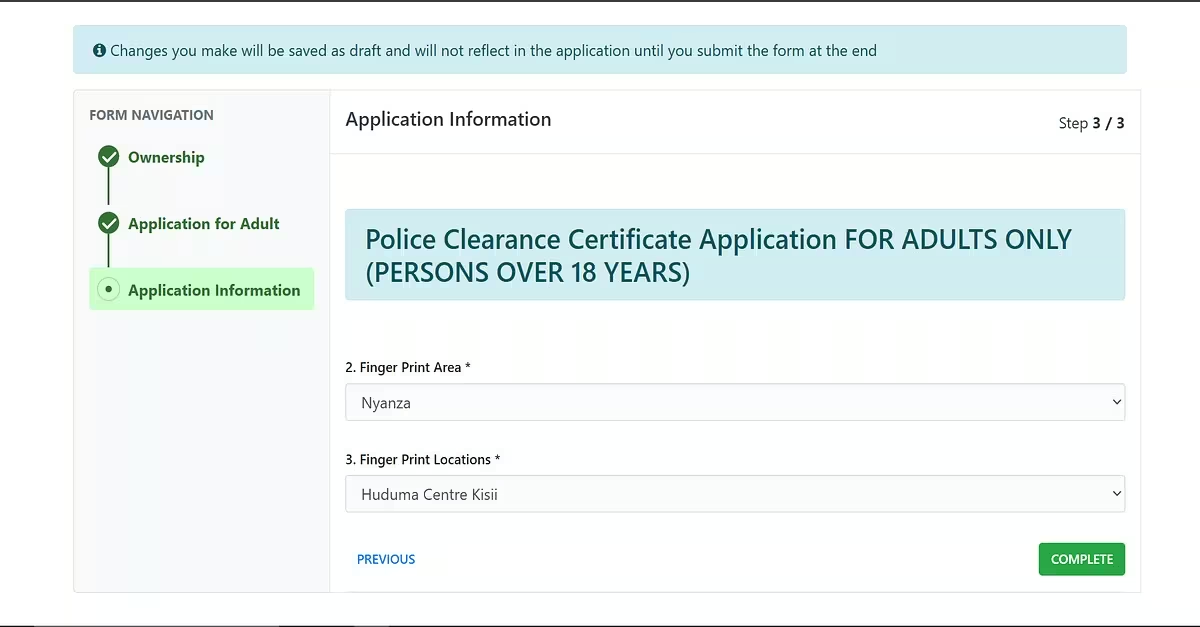
- Select the county and specific Huduma center that is near you where you would like your fingerprints taken. Choose what is most convenient to you — options include: “the fingerprint areas and fingerprint location meaning choosing your areas and specific Huduma center near you.
- Click “Complete“ when done.
Step 8— Pay the Application Fee
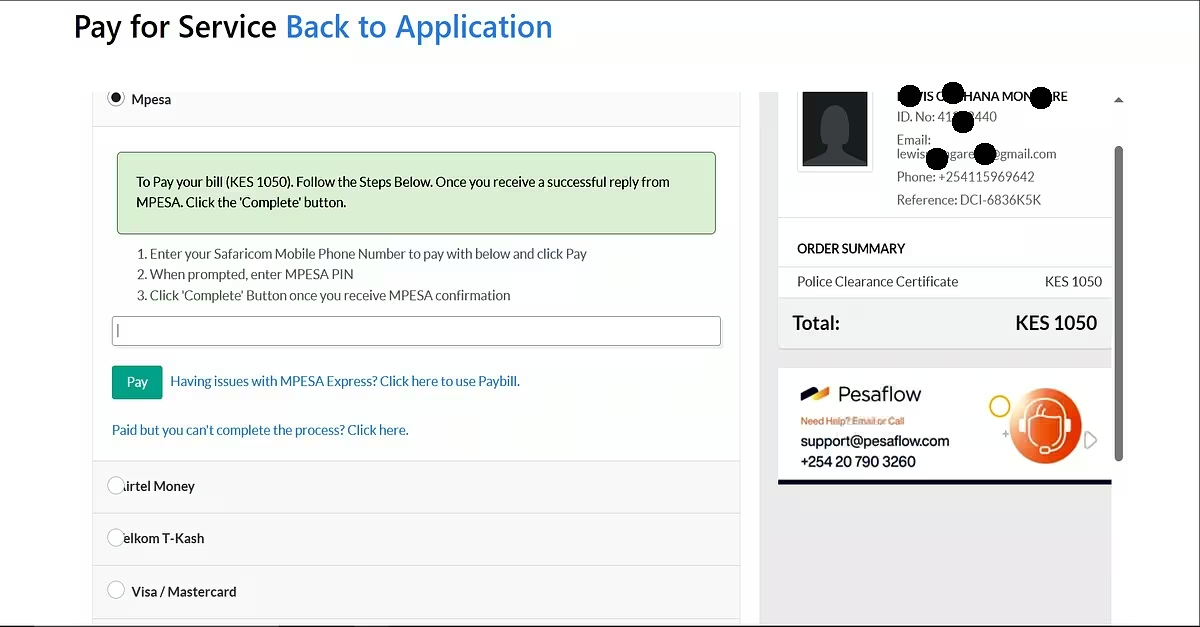
- First, pay your fee– this involves making your payment of KES 1,050 (KES 1,000 certificate fee and KES 50 convenience fee) via M-Pesa, debit card, or credit card right on the eCitizen platform.
- Then, print your documents. Once payment is confirmed, print the following:
- Two (2) copies of your payment invoice
- One (1) copy of your C24 form (printed on both sides of a single A4 paper)
Quick Tip: The DCI has officially removed the appointment booking requirement. You no longer need to book a fingerprinting date. Just show up at your chosen Huduma Center or DCI Headquarters with your documents, and you will be served.
What to Carry When You Walk In To Do Biometric Verifications:
- Your printed C24 form
- Two copies of your payment invoice/receipt
- Your original National ID
Step 9 — Sign the Declaration
- Before or during your visit, you will encounter a declaration section confirming that all the information you have provided is correct and accurate. Sign it because it is a legal requirement.
Step 10 — Wait for Processing
- After your fingerprints are taken, your application is entered into the DCI database for verification against criminal records. Processing time typically takes 7 to 14 days after fingerprinting. During busy periods, it may take up to 4 weeks.
- You will receive an SMS notification on your registered phone number once your certificate is ready. If you have not received an SMS after 10 days, it is worth logging into eCitizen to check your status — notifications can sometimes be delayed.
Step 11 — Download Your Certificate
Once you receive the SMS, the certificate is ready. Log back into eCitizen, navigate to the “Download Certificate of Good Conduct” section, and download your certificate as a PDF.
How Do I Know If a Clearance Certificate is Authentic?
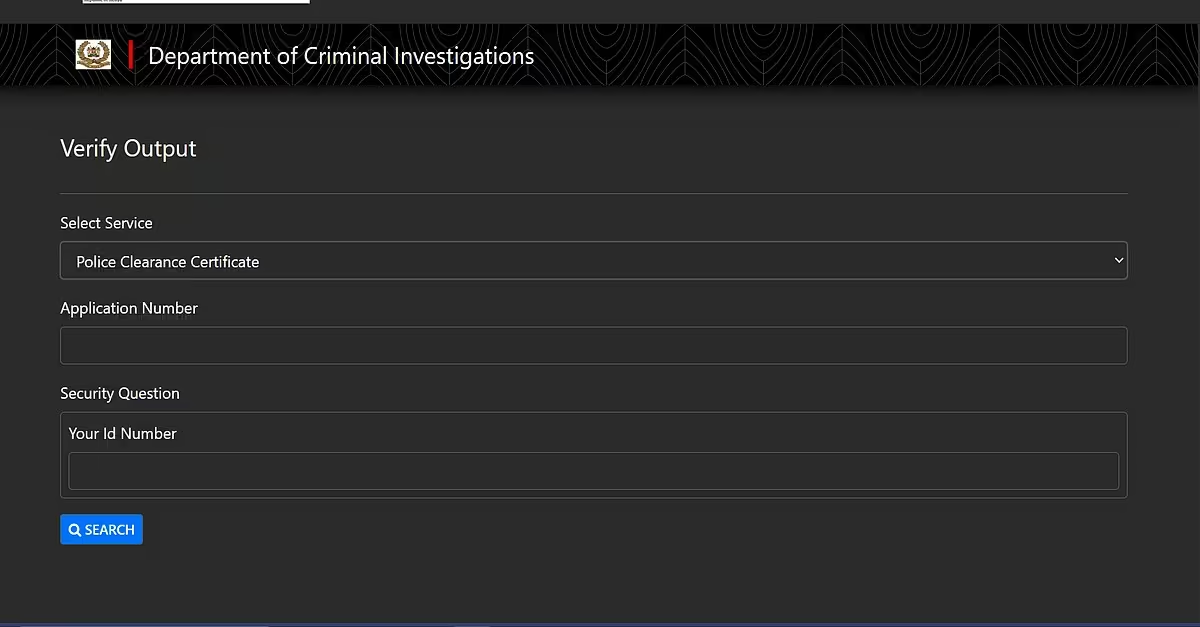
Fraud and forgery cases are increasing, making it important to verify your Certificate of Good Conduct before relying on it. The process has been simplified and made simple and convenient, as you do not need to visit any office or make phone calls.
You can easily confirm the authenticity of a certificate using two quick and reliable methods, as outlined by Agnes (2025)
Method One: Verify via SMS & USSD
- Send the word “DCI” to 21546 to subscribe to the verification service provided by the Directorate of Criminal Investigations.
- After subscribing, dial *512# on your phone and follow the on-screen prompts to begin the verification process.
- Once you complete the steps, you will receive a message confirming whether your Certificate of Good Conduct is valid.
Method Two: Verify Online
- Go to the official website of the Directorate of Criminal Investigations.
- Click on the “Police Clearance Certificate” option.
- Enter the application number provided on the certificate.
- Input your National ID number for verification.
- Click the submit button to begin the verification process.
- If the certificate is genuine, a confirmation message will appear on the screen.
Read Also: How to Apply for Smart Driving Licence in Kenya 2026: Cost, Renewal & NTSA e-Citizen Guide
What If Your Application Is Rejected?
Although rejections are rare, they can still occur in certain situations. The most common reasons include having a criminal record or submitting false, incomplete, or inconsistent documents during the application process.
What You Can Do:
- Appeal the decision — You can file a complaint or request a review through the Directorate of Criminal Investigations’ complaints desk.
- Seek legal advice — If you believe the rejection was unfair or based on incorrect information, consulting a legal professional can help you challenge the decision in the right way.
How to Renew a Certificate of Good Conduct in Kenya
A Certificate of Good Conduct is valid for 1 year, after which it expires, and you must reapply (renew). Since this document is based on criminal records, having received a previous certificate does not guarantee that you will automatically qualify for a new one, as your record may have changed within that period. You can renew the certificate using the procedure below:
- Visit the eCitizen platform and log in using your email or ID number and password.
- Go to the Directorate of Criminal Investigations section and click on “Get Service.”
- Under “Our Services,” select “Police Clearance Certificate.”
- Choose whether the application is for yourself or your child.
- Read the instructions carefully and fill in the application form.
- Pay the required fee of KES 1,050 using mobile money or a credit/debit card.
- Download and print two copies of the invoice together with the C24 form.
- Submit the documents at a nearby Huduma Center or DCI office for fingerprint capture and completion of the C24 form.
After completing the process, you will typically wait about one to two weeks for your new Certificate of Good Conduct to be processed and ready.
Common Mistakes During Application
Many applications are delayed—or even rejected—due to simple, avoidable errors. Being careful at each step can save you time and unnecessary stress, as per Samwel (2025)
- Incorrect ID details — Entering the wrong ID number or personal information leads to mismatches in the system.
- Incomplete documents — Missing or unclear documents can halt your application process.
- Failure to print the C24 form — This document is mandatory for fingerprinting and must be printed correctly from eCitizen.
- Missing fingerprint appointments — Not showing up for biometric capture will delay or cancel your application.
- Choosing the wrong fingerprinting location — Selecting an inconvenient or incorrect center can cause scheduling issues.
Tips for Faster Application
Want to avoid delays and receive your certificate as quickly as possible? A few simple steps can greatly improve the smoothness of your application processing.
- Apply during off-peak periods — During busy seasons, processing times may be longer, so applying early can help you avoid unnecessary delays.
- Use a stable internet connection — This ensures your application on the eCitizen platform is completed and submitted correctly without errors.
- Keep your documents well-stored — Save and back up your downloaded forms and payment receipts so you can easily access them when needed.
- Visit official fingerprinting centers only — Using authorized stations under the Directorate of Criminal Investigations helps reduce errors and lowers the risk of rejection.
Conclusion
Applying for a Police Clearance Certificate (also known as a Certificate of Good Conduct) in Kenya is now fast and convenient through the eCitizen platform. By following the steps outlined above, you can complete your application smoothly without unnecessary difficulties. Always ensure the information you provide is accurate, and remember to track your application when needed.