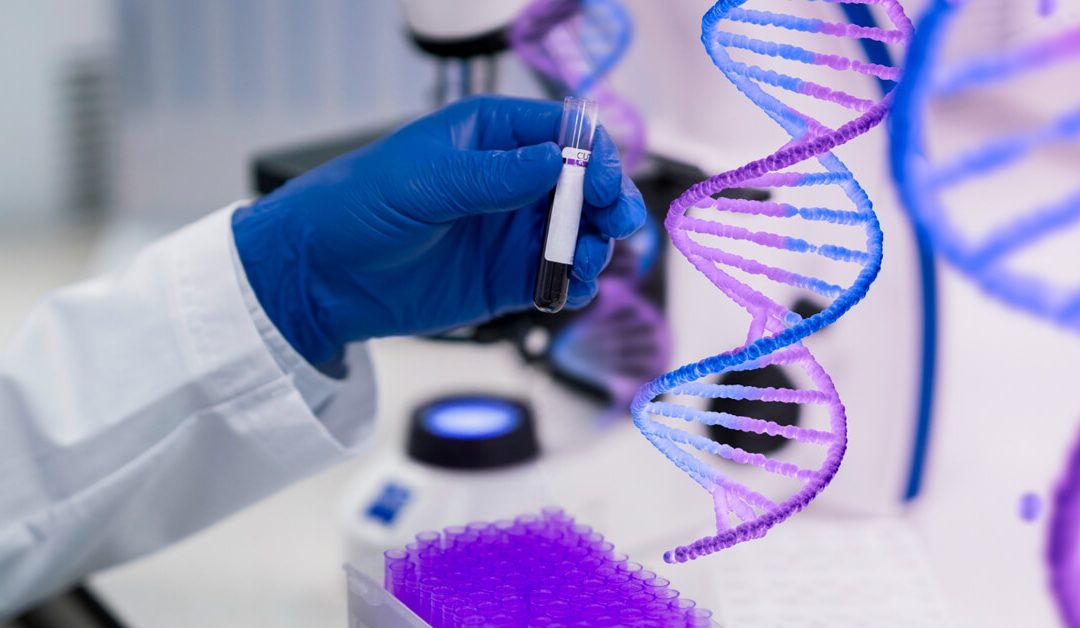
Technology has played a significant role in research and science breakthroughs in recent years. With the advancements of technology, scientists and researchers have access to innovative tools that enable them to carry out experiments with greater precision and speed. This has led to an acceleration of breakthroughs across many fields of science.
Technology has become an indispensable partner in the world of research and science, acting as a powerful catalyst for breakthroughs and discoveries across various fields. Here are some key benefits of technology in research and science:
1. Enhanced Data Acquisition and Analysis:
- Advanced instruments and sensors allow for precise and detailed data collection, enabling researchers to study phenomena at previously unimaginable scales. From powerful telescopes peering into the depths of space to microscopic imaging revealing the intricacies of cells, technology has revolutionized data acquisition.
- Advanced computational tools like machine learning and artificial intelligence can analyze massive datasets, identify patterns, and generate hypotheses that would be impossible for humans alone. This has led to significant breakthroughs in fields like drug discovery, materials science, and climate modeling.
2. Faster and More Efficient Research:
- Automation and robotics are transforming research by handling repetitive tasks, freeing up researchers’ time for more creative and strategic work. This increases the speed and efficiency of research, allowing scientists to gather more data, conduct more experiments, and iterate on their findings faster.
- High-speed communication and collaboration platforms enable researchers from around the world to share data, ideas, and expertise in real-time. This fosters international collaboration and accelerates the pace of scientific progress.

3. Exploring Uncharted Frontiers:
- Technology opens doors to previously inaccessible environments, such as the deep ocean, the upper atmosphere, and even the human brain. This allows scientists to study phenomena in their natural context and gain deeper insights into the workings of the universe.
- Virtual reality and simulation technologies are creating immersive environments that allow researchers to test hypotheses and conduct experiments in a safe and controlled setting. This is particularly valuable for studying complex systems or dangerous environments.
4. Democratization of Science:
- Open-source software and hardware platforms are making scientific tools and data more accessible to researchers around the world. This fosters innovation and collaboration, particularly in developing countries where access to expensive equipment might be limited.
- Online educational resources and communication tools are democratizing science education, making scientific knowledge more readily available to the public. This fosters scientific literacy and engagement, which is crucial for informed decision-making on a global scale.
However, it’s important to acknowledge that technology also presents some challenges in research and science:
- The cost of cutting-edge technology can be a barrier to entry for smaller research groups and institutions.
- Overreliance on technology can lead to neglecting other important aspects of research, such as critical thinking and scientific intuition.
- Ethical considerations arise when using technologies like AI and genetic engineering, requiring careful thought and responsible implementation.
Despite these challenges, the benefits of technology in research and science are undeniable. As technology continues to evolve, we can expect even more groundbreaking discoveries and advancements in the years to come
The Positives of Technology in Research
One of the major advantages of technology in research is the ability to collect and analyze data more accurately and efficiently. For example, scientists can use computer simulations to test hypotheses and study phenomena that cannot be observed in the real world, such as the behavior of atoms and molecules. They can also use big data analytics to sift through vast amounts of data to uncover patterns and relationships that would be impossible to find manually.
Another advantage of technology in research is the ability to communicate and collaborate with other researchers and scientists on a global scale. Through online platforms and social media, researchers can share findings, collaborate on projects, and stay up-to-date with the latest developments in their field. This has allowed for unprecedented levels of collaboration, which has accelerated breakthroughs and has led to the opening of new avenues of scientific inquiry.
Examples of Breakthroughs Enabled by Technology
Some of the most significant breakthroughs in recent years have been made possible by technology. For instance, the development of gene-editing tools, such as CRISPR-Cas9, has revolutionized the study of genetics and has the potential to cure genetic diseases. Similarly, advancements in artificial intelligence and machine learning have allowed for the creation of new drugs, the detection of diseases, and the development of self-driving cars.
Additionally, recent breakthroughs in astronomy, space travel, Medicine, Agriculture and physics have been made possible by technological advancements in telescopes, space probes, and particle accelerators. These technologies have allowed scientists to observe the universe in unprecedented detail and have enabled the study of fundamental particles and forces. Technology has played a crucial role in scientific breakthroughs and will continue to do so in the years to come. By providing scientists and researchers with innovative tools and platforms, technology has enabled breakthroughs that were once thought impossible. As we move forward, we can expect more breakthroughs that will lead to new discoveries, innovative solutions, and a better understanding of the universe and the way we approach research has paved the way for new discoveries.
Another crucial breakthrough facilitated by technology is the development of vaccines that have saved millions of lives worldwide. Technological advancements have led to the rapid development of vaccines for COVID-19, making it possible for us to contain the spread of the virus and protect people at risk.
Another area where technology has come in handy is in DNA sequencing, making it possible for scientists to identify genetic mutations that cause diseases and find ways to treat them. Furthermore, the use of satellite imagery and remote sensing has improved agricultural practices by enabling farmers to monitor crop yields and adopt precision agriculture practices. In addition, artificial intelligence (AI) is being used increasingly in scientific research. AI algorithms can analyze vast amounts of data faster than humans and identify patterns that would be difficult or impossible for researchers to spot on their own.
Advancements in Technology for Future Breakthroughs
As technology continues to evolve, scientists and researchers are exploring new ways to leverage its capabilities for further breakthroughs. One area of focus is the development of quantum computers, which have the potential to solve complex problems that would be impossible with traditional computers. Additionally, advancements in nanotechnology could lead to the creation of new materials with unique properties and applications.
Another promising area is the use of virtual and augmented reality in research. Scientists can use these technologies to simulate environments and test hypotheses without the need for physical experiments. This could lead to faster and more cost-effective research, as well as a better understanding of complex phenomena. the integration of technology with biology has opened up new avenues for research into areas such as biotechnology and synthetic biology. Researchers can now manipulate biological systems at a molecular level using tools such as CRISPR-Cas9, leading to breakthroughs in fields such as gene therapy and personalized medicine.
As technology continues to advance, we can expect more breakthroughs that will shape our understanding of the world around us. By leveraging innovative tools and platforms, scientists and researchers can continue to push the boundaries of what is possible and make discoveries that will benefit humanity for years to come.