Financial fraud has become a major challenge in today’s digital world. The financial services have been enhanced and made more accessible due to the growth of payment systems, online banking, and e-commerce. This growth has provided fraudsters with opportunities to exploit weaknesses in digital systems, carry out illegal transactions quickly, and misuse digital identities. As a result, individuals, businesses, and financial institutions now operate in an environment where financial and cyber risks are constantly increasing.
Financial fraud affects many people in society in different ways. For instance, Individuals may experience unauthorized transactions or misuse of their personal information; on the other hand, businesses often face payment fraud and damage to their reputation. As a result, financial institutions must protect customers, meet regulatory requirements, and provide smooth services while handling millions of transactions every day. These expectations show the weaknesses of traditional fraud detection systems, which are often reactive, rule-based, and slow to adapt to new fraud methods.
Modern technology has become essential for reducing financial fraud, providing a solution for businesses and financial institutions. Tools such as artificial intelligence, machine learning, biometric authentication, and real-time data analysis help entities to detect unusual activity, predict fraudulent behavior, and respond quickly to threats. Financial systems can use this technology to protect customers, improve security, and enhance trust in digital transactions.
Understanding Financial Fraud
Financial fraud is the Intentional actions intended to deceive individuals or entities for financial gain. It usually happens when someone is tricked into giving away money, personal information, or access to financial accounts, as per (Staffwriter, 2024). In today’s digital age, fraud mainly occurs through online platforms, mobile phones, and electronic financial systems.
Online payments have become the most widely used method of transaction in today’s digital financial environment. However, their growing use has also increased the risk of fraudulent activity. A study by Jefferson (2026) highlights the following forms of fraud.
- Impersonation Scams
This fraud involves Scammers contacting you by phone while pretending to be bank officials. They will then tell you there is a problem with your account and ask for sensitive data, such as passwords or one-time passcodes. Banks never request full passwords, PINs, or one-time passcodes over the phone. If you receive such a call, hang up and contact your bank using an official number.
- Fake Banking Apps
The fraudsters design a fake banking application to steal the sensitive information from the users. As a result, you are required to use trusted app stores like the Google Play Store and the App Store to download banking apps. Additionally, before entering your details on the website, check whether the website address starts with “https” and confirm the bank’s official domain before entering any login details.
- ATM Skimming
This refers to a form of fraud in which fraudsters attach or even install skimming devices to ATMs to secretly collect card information and PINs from users. Some modern skimmers are hidden inside ATMs, making them hard to notice. As a result, you should use ATMs in secure, well-lit areas, preferably inside bank branches. Additionally, when using your ATM, examine the card slot for any unusual or loose parts, and even cover the keypad when entering your PIN.
- Peer-to-Peer Payment Scams
This Is a form of fraud where the Scammers trick victims into sending money through platforms like M-Pesa, or other mobile wallets using false stories, such as claiming money was sent by mistake or offering fake prizes, so they are requaesting you to send back the money. In this case you are required to always double-check transaction details and avoid sending funds to strangers, especially when pressured to act quickly.
- Phishing Emails and Text Messages
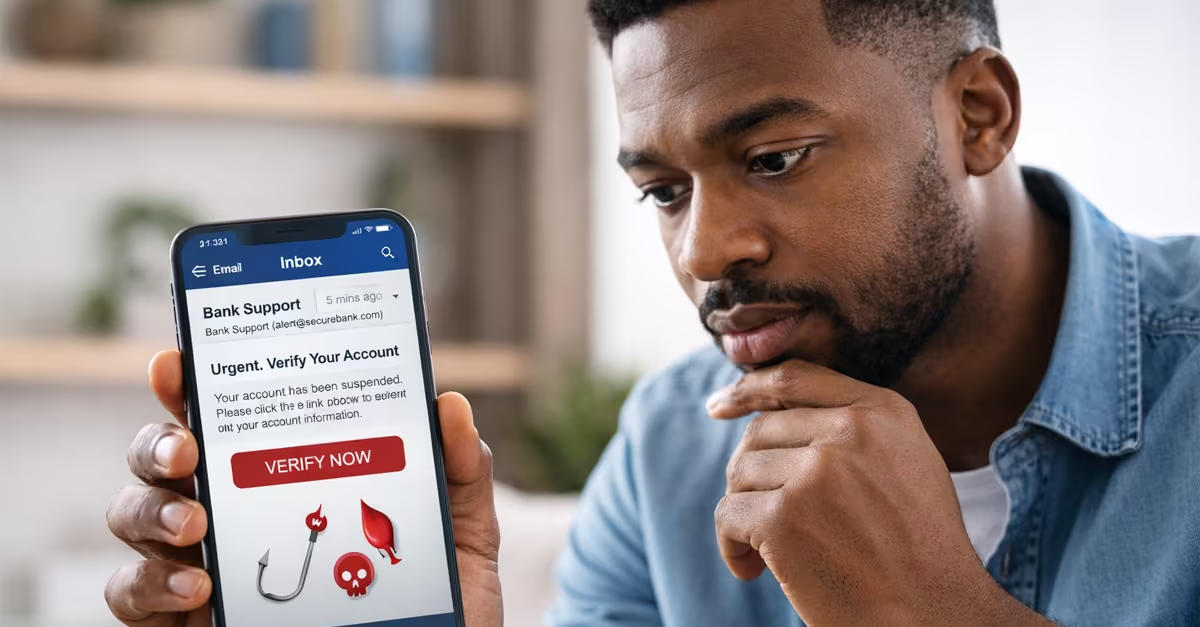
In this form of fraud, the fraudster sends fake emails or text messages that look like they are coming from a legitimate bank. This message usually warns you about problems or security issues with your account. This message then links to a fake website that steals your login credentials if you click it. You are advised to avoid clicking unproven links, and if you receive a suspicious message, contact your bank directly using its official customer service number.
Financial fraud has resulted in significant negative effects on individuals and businesses. Individuals may experience financial losses, credit record damage, and emotional stress. Businesses often face lost revenue, chargebacks, operational interruptions, and reputational damage. Governments and financial institutions also bear heavy costs related to fraud investigations, regulatory enforcement, and system security, while struggling to maintain public trust.
Read Also: From Budget to Breakthrough: The Role of Financial Planning in Business Success
Characteristics of Financial Fraud
Financial fraud can be easily detected because it follows recognizable patterns; thus, if identified early, businesses and individuals can prevent potential losses. Understanding these signs or even teaching your employee is critical for recognizing fraud before significant damage occurs. The following are the common characteristics of financial fraud as per Temitope (2025)
- Suspicious Account Activity
One of the most common indicators of financial fraud is unexpected activity within an account. This may include large, sudden withdrawals, frequent transactions within a short period, or payments to unfamiliar recipients. Such activity often occurs without a clear or legitimate reason and may indicate unauthorized access.
- Pressure to Act Quickly
To prevent users from thinking critically, the fraudsters usually create a sense of urgency. In this situation, they will tell you that immediate action is required to avoid penalties, account suspension, or financial loss. This tactic is designed to rush decisions and reduce the chance of verification.
- Lack of Transparency
The transactions associated with these fraudsters lack proper, clear documentation and detailed explanations. Records may be incomplete, inconsistent, or deliberately unclear, thus making it difficult to verify the legitimacy of the transaction. This absence of transparency is frequently used to hide fraudulent behavior.
- Fake Documentation
Fraudsters often use altered, false, and misleading documents to support their fraudulent activities. These may include forged invoices, fake identification, or manipulated financial statements. Such documents are intended to make fraudulent transactions appear legitimate.
- Changes in Spending Behaviour
Unexpected changes in spending patterns also characterize financial fraud. This includes spending outside normal geographic locations, unusual purchases, and increased transaction frequency. The Sudden behavioral shifts often indicate compromised accounts or fraudulent intent.
Types of Financial Fraud in the Digital Age
Fraud has increased in scope and complexity as transactions and financial systems have moved online. Online payments and financial services, such as mobile banking, have created new opportunities for fraudsters to exploit weaknesses in institutional processes, system design, and user behavior. Research by the Editorial team (2025) highlights the following types of fraud.
- Identity Theft
This is the type of fraud that occurs when someone accesses your accounts, whether it be a banking account, by obtaining your personal details like banking credentials, and then commits unauthorized financial actions. This can include opening new accounts, making purchases, or accessing existing funds. This is mainly caused by phishing emails or data breaches that steal your information, which are then used to access your accounts.
- Credit Card Fraud
In this type of fraud, fraudsters use machine line-skimming devices, social engineering schemes, and compromised websites to gather details about your credit card. After receiving the information, they make a purchase and withdraw your funds without your knowledge. With the rise of online transactions, stolen card data can be used quickly, often before the cardholder notices.
- Invoice Fraud
This is a type of fraud that mainly happens in businesses. It occurs when fraudsters send fraudulent invoices to the business requesting payment and impersonate legitimate vendors. In this case, if employees fail to verify the bank details provided or the authenticity of the request, payments may be sent to criminal accounts rather than legitimate suppliers.
- Investment Fraud
These are frauds that mainly promise high returns in a short period of time with little risk. These scams often take the form of Ponzi schemes or fraudulent cryptocurrency projects. The fraudsters will try to persuade you through persuasive marketing and pressure tactics, only to collapse once funds are diverted to the fraudsters or when they fail to get new individuals to scam.
- Payroll Fraud
This fraud also occurs in many entities. It occurs when insiders, or even the payroll accountant, manipulate payroll systems for personal gain. for instance, claiming unworked hours, including non-existent employees on the payroll, and diverting wages into individual accounts. Weak payroll controls often allow these schemes to continue undetected over long periods.
Technologies Transforming Financial Fraud Detection

In recent years, fraud detection has evolved from manual to advanced technology-driven systems to curb the rise in fraud as payments have shifted to digital platforms. The following are technologies used to prevent fraud.
- Artificial Intelligence and Machine Learning
Artificial intelligence and machine learning have improved fraud detection by enabling the analysis of data. These technologies automate complex data analysis in a short period, enabling fraud detection systems to detect fraud faster and more accurately. They can examine large amounts of transaction and user behavior data in real time, spotting unusual patterns that would be very difficult for humans to identify manually.
These AI-based models used to detect and prevent fraud keep learning and updating to new frauds, helping them respond to new fraud methods. According to Abdus (2025), in industries such as banking and insurance, AI helps analyze transaction records and claims to detect inconsistencies early. AI-powered chatbots also help by monitoring customer interactions for signs of phishing, social engineering, or attempts to obtain sensitive information.
Additionally, in the financial sector, Artificial Intelligence and machine learning are effective for monitoring transactions as they occur. They can study customer behaviour over time to detect when unusual actions occur, such as unexpected high-value purchases or transactions made from unfamiliar locations.
- Biometric Authentication
Biometric authentication is increasingly essential for reducing financial fraud because it strengthens identity verification. Using unique physical or biological features, such as fingerprints, facial recognition, iris scans, and voice patterns, to confirm a person’s identity helps prevent unauthorized access to their accounts. Unlike passwords or PINs, which can be forgotten, stolen, or shared, biometric information is tied directly to an individual. It is very difficult to copy or fake. This makes biometric systems more secure and effective in preventing unauthorized access, identity theft, and account takeovers in digital financial systems.
This technology is currently used in mobile and online banking to protect accounts and approve transactions. Many banks allow customers to sign in or confirm payments using fingerprints or facial recognition, reducing the risks associated with traditional passwords. Newer forms of biometrics are also being developed, including behavioral and physiological methods.
- Blockchain Technology
In a blockchain system, transactions are stored in blocks that are securely linked together, creating a permanent, tamper-proof record. Once information is added, it cannot be altered without being noticed, making fraud, duplication, or falsification very difficult. This transparency allows all authorized participants to verify transactions, reducing opportunities for manipulation and building trust in digital systems.
Blockchain platforms, like Ripple, allow fast, secure, and traceable transactions through a shared ledger that everyone involved can access in real time. Additionally, smart contracts and decentralized identity systems automate verification, reduce reliance on intermediaries, lower costs, and improve fraud prevention efficiency and reliability.
- Mobile Security
As more people use mobile devices for banking, payments, and other financial activities, mobile security has become essential for preventing fraud. Mobile devices are particularly vulnerable to threats such as malware, phishing, and unauthorized access, making strong security measures critical to protecting sensitive financial information. Good mobile security protects individual users and also helps maintain trust in digital financial systems.
Key ways to secure mobile transactions include mobile device management (MDM), app security testing, and secure payment technologies. MDM software enables organizations to remotely monitor and control mobile devices, enforcing security policies to reduce the risk of compromised devices. App security testing identifies weaknesses in mobile apps before fraudsters can exploit them. Secure mobile payment methods, such as tokenization and encryption, protect sensitive data during transactions, keeping financial information safe even if intercepted. By using these strategies, financial institutions can lower fraud risks and provide users with safer, more reliable mobile transactions.
- Behavioral Analytics
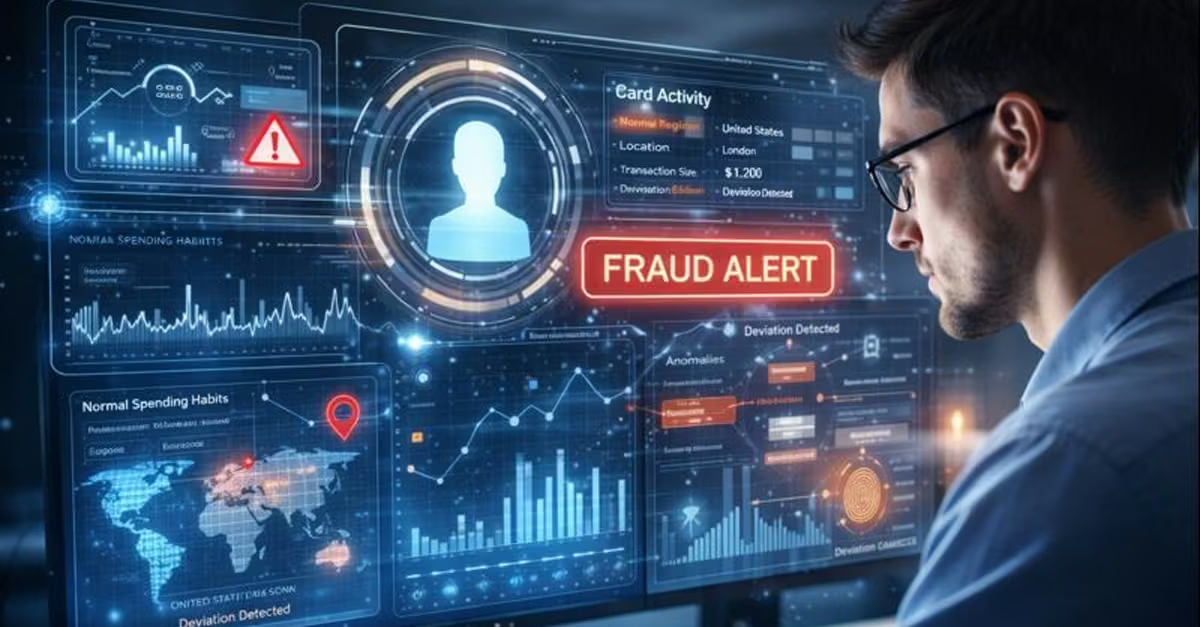
This technology has become critical, especially in the financial industry, by detecting and preventing fraud by focusing on user behavior rather than relying solely on static credentials. This technology analyzes patterns such as login frequency, transaction timing, spending habits, device usage, and even typing speed to establish a baseline of normal behavior for each user. When actions differ from previously analyzed user behaviour, the system can flag the activity as potentially fraudulent, enabling early intervention before financial loss occurs.
A study by Meghana (2024) highlights that Behavioral analytics technology is usually applied in credit card and debit card monitoring. In Banks, they track typical spending locations and transaction sizes. If a card normally used in one region suddenly generates transactions in a foreign country, alerts are triggered for further verification. Doing this helps detect and prevent fraud.
Read Also: How Mobile Money is Redefining Financial Inclusion
Challenges of Technology in Financial Fraud Prevention
As businesses manage and implement different technologies to detect and prevent fraud, they face a lot of challenges. Understanding these challenges is essential to setting realistic expectations and developing balanced fraud-prevention strategies.
- Increasing Sophistication of Fraudsters– the Fraudsters are also adapting to new technology and fraud detection tools by designing more sophisticated fraud that these tools cannot easily detect. For instance, as artificial intelligence and analytics improve detection systems, criminals respond with equally sophisticated methods such as AI-generated phishing, deepfakes, and social engineering attacks. This necessitates that fraud detection tools continue to evolve as well.
- High Implementation and Maintenance Costs – Advanced fraud detection technologies often require significant financial investment, including software, infrastructure, skilled personnel, and ongoing system updates. This hinders small businesses from leveraging this technology to prevent and detect fraud, leaving them vulnerable.
- Inaccurate Detection – when automated fraud detection systems incorrectly flag legitimate transactions as suspicious, leading to false positives, disruptions, delayed business transactions, and frustrated customers. Managing false alerts requires additional resources and careful system calibration to avoid unnecessary friction.
- Data Privacy – technologies that are used to prevent fraud depend heavily on large volumes of customer data. This raises concerns about the privacy of this collected data; thus, the businesses must ensure that data collection, storage, and analysis comply with laws such as data protection and privacy regulations.
- Balancing Security with Customer Convenience – This is when strong security measures negatively impact the customer experience. For instance, the excessive verification steps in most mobile banking applications may discourage customers or lead them to abandon transactions. As a result, Organizations must balance implementing adequate security controls with maintaining a smooth, user-friendly experience.
Conclusion
As payments have shifted online, financial fraud continues to be a serious and growing challenge for businesses and individuals. Fraudsters take advantage of new technologies and the weaknesses in the system designs and methods that individuals and businesses use to make transactions. The fraudsters can use various methods, like sending you a phishing email, impersonating banks as they try to steal sensitive information from you, they can also use skimming machines to steal your credit and debit card information, and use fake banking applications so that they can access your accounts and even steal funds from you. Different technologies have been developed to detect and prevent this fraud, which include artificial intelligence, which analyzes, biometric authentication, which prevents unauthorized access to the individual accounts, behavior analytics, which analyzes user behavior and detects when their is a suspicious behavior in the account of an individual, block chain technology and mobile security, which is used to secure transactions between devices. While using these technologies, you will face challenges such as high implementation costs, inaccurate detection that sometimes disrupts business transactions, and data privacy concerns regarding the collected customer information.