
What if small enterprises would be working smart and serving customers faster? Those are the powers of artificial intelligence. Artificial intelligence is not exclusive to big technology companies; small businesses have also adapted to AI-based operations. A recent study by Forbes revealed that 56% of small businesses are already experimenting with AI to eliminate inefficiency, save time, and enhance customer satisfaction. The revolution of AI is no longer coming; it’s already here. Small businesses are set to benefit the most. In this article, I will examine how small businesses are leveraging artificial intelligence in their daily operations.
Clarifying AI for Small Business Owners
Artificial Intelligence (AI) may sound complex. Still, it simply refers to the use of software to perform jobs that humans typically perform, such as sorting emails, predicting client preferences, or generating bills. The primary advantage is that AI can complete these tasks more quickly and precisely.
Many individuals believe that using AI requires a significant amount of money or specialized technical expertise. However, that is untrue. Many AI tools available today are simple to use; you don’t need to be an expert in technology or know how to code to begin using them.
The Benefits of Artificial Intelligence on Small Businesses
Artificial intelligence is no longer limited to large businesses but is also being utilized by small businesses. Below are ways it helps companies in their small operations create value.
Time Savings Through Automation
Handling routines and repetitive tasks, which consume a lot of time, has been made easier with the help of artificial intelligence. Tasks such as sending reminders to customers, following up on emails and inquiries, and tracking stock levels in real time are being automated by AI. By taking over these time-consuming duties, AI allows small business owners and their teams to focus on more strategic activities, like improving products, expanding customer bases, or refining services.
Better Fraud Detection and Risk Management
Fraud detection and risk management are crucial in a business as it helps to keep the business owner and the customer safe. Artificial intelligence can be used to do this by detecting unusual activities after monitoring the transaction data and behavior patterns and habits so as to help secure customer data and handle online payments. . Additionally, it can help in risk forecasting, such as market fluctuations and supply chain delays; hence, a business can take proactive actions before the risk materializes.
Improved Customer Experiences
Providing better, faster, and more consistent customer service is crucial for a business; being on the clock for an extended period can be challenging for the business’s staff. This creates a gap for AI-powered chatbots to fill. Research conducted by Lindsay (2024) highlights that artificial intelligence can help customers answer frequently asked questions, order products, and guide clients in product selection. Additionally, personalized recommendations can be made with the help of artificial intelligence after analyzing the customers’ data and behaviors, hence making them feel valued and seen.
Data-driven Decision Making
AI tools can process large amounts of data, such as sales trends, website traffic, and customer purchase histories, and turn them into clear, actionable insights. Instead of decision-makers guessing what’s working or what customers want, business owners can use this data to make informed decisions. For instance, AI can help in informing a business owner that a particular product sells best on weekends or that certain marketing messages perform better with specific customer groups after analyzing the sales data of customers in relation to the individual product or service. This will help the business owner make informed decisions regarding the insights provided by AI.
Improved Marketing and Outreach
How businesses do marketing for their products and services can be enhanced with the help of artificial intelligence. A company can achieve this using AI-powered tools, which can create personalized advertisements based on user behavior. It can generate email campaigns and schedule social media posts at the most effective times. This can not only improve the marketing of a business but also ensure that marketing is being done to the right audience and at the right time, leading to high sales volume and more profits.
Tailored AI Tools for Small Businesses
The growing availability of affordable, easy-to-use AI tools is a game-changer for small businesses. A business doesn’t need to hire an IT expert to start using AI in its operations, as many AI tools are designed with simple interfaces to help businesses utilize them, even if they have limited IT skills. Below are the tools a small business can use in its operations.
A. Finance
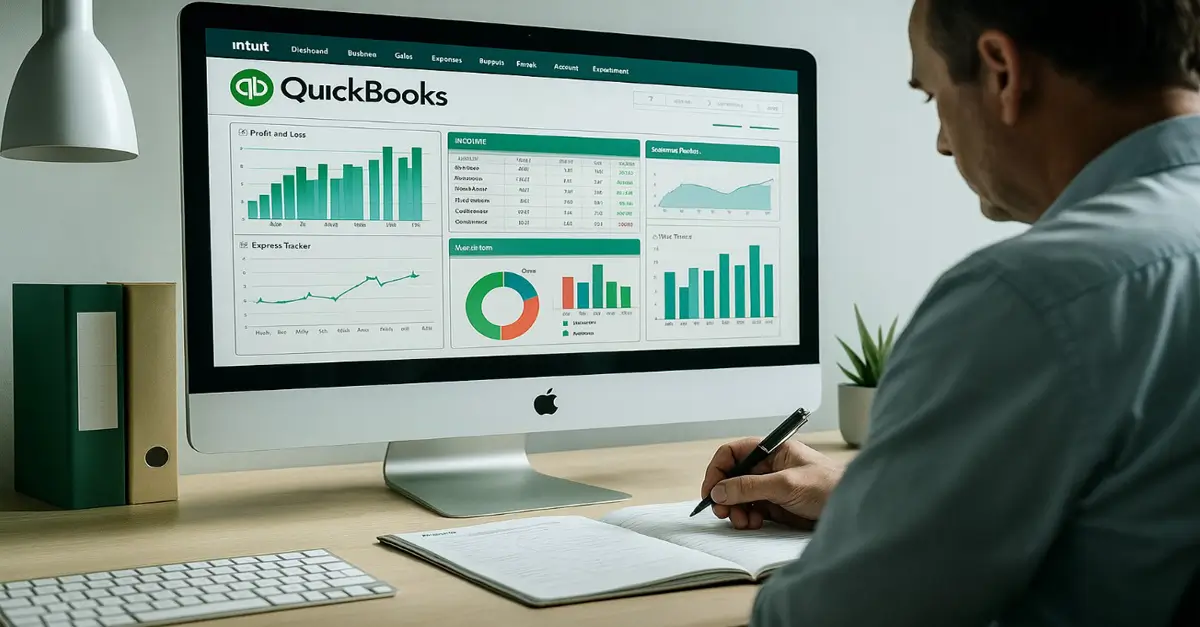
One of the main challenges faced by small business owners is keeping a record of their transactions and managing their finances. This has been solved with the help of artificial intelligence through the tools below:
I. QuickBooks and Xero– financial management of small businesses has been improved due to these tools. They integrate artificial intelligence so that by analyzing the transaction data, they can be able to automatically categorize the expenses of a business, thus saving the time the company will take making data entry manually and then classifying them. Additionally, financial statements can be easily generated by these tools, such as the statement of financial position and profit and loss account.
These tools can predict the future cash flow of the business, enabling it to determine whether its sales revenue will increase or decrease in the future and make informed financial decisions accordingly.
II. Expensify– with the help of this tool, the process of employee compensation has been simplified for small businesses. Research done by Ronald (2025) highlights that, with the help of built-in AI, the platform allows users to take a quick photo of a receipt using their smartphone. The AI then automatically reads the key details such as the amount, date, vendor, and type of expense and accurately categorizes it, logging it into the company’s financial records. hours of administrative labour and errors are minimized due to this tool. Expensify not only increases business efficiency but also produces accurate and well-organized financial reporting.
B. Content Creation
In recent years, content creation has undergone significant changes. Without a professional graphic designer and even a video editor, small businesses can produce high-quality designs and professional videos. The following AI tools can do this transformation.
I. Canva magic design– this is an AI-powered design tool that has been integrated into Canva. A polished designs, such as social media posts, presentations, and marketing materials will be designed when the user write a prompt and paste it into the tool. This saves time, cuts extra costs, and ensures professional appearances.
II. Lumen5– this AI tool helps business to easily convert their written content, like, for instance, blog posts, into a professional and engaging video without much knowledge of a video editor. The AI selects relevant visuals, places text in the right spots, and adds smooth transitions, making video creation fast and user-friendly for beginners.
C. Marketing

AI excels in the field of marketing, particularly for small businesses that are trying to generate content and identify target audiences. A small business can easily use the below tools to do marketing:
I. ChatGPT, Jasper, and Copy.ai – these are writing assistants that business owners can easily use to provide descriptions for their products, generate blog posts, create social media captions, and instantly create email content. This helps a business ensure consistent brand messaging and eliminates delays.
II. Mailchimp and HubSpot are AI-powered tools used for email marketing automation. In this way, they help businesses personalize content for different customer segments, send emails at optimal times, and also assist in analyzing engagements to improve future campaigns.
D. Customer Service
Even during outside business hours, customer services can be improved with the help of AI-powered customer service tools explained below:
Tidio and Zendesk AI– This al-powered Chabot is used to handle the common clients’ interactions like answering frequently asked questions, gathering information from the customer, providing order updates, and, when necessary, directing the customer to the human agents when the issues are complex. By automating these services, the business can be able to maintain consistent customer service, answering the quarries of the customers promptly.
E. HR & Recruiting
Employing the right talent in a small business is essential, but the hiring process can be time-consuming, especially when an organization lacks a dedicated human resource team. With the innovation of AI, the process has been simplified and made faster with the help of the following tools, as highlighted by Guest (2025)
Zoho Recruit – This is an AI-powered tool that automatically scans applicants’ resumes for specific keywords, qualifications, and job experience that match the posted job. This helps eliminate unqualified applicants automatically rather than manually, which saves time. This tool speeds up the process of recruitment and makes it simpler.
HireVue – This tool utilizes artificial intelligence to assess applicants’ communication skills by analyzing video interviews. It examines the tone of the applicant and their facial expressions to determine whether they possess the soft skills required for the posted role.
Case Study: 4G Capital, Empowering Small Business Using AI
In Kenya’s economy, small businesses are crucial for its growth. 4G Capital, a fintech company based in Nairobi, has emerged as a game changer by adopting AI technology across its operations, particularly in the issuance of small-scale lending.
obtain loans for Many small and medium-sized businesses, as well as entrepreneurs, may be hard due to a lack of formal documentation and Limited credit history. 4 G Capital Company has addressed this challenge by determining the creditworthiness of its customers using artificial intelligence algorithms rather than relying on traditional credit scores. In this method, they analyze the client data by evaluating the repayment behaviors and sales cycles of previous transactions. This allows the company to personalize its loaning services to different individuals and businesses.
The transformative effects to the 4G capital company.
I. Smart lending
The rate of loan default in the 4G capital business has reduced. This is due to the use of artificial intelligence to analyze the customer data and then help in matching the amount of loans that can be suitable to a customer based on his transaction capacity and business capacity.
II. Financial inclusion
The use of AI in the determination of the creditworthiness of a customer has increased the number of people who qualify for loans as compared to when traditional methods are being used. This has facilitated financial inclusion as many people qualify for loans they are capable of paying back.
4G Capital demonstrates that when technology is utilized wisely, it can benefit everyone—not just large companies. Their approach is a model for how small businesses around the world can succeed if they have access to innovative digital tools
Read Also: Fintech Innovations: How Technology is Changing Financial Strategies
Challenges and Ethical Consideration of AI for Small Business
A. Data Privacy

According to Quicksmart AI (2024) one of the essential things to consider is how customer data is handled, especially when small businesses utilize AI-powered tools. This is because the AI tools analyze sensitive information such as client names, contact details, payment data, or purchasing behavior. Suppose the tools being used don’t have strong security measures. In that case, this data can be vulnerable to leaks, hacking, or unauthorized access. To avoid this, business owners should select AI tools from trusted providers, review their privacy policies, and ensure that all shared data is securely stored, encrypted, and used with customer consent.
B. Job Displacement
Many routine tasks can be easily automated by AI-powered tools. Jobs like processing invoices, scheduling appointments, and handling the basic customer quarries can be easily automated, resulting in efficiency. However, as these tasks are being automated, there is a rising concern about most of the employees losing their jobs.
C. Biased AI Outputs
Another challenge of AI is the potential of AI to produce biased results. Since AI systems learn from historical data, they may reflect or even reinforce existing human biases if that data is flawed. For instance, if an AI tool used for recruitment was trained on data from a company that previously favored a specific demographic, the tool might continue that pattern, even if unintentionally. This could lead to unfair treatment in hiring, marketing, or customer service. Small businesses must be aware of this risk and regularly check how their AI tools are making decisions.
Read Also: How AI Is Transforming Healthcare
Conclusion
AI is no longer a tool that belongs to big companies with IT experts. It also contains tools that are designed to help businesses that don’t have extensive knowledge of technology to save time, ensure efficiency, improve customer satisfaction, reduce unnecessary costs, and enhance their customer service. For a business to achieve the above, it needs to take a step and start using AI-powered tools like ChatGPT, QuickBooks, Zendesk AI, Canva Magic, and Zoho Recruit. Despite its advantages, AI presents challenges that businesses must be cautious of, including job displacement, data breach concerns, and the production of biased output.