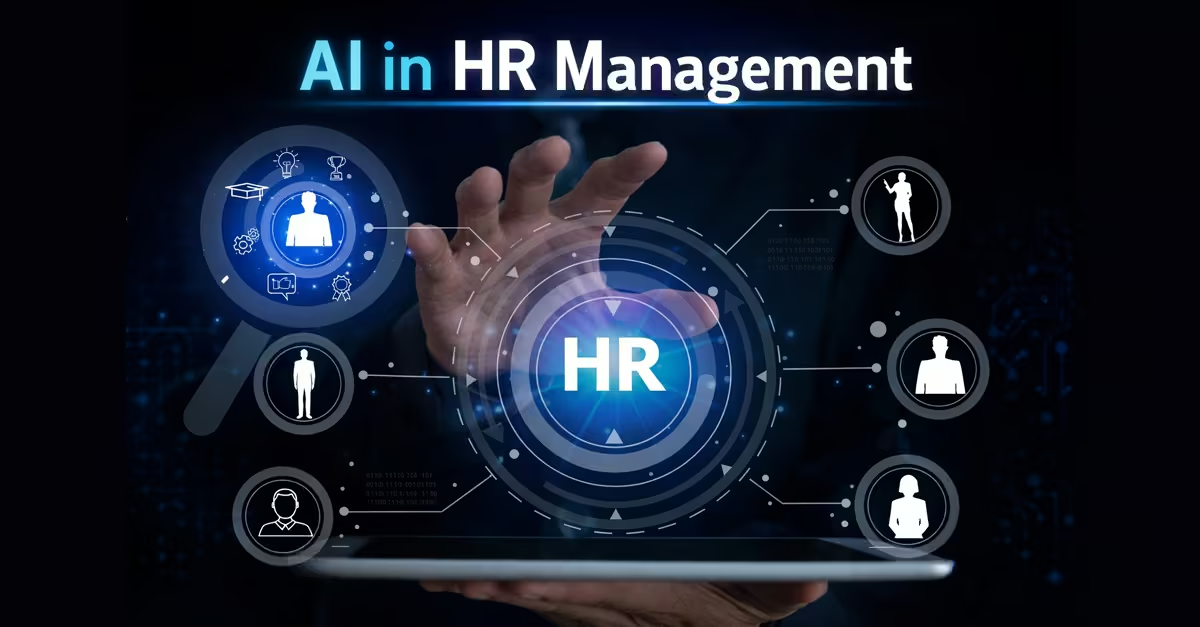
Human Resource Management (HRM) is an important function in any organization. Its main purpose is to manage human capital within an entity by handling key activities such as employee training and development, recruitment, performance management, and compensation. As organizations expand and workplaces become broader and more complex, the need to manage human resources effectively has become increasingly vital for an entity to succeed, hence the need of artificial intelligence. In this article, we will explore the impact of AI in human resource management for most businesses around the world.
Artificial Intelligence (AI) is an emerging technology that is changing how businesses manage their human resources in today’s business world. Many industries now use AI to improve efficiency, reduce errors, and support better planning. Additionally, in human resource management, artificial intelligence is gradually changing how organizations recruit employees, evaluate performance, engage their workforce, and manage employee data.
This higher adoption of artificial intelligence is driven by a range of challenges associated with traditional HR processes. Many traditional methods for handling human resources tasks manually are time-consuming and prone to human bias. For instance, an organization spends a lot of time and resources reviewing hundreds of job applications, monitoring employee performance, or answering routine HR questions. The adoption of AI in human resources offers a more efficient solution by automating repetitive tasks, improving accuracy, and supporting data-driven decision-making rather than personal judgment.
What Is AI in Human Resource Management?
Artificial intelligence (AI) in human resource management is the use of advanced digital technologies, such as machine learning, predictive analytics, and natural language processing, to support, automate, and improve HR activities that have traditionally depended on human judgment, as per Molly (2024). These innovations enable HR systems to process and analyze large volumes of employee and organizational data, identify patterns, and generate useful insights, thereby enabling an entity to achieve greater accuracy and consistency in HR decisions while reducing manual effort and increasing operational efficiency.
Artificial intelligence is used in an organization to streamline and automate many human resource functions, such as recruitment, payroll and benefits management, policy and contract preparation, and real-time employee support through chatbots and virtual assistants. Additionally, in areas such as employee training and development, retention planning, and workforce management, artificial intelligence helps ensure data-driven decision-making.
Read Also: The Rise of AI-Powered Marketing Tools
Types of AI in Human Resource Management
Artificial intelligence is not a single tool but a group of different technologies designed to address specific tasks and challenges. In human resource management, various types of AI are used to automate routine activities, support better decision-making, and improve the experiences of both employees and job candidates. A study by AIHR (2026) highlights the following types of AI in human resource management.
a) Generative AI
Generative AI uses large amounts of data and advanced algorithms to create new content, including text, images, and videos. Generative AI is used to write job descriptions, develop training and learning materials, produce personalized communication for candidates, and support workforce planning by summarising and interpreting complex information.
b) Conversational AI
Conversational AI is the technology behind HR chatbots and virtual assistants. It uses Natural Language Processing (NLP) to understand and respond to human language, enabling entities to offer instant support to employees and job seekers. These systems can answer common HR policy questions, assist with benefits enrollment, support onboarding processes, and suggest relevant learning opportunities. By improving access to HR services, conversational AI increases engagement while reducing the routine workload placed on HR teams.
c) AI Voice Technology
AI voice technology builds on conversational AI by enabling voice-based communication with employees and candidates. Virtual HR assistants that use voice technology can respond to routine questions, offer guidance, and transfer complex or sensitive matters to human HR professionals when needed. This approach enhances accessibility and response speed, especially in organizations with large, remote, or geographically dispersed workforces.
d) Machine Learning (ML)
Machine learning allows AI systems to learn from data and improve their accuracy over time. In HR, machine learning is commonly used to predict employee turnover, match candidates to suitable job roles, and suggest fair and competitive salary ranges. Supervised learning models rely on historical data, such as past hiring outcomes, to make predictions. In contrast, unsupervised learning models examine large datasets to identify patterns, such as factors contributing to high turnover within certain departments or teams.
e) Natural Language Processing (NLP)
Natural Language Processing focuses on understanding and analyzing human language in both written and spoken forms. Within HR, NLP is applied to employee surveys, performance evaluations, feedback forms, and interview records to detect sentiment and identify recurring topics. By gaining insight into employees’ opinions and concerns, HR teams can take early action to improve workplace culture and resolve potential issues before they escalate.
f) Automation AI
Automation AI is designed to manage repetitive and time-intensive administrative tasks. In human resource management, it is widely used for resume screening, payroll administration, compliance monitoring, and employee data management. Automating these functions reduces the likelihood of human error, improves accuracy, and allows HR professionals to dedicate more time to strategic and people-focused responsibilities.
g) AI Agents
These are advanced, emerging forms of artificial intelligence that can operate with minimal human supervision. Using this technology, an organization can actively track employee performance, recommend personalized career development plans, schedule training activities, and guide new employees through onboarding processes. Although these systems offer powerful capabilities, they require careful oversight and Governance due to their wide-reaching impact on employees and organizational decision-making.
Read Also: Understanding AI Agents: The Digital Minds Behind Modern Technology
Top AI Tools Used in AI in Human Resource Management
As artificial intelligence is increasingly applied to human resource management, several specialized tools have been developed to improve efficiency, decision-making, and the overall employee experience. The following are common AI tools used in human resources across various organizations, according to IMD Business School.
a) Paradox Olivia
This is an AI-powered conversational chatbot commonly used for sourcing and engaging candidates. It communicates with job applicants in real time, answers frequently asked questions, screens candidates, and automatically schedules interviews. By doing this, it helps improve response times and ensure consistent communication, thus enhancing the candidate experience.
b) HireVue
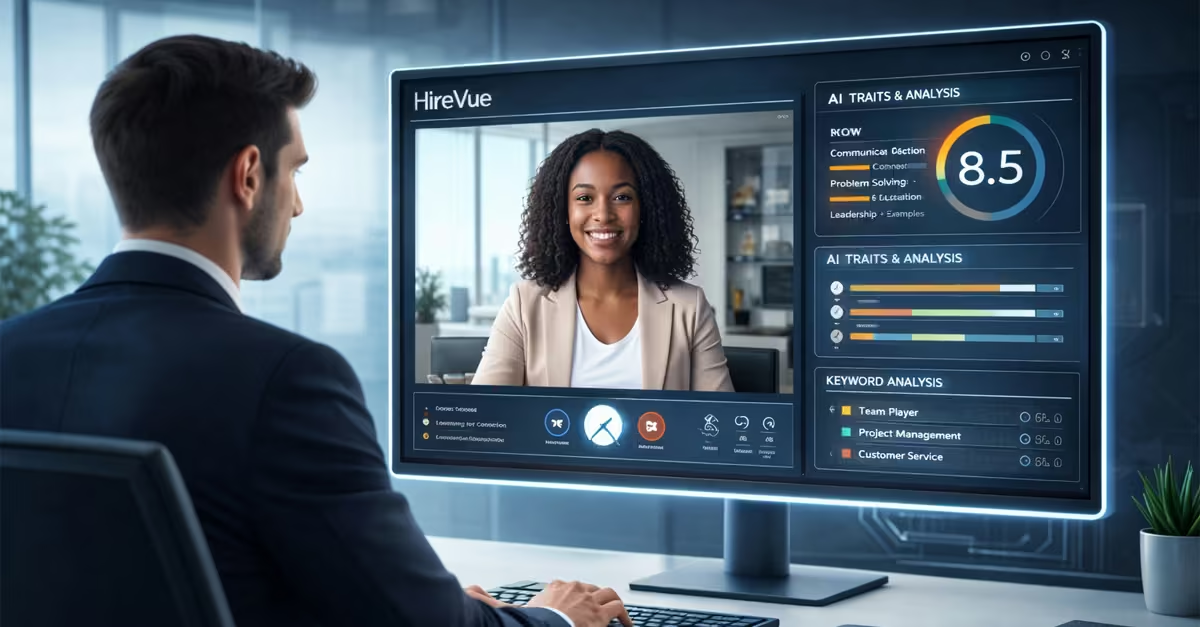
Organizations use this AI tool to analyze structured Virtual interviews. It uses AI to support structured digital interviews by analyzing interview responses, including speech patterns, tone, keywords, and content. The platform helps standardize interview assessments and provides data-driven insights to support hiring decisions. When used alongside human judgment, HireVue can improve consistency, fairness, and efficiency in large-scale recruitment processes.
c) Eightfold.ai
Eightfold.ai focuses on talent intelligence and internal mobility within organizations. It applies AI to analyze employees’ skills, experience, and career histories to predict future career paths. The platform helps businesses to identify internal talent, recommend reskilling and upskilling opportunities, and support succession planning, making workforce development more strategic and data-driven.
d) Chronus
Chronus uses AI to strengthen mentorship and talent development programs. Its AI models help match Mentors and trainees based on skills, goals, and personal preferences. It also provides insights into the effectiveness of mentoring programs. This approach improves the quality of mentoring relationships and supports continuous learning, growth, and employee engagement.
e) Pymetrics
Pymetrics uses AI-powered, engagement-driven assessments to evaluate Candidates’ mental and interpersonal capabilities. The platform measures skillsets such as problem-solving ability, attention, and risk tolerance, instead of relying only on resumes or traditional interviews. This method supports fairer hiring decisions by focusing on potential and job fit rather than background and credentials alone.
Applications of AI in Human Resource Management
Human resource management has become faster, more efficient, and increasingly data-driven with the use of Artificial intelligence. In an entity, artificial intelligence is used across the entire employee lifecycle, from recruitment to development and retention. Thus it helps the HR teams to automate routine tasks, analyze workforce trends, and support informed decision-making. A study by Marcela (2025) highlights the following areas in which artificial intelligence is used in human resource management.
a. Talent Acquisition and Recruitment
One of the most significant ways AI has influenced human resource management is in talent acquisition and recruitment. Hiring is often time-consuming and costly, but AI helps streamline the recruitment process by improving each stage of candidate sourcing, screening, and assessment.
HR professionals can use AI to manage large volumes of job applications, reduce bias, and improve the overall quality of hiring decisions. AI-driven tools also help HR teams create well-structured and optimized job descriptions that attract suitable candidates and engage them from the earliest stages of the recruitment process.
Below are some of the key ways AI is applied in recruitment:
- Talent Sourcing- AI helps HR professionals identify potential candidates more efficiently by searching for individuals who match specific job criteria on platforms such as LinkedIn and other talent databases.
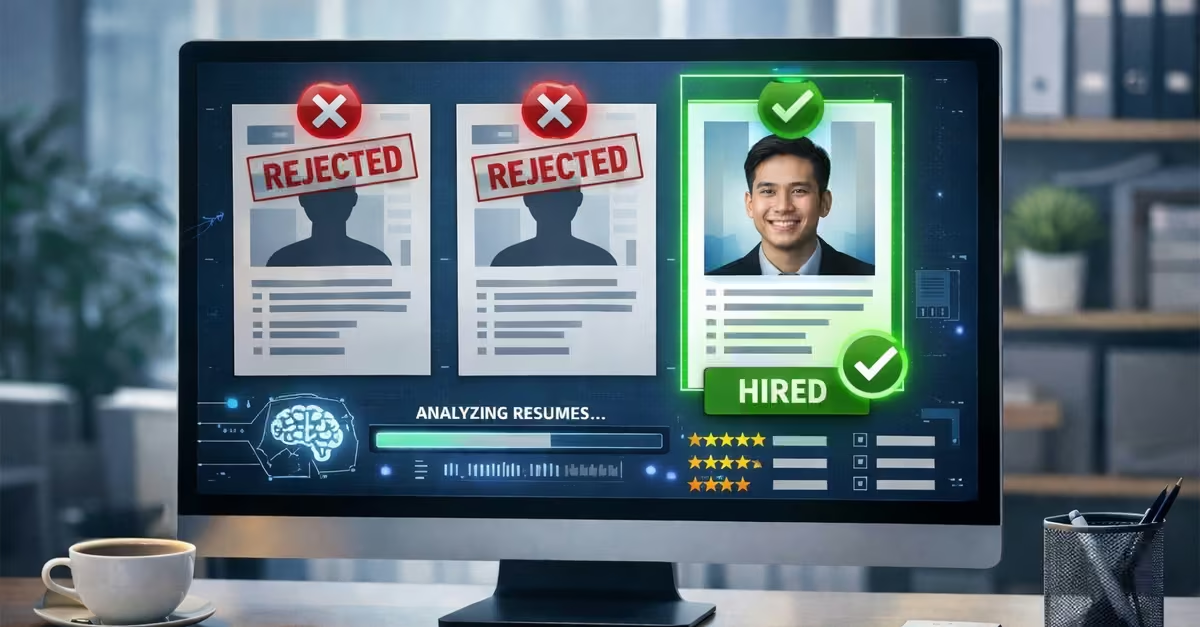
- Screening resumes-AI algorithms quickly review and rank resumes based on qualifications, experience, and required skills, saving time and ensuring consistency.
- Using AI-powered chatbots, they manage initial candidate interactions, respond to frequently asked questions, and, in some cases, assess basic skills before candidates move to the next stage of the recruitment process.
- Automating assessments-AI based assessment tools provide data-driven insights into candidates’ abilities, strengths, and potential cultural fit within the organization.
The recruitment process has become faster, more structured, and more data-driven through the use of AI tools. This enables HR teams to make more informed hiring decisions while offering candidates a smoother and more engaging recruitment experience.
b. Onboarding Incoming Employees
Onboarding is a crucial responsibility for HR departments, as it defines a new employee’s first experience within the organization. By automating routine administrative tasks, providing real-time assistance, and delivering more personalised onboarding experiences, AI tools enhance the onboarding process. Additionally, AI-powered onboarding enables an entity to streamline the process, creating a welcoming and supportive environment that improves employee retention. Some common applications of AI in onboarding include the following, as per Lorelei (2025).
- Automating administrative tasks- AI manages repetitive activities such as completing employment documents, scheduling onboarding activities, and assigning compliance or mandatory training.
- Using chatbots for support: AI-driven chatbots provide continuous support by answering new hires’ questions about benefits and the company.
- Creating personalized onboarding journeys-AI tailors onboarding programs to individual employees, allowing them to progress at their own pace and focus on information that is most relevant to their role.
c. Workforce Planning
Effective workforce planning is an important responsibility of HR departments, and AI plays an important role in strengthening this process. By analyzing large sets of workforce data, AI helps HR leaders forecast staffing requirements, allocate resources more efficiently, and make informed decisions that support long-term organizational growth.
Below are several ways AI supports workforce planning and decision-making:
- Forecasting staffing needs-AI tools analyze historical data such as hiring trends, turnover rates, and business demand to predict future staffing requirements, enabling HR teams to plan.
- Improving resource allocation-AI generates data-driven insights that help HR departments distribute talent, budgets, and training resources more effectively across the organization.
- Supporting informed decisions-Through real-time data analysis, AI enables HR leaders to respond quickly to changes in the market, workforce trends, and organizational priorities.
The application of AI in data-driven workforce planning enables human resource departments to become more flexible and better equipped to adapt to changing business environments. This approach helps organizations meet workforce demands efficiently in competitive job market.
d. Transforming Performance Management and Retention
AI has significantly improved performance management by enabling HR departments to set data-driven performance standards, streamline performance reviews, and identify factors that influence employee retention. By leveraging predictive analytics, HR leaders can develop retention strategies that reduce turnover while supporting long-term organizational objectives.
Below are several ways AI is applied in performance management, according to Itacit (2026)
- Automating performance reviews– AI-powered tools analyses employee performance data to streamline review processes, highlighting strengths, progress, and areas that may require improvement.
- Setting performance benchmarks-AI supports HR teams in establishing clear, measurable, and objective performance goals that align with organizational priorities.
- Predicting retention risks– Predictive analytics examines data on engagement, job satisfaction, and performance to identify employees at risk of leaving, enabling HR teams to take proactive action.
By adopting AI-driven performance management practices, HR professionals can promote transparency, fairness, and continuous feedback. This supportive approach encourages employee development and increases the likelihood that employees will remain engaged and grow within the organization.
e. HR Chatbots and Virtual Assistants
HR chatbots and virtual assistants are commonly used to provide continuous, 24/7 support to employees and job candidates. These tools can respond to frequently asked questions about leave policies, employee benefits, payroll, and company procedures, as per Keith (2023). This reduces response times and administrative pressure on HR teams. By providing consistent, immediate access to information, AI-powered chatbots improve employee satisfaction and the overall quality of HR service delivery.
f. Supporting Learning, Development, and Up-skilling
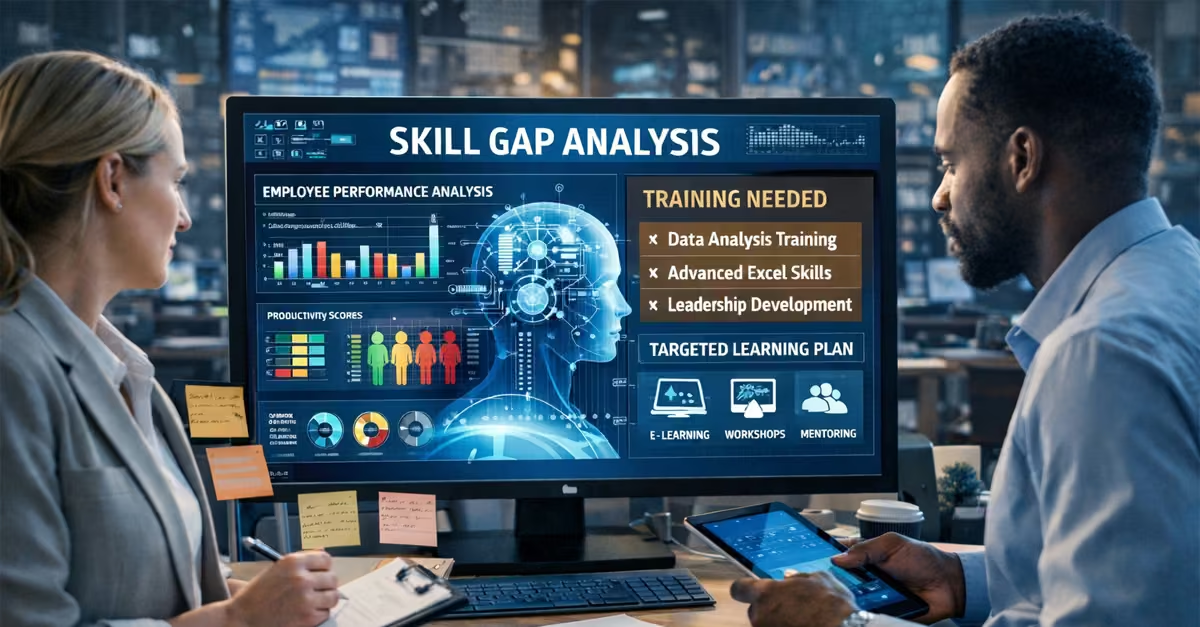
AI plays a vital role in modern learning and development by helping entities identify skill gaps, deliver personalized learning experiences, and support continuous up skilling. Using machine learning algorithms, HR managers can monitor employee progress and evaluate the effectiveness of training programs. In addition, generative AI enables HR teams to create customized learning content that closely aligns with their workforce’s skills and needs.
Below are key ways AI is applied in learning and development:
- Identifying skills gaps-AI analyzes employee performance data and competency levels to highlight areas where additional training or development is needed, helping HR teams design targeted learning initiatives.
- Creating personalized learning journeys-AI-powered tools tailor training programs to individual learning styles, roles, and career goals, ensuring employees acquire the skills most relevant to their responsibilities.
- Supporting up skilling and reskilling– AI-driven learning platforms make it easier for HR departments to offer up skilling and reskilling opportunities, helping employees adapt to evolving job requirements and industry changes.
- Tracking performance in real time- Machine learning algorithms continuously track employee learning progress and generate insights into the effectiveness of each training program.
Challenges of AI in Human Resource Management
Although artificial intelligence offers significant benefits to human resource management, its adoption also introduces several challenges that organizations must manage carefully. Below are the challenges faced by most orginizations.
- Data Privacy and Security- In an organization AI systems depend on large amounts of sensitive employee and candidate data. This data includes personal details, financial records, and performance information. This reliance increases the risk of data privacy breaches, cybersecurity threats, and non-compliance with data protection regulations. Organisations must implement robust data security measures to prevent sensitive data from being accessed without authorisation.
- Bias and Fairness Risks– While AI has the potential to reduce certain human biases, it can also reproduce or even intensify bias if it is trained on incomplete, biased, or unrepresentative data. In areas such as recruitment and performance evaluation, biased algorithms may unintentionally disadvantage specific individuals. To address this risk, HR professionals must regularly review AI outputs, audit training data, and maintain human oversight to promote fairness and equal treatment in decision-making.
- Ethical and Governance Concerns-The use of AI in HR raises important ethical issues related to transparency, accountability, and employee trust. Organisations need to clearly define responsibility for AI-supported decisions and ensure that AI systems align with organisational values and ethical principles.
- Loss of Human Touch –Although AI improves efficiency, excessive automation can reduce the human connection that is essential in many HR interactions. Activities such as onboarding, offboarding, conflict resolution, and performance conversations benefit greatly from empathy, understanding, and personal communication. Over-reliance on AI in these areas may weaken relationships and negatively impact workplace culture.
- Skills Gaps due to a lack of training– Introducing AI into HR requires new skills in data analysis, digital tools, and AI governance. HR teams may face challenges such as resistance to change or limited technical knowledge needed to use AI effectively. Without proper training and clear communication organizations may struggle to achieve the full benefits of their AI investments.
Conclusion
Artificial intelligence is transforming modern human resource management by changing how organizations recruit, develop, engage, and retain talent. By automating routine administrative tasks, improving personalisation, and enabling data-driven decision-making, AI helps HR teams work more efficiently while focusing on strategic, people-centred priorities. In human resource management, you may use artificial intelligence for recruiting and onboarding new employees, workforce planning, performance management, and identifying skills gaps so employees can upskill. Various AI tools can be used in an organisation, such as Paradox Oliviah to source and engage candidates, Eightfold.ai to analyse an entity’s employees’ skills, HireVue to analyse structured Virtual interviews, and Chronus to strengthen mentorship and talent development programs. As you adopt this technology, you must be aware of the challenges that require careful management by an entity. They include bias, data privacy concerns since many employees’ data is uploaded for analysis, loss of human touch, and the need to train your existing employees before adopting artificial intelligence in your human resources.