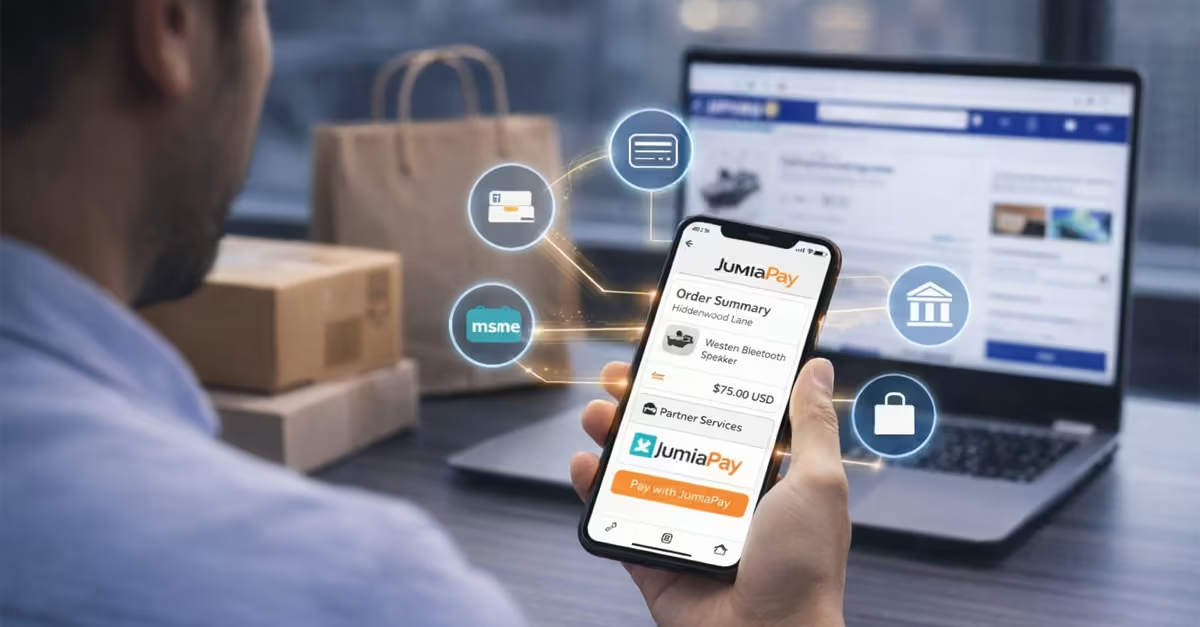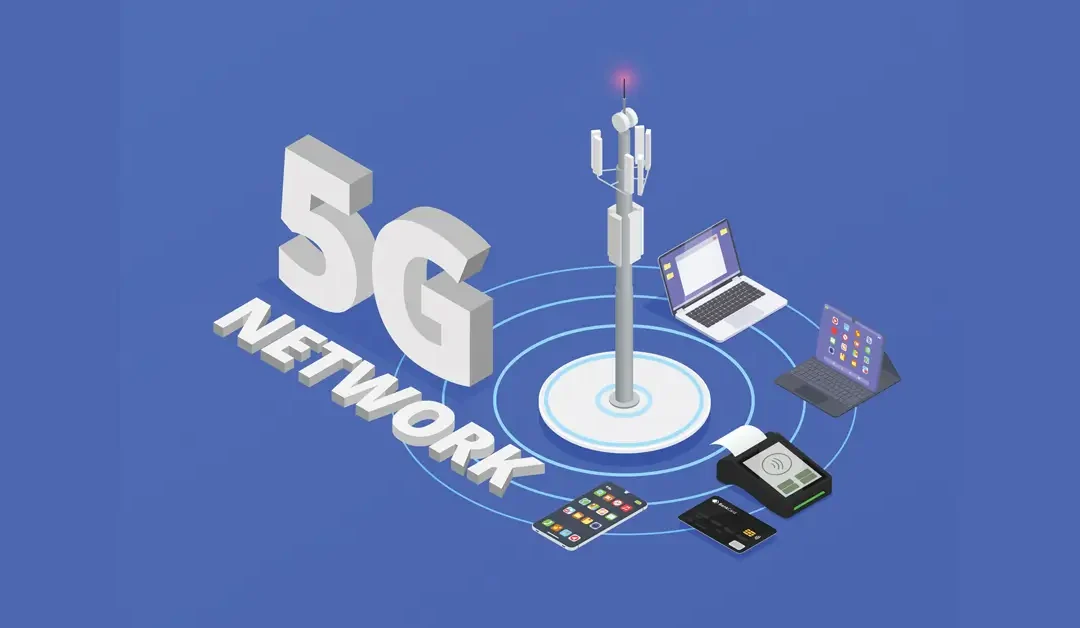
Imagine watching high-definition videos smoothly online, browsing quickly, playing video games, attending virtual meetings, and working remotely without buffering or interruption. This is what the 5th generation network promises to deliver. Internet service providers embracing this advancement will improve their customer experience due to increased internet speed and gain a competitive advantage. This article, The Rise of 5G Network and Its Impacts on Internet Service Providers, will explore the impact of the 5th Generation network on internet service providers.
Understanding the 5G network
The Internet has become an essential part of our dairy operations because it’s used in almost every aspect of our dairy activities. For instance, it is used in communication, education, entertainment, and business operations. As technology evolves, there is an increased growth and a high demand for quicker and more reliable internet connections. This has led to the introduction of the 5th Generation network, which is a transformative upgrade from the previous 4th Generation Network.
This innovation of 5G can provide a high-speed internet connection of up to 10 Gbps, and its latency has been optimized, meaning there is a reduced delay while using it, compared to a 4G network. (Taboada et al. 2021). The availability of high-speed internet connections has improved customer experience in terms of how they will be using the internet, such as working remotely, playing video games, and also enjoying entertainment like watching videos online. Internet providers need to prepare to shift to this new evolution to improve the services they provide to their clients.
Opportunities for Internet Providers
High Internet Speed and Dependency
The most significant aspect of having a 5G network is its quick internet speed. Its speed is unmatched as it can provide an average of 100 Mbps, which enables a client to download and even watch high-definition videos instantly. (Shrama et al. 2020). It also helps gamers to play online video games without interruptions. Additionally, it allows people, for instance, those working remotely, to attend teleconferences and Zoom calls without buffering and disruptions.
The 5th Generation network has reduced latency, meaning it takes a shorter time for data to be transmitted from one device to another. The latency for 5G can be as low as 1 millisecond, compared to 4G, which is approximately 50 milliseconds. This clearly shows that there is an advancement in the evolution of 5G network, which is essential in applications like live gaming, remote-controlled surgery, and robotics vehicles, where there is a need for a high-speed network, where problems can be caused if there is a slight delay in the internet.
Internet service providers need to start offering the 5G empowered internet connection by including it in their packages so that their customers can experience uninterrupted internet connection. This will meet the demands of the businesses and individuals who demand high-speed internet, thus making their services more attractive in the market and increasing incomes. The Mobile Internet Impact
Many people in most countries use Mobile data to access the internet. The availability of 5G networks has enabled these users to experience enhanced app performance, quick browsing through the internet, and seamless video calls. With the faster connectivity and browsing, this network exhausts the data bundles very fast, which is a significant disadvantage of the network. If internet service providers start offering mobile plans like in a hotspot, where they include the 5G plans at a cheaper price to help draw more customers in the market, especially those that are interested in video games, even streaming services, and working remotely. Additionally, this network will provide less congestion and improved connectivity in the crowded areas, thus enhancing customer satisfaction, reputation, and revenue.
Competitive Advantage
In recent years, there has been a rising trend in the number of internet service provider companies in Kenya. The increasing trend has led to high competition in the market. Embracing the 5G network earlier is a strong competitive strategy to beat your competitors in the market. (Shukurillaevich et al. 2019)This is because a lot of businesses and individuals in the market demand faster internet connectivity, as most of them are involved with activities like virtual meetings. An internet service provider offering 5G network connectivity can attract these customers, thus gaining a competitive edge in the market. Investing in 5G network will help internet service providers:
- Enhanced customer satisfaction– This is achieved by providing a more reliable and quicker internet connection.
- Increase their income- This can be done by offering 5G Packages, for instance, in the hotspots, to meet the different customers’ needs.
- Expand their market shares– This is because of the higher speed of connectivity offered by the 5G network, which will attract more customers and help them beat their competitors in the market.
Opportunity Diversification
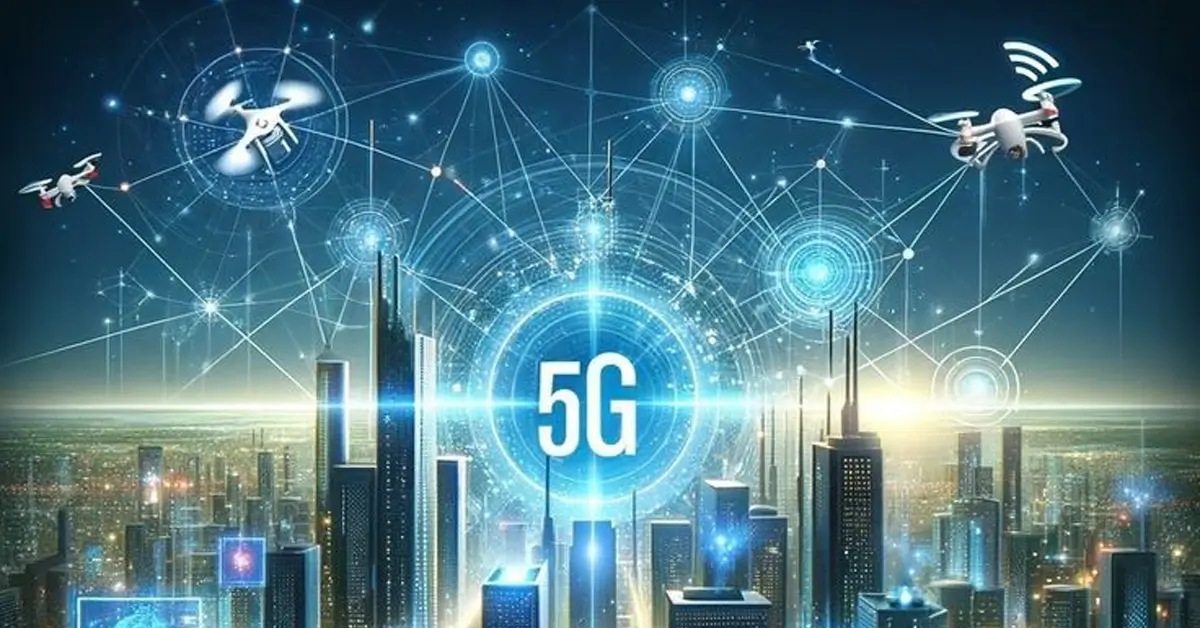
The ability to connect many devices, ultra-low latency, and high internet speed connections are the capabilities that are driving the rise of 5G networks. This can help internet service providers increase the number of services they offer, which is more than just providing internet access. (Kelechi et al. 2019). In this case, the internet service providers can design their services to meet different industry needs, thus solving their problems. For instance in, in healthcare, with availability of 5G which can transfer data very fast between two devices, this can give internet service providers a chance to design package which help in real-time transmission of high-resolution medical images, remote surgery, and continuous monitoring of patients through connected devices rather than just providing basic internet connection services.
Read Also: 5G and the IoT
Disadvantages of the Rise of 5G to Internet Service Providers
Investment in the Infrastructure
For internet service providers to be upgraded to the newly evolved 5G network, they must invest heavily in their infrastructure, which needs a lot of capital, to ensure that new equipment has been installed and their current systems have been upgraded. These changes are essential and help support a high-speed and low-latency internet connection. However, the amount of money required to buy the new equipment and even do systems upgrades may be too high for some internet service providers, especially small ones, to acquire. This will force some internet service providers to remain on the 4G network.
Allocation of Spectrum
Spectrum is the electromagnetic waves that travel through space and are used in different technologies, and the 5G network technology needs access to this spectrum to operate efficiently. Spectrum allocation also refers to the process by which various services and users are being assigned to portions of the electromagnetic spectrum for communication.
Spectrum is used in wireless connectivity like WI-FI, satellite communication, mobile networks, and radio broadcasting, and it is a limited natural resource, thus regulated by the government. The spectrum being a resource that the government regulates, the internet service providers compete in acquiring licenses. (Vuojala et al. 2020). In most cases, it is costly, it takes a lot of time to be given a license, and it follows complex processes and procedures until one is licensed. This hinders most internet service providers from offering complete 5G services since they lack access to the right spectrum bands.
The Security Concerns

The 5G network facilitates an increased number of devices and systems connected in a network. This creates more potential entry points for cyber-attacks. Additionally, it is hard to monitor and protect all the endpoints when the network environment has expanded due to the increased number of connected devices. (Kim, 2020). Thus, by investing in cybersecurity strategies, internet service providers need to ensure no data breaches, hacking, or any other threats.
Conclusion
The evolution of the 5th generation provides significant opportunities for the internet service to explore, change their operations, and increase the number of services they offer. By using the capabilities of the 5G network like faster internet connection, low latency, and ability to transfer data between two devices faster the internet service providers can be able to provide high quality services to their customers, increase the market share in the market, gain the competitive advantage, and diversify their services. However, achieving the above benefits is not a walk in the park, as an organization must incur some costs and regulatory fees as the 5G network requires the internet service providers to upgrade their systems, buy new equipment, and apply for a license so that they can be allocated the electromagnetic spectrum. Hackers can easily access the data of customers who are connected to the network because the 5G network allows many devices to be connected, which creates security concerns, which is another limitation that comes with this network.
References
- Kelechi, A. H., Alsharif, M. H., Ramly, A. M., Abdullah, N. F., & Nordin, R. (2019). The four-C framework for high capacity ultra-low latency in 5G networks: A review. Energies, 12(18), 3449.
- Kim, H. (2020). 5G core network security issues and attack classification from network protocol perspective. J. Internet Serv. Inf. Secur., 10(2), 1-15.
- Taboada, I., & Shee, H. (2021). Understanding 5G technology for future supply chain management. International Journal of Logistics Research and Applications, 24(4), 392-406.
- Shrama, L., Javali, A., & Routray, S. K. (2020, February). An overview of high speed streaming in 5G. In 2020 International Conference on Inventive Computation Technologies (ICICT) (pp. 557-562). IEEE.
- Shukurillaevich, U. B., Sattorivich, R. O., & Amrillojonovich, R. U. (2019, November). 5G technology evolution. In 2019 International Conference on Information Science and Communications Technologies (ICISCT) (pp. 1-5). IEEE.
- Vuojala, H., Mustonen, M., Chen, X., Kujanpää, K., Ruuska, P., Höyhtyä, M., … & Nyström, A. G. (2020). Spectrum access options for vertical network service providers in 5G. Telecommunications Policy, 44(4), 101903.