
Kenyan businesses today operate in a highly competitive environment, increasingly shaped by digital technologies. However, many organizations still face basic operational difficulties. Managing information in an organization is important for faster communication and decision-making. This information is often spread across different systems in various departments. Many tasks are also handled manually, limiting access to the business’s data. Key business departments such as accounting, inventory control, human resource management, and procurement are often managed separately using spreadsheets or unconnected software applications. This led to inefficiency, slow decision-making, and higher operational costs. Over time, such issues also make it harder for organizations to grow and expand their operations. Currently, businesses aim to produce accurate financial reports, manage inventory more efficiently, properly organize employee data, and maintain transparency in procurement and supply chain activities. When systems in an entity are not integrated, managers lack a single, reliable source of information. This makes it difficult to respond quickly to market changes, customer expectations, and regulatory demands. Enterprise Resource Planning (ERP) is a digital tool that solves these challenges by bringing core business functions together into a centralized system. By connecting data across departments, ERP systems provide real-time visibility, automate routine processes, and support better, data-driven decision-making.
Understanding ERP Systems
Enterprise Resource Planning (ERP) systems are integrated software platforms that help organizations manage and automate their core business processes within a single, unified system, instead of using separate applications for functions such as finance, inventory, human resources, procurement, sales, and operations, as per April 2023. ERP systems bring these activities together into interconnected modules that operate on a shared database. The incorporation of data from all business departments facilitates data consistency across departments, minimizes duplication of work, and allows real-time access to accurate business information. As a result, organizations achieve better coordination and improved efficiency.
In modern business, ERP systems serve as the digital backbone, enhancing business processes and operations. They enable managers to monitor performance, track resources, and analyze trends using centralized dashboards and reports. Using this technology allows a business to move from reactive management practices to informed, data-driven decision-making.
How ERP Systems Work
ERP systems gather information from different departments and manage it in a centralized digital system. Each area of the business, such as finance, inventory, human resources, sales, and procurement, records its daily activities directly into the ERP system.
After gathering the information, it’s stored in a shared database to ensure the same data is used across departments, rather than relying on separate files and disconnected systems. For instance, when a business transaction occurs, such as processing a sale, updating stock levels, or preparing payroll, the ERP system automatically updates the relevant areas. This reduces the need for manual data entry and lowers the risk of errors.
One of the most important features of ERP systems is real-time data sharing, which means information becomes available across the organization as soon as it is entered. For instance, when a product is sold, and inventory levels change, the system instantly updates procurement and financial records. This immediate visibility helps managers monitor performance, detect problems early, and make quicker, better-informed decisions. If you want your business to achieve operational efficiency and remain competitive, this centralized way of working significantly improves day-to-day operations and supports long-term business growth.
Types of ERP Software
ERP software can be grouped into different types based on how it is implemented and the specific needs it serves. A study by GeeksforGeeks highlights the following main ERP categories.
- On-Premise ERP
These are categories of ERP systems installed and run on businesses’ hardware and servers. This gives organizations a high level of control over their data, system security, and customization options. However, these systems usually require a large initial infrastructure investment and ongoing maintenance, updates, and IT support costs.
- Cloud-Based ERP
Cloud-based ERP systems are hosted on the software provider’s servers and accessed through the internet. They typically have lower upfront costs, as businesses do not need to invest heavily in hardware. Cloud ERP solutions also offer automatic updates, easy scalability, and remote access, which makes them an attractive option for many modern businesses.
- Hybrid ERP
Hybrid ERP combines on-premises systems with cloud-based applications. In this model, organizations keep specific critical systems in-house for greater control while using cloud solutions for flexibility and scalability. This approach is suitable for businesses that want to move to the cloud gradually or need to meet strict regulatory requirements while still benefiting from cloud technology.
- Industry-Specific ERP
They are types of ERP systems designed to meet the Specific industry requirements of sectors such as manufacturing, healthcare, retail, or construction. They include specialized modules and workflows, such as compliance management for healthcare or project tracking for construction. These systems enable faster implementation and provide functionality that closely matches industry needs, compared to general-purpose ERP solutions.
- Web-Based ERP
Web-based ERP systems operate entirely in a web browser and do not require software installation on local devices. Organizations using them can access the system as long as they have an internet connection, making these solutions highly accessible and easy to use. Automatic updates, simple deployment, and lower IT management needs make web-based ERP systems especially suitable for small businesses or organizations with distributed teams.
Read Also: The Role of Technology in Transforming Agriculture: A Path Toward Sustainable Farming
Core ERP Modules and Their Key Features
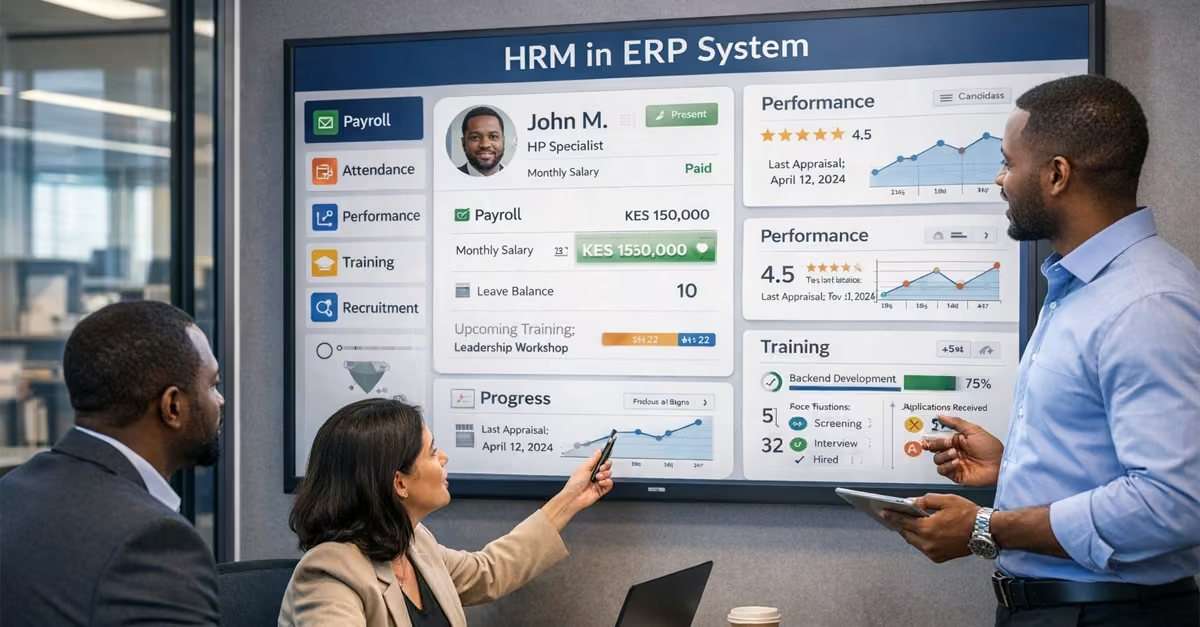
Modules are the components that make up ERP. Each of these components is designed to manage a specific business function while using a shared, centralized database. This modular design allows different departments to work together more effectively, ensuring information remains consistent, accurate, and available in real time. The following are the modules of ERP as per Ian (2025)
a. Human Resource Management (HRM)
Data related to employees, such as training data, performance evaluations, payroll, attendance, and recruitment details, is being centralized using the human resource management module. Integrating human resource data into the ERP system helps organizations manage their workforce more efficiently, reduce administrative workload, and comply with labor laws. Additionally, this centralized approach allows businesses to plan staffing needs better and align employee management with overall business goals, especially as teams continue to grow.
b. Financial Management and Accounting
The financial management module provides the backbone of most ERP systems. It handles essential accounting activities, including the general ledger, accounts payable and receivable, budgeting, cash flow tracking, and financial reporting.
By automating financial processes and consolidating data from across the business, this module improves accuracy. It helps organizations meet regulatory and reporting requirements. It also provides management with up-to-date financial information, which is useful for planning, control, and long-term growth.
c. Supply Chain Management (SCM)
The supply chain management module manages the movement of goods, services, and information from suppliers through to customers. This module enhances business processes in procurement, supplier coordination, order handling, and logistics management. By offering real-time visibility into supply chain operations, ERP systems help organizations minimize delays, control costs, and improve reliability.
d. Inventory and Warehouse Management
An organization must manage its inventory effectively to ensure profitability and proper working capital. The inventory and warehouse management module enables an entity to monitor inventory levels, track stock movements, and manage warehouse activities more effectively. By providing real-time stock availability information, ERP systems reduce the risk of overstocking or running out of essential items.
e. Customer Relationship Management (CRM)
The CRM module is designed to manage customer-related activities, including sales processes, customer communication, order history, and after-sales support. It records and organizes information about leads, customers, and service interactions. When integrated with other ERP modules, CRM helps businesses improve customer service, identify new sales opportunities, and build strong, long-term customer relationships by leveraging accurate, shared data.
f. Business Intelligence and Reporting

These are ERP tools that are now mainly used for reporting. This tool analyzes data collected from all modules to produce reports, dashboards, and performance indicators. This component turns raw business data into clear, actionable insights that managers can easily understand. Organizations use this tool to monitor trends and evaluate performance, making informed decisions and ensuring smooth daily operations.
How ERP Improves Business Efficiency
By replacing fragmented, manual, and disconnected processes with one integrated digital system, ERP systems play an essential role in improving business efficiency. Many organizations in Kenya experience inefficiencies due to repeated tasks, slow information flow, and limited visibility between departments. The following are ways that ERP enables efficiency.
- Automating Business Processes – ERP systems automate routine and repetitive activities such as data entry, invoicing, payroll management, and inventory updates. This reduces the time and effort needed to complete daily tasks while lowering the risk of human error.
- Reducing Duplication of Work – In a business that uses separate software in different departments, the same information is often entered multiple times, leading to wasted effort and inconsistent data. ERP systems remove this duplication by ensuring information is entered once and shared across all relevant areas.
- Improving Data Accuracy and Consistency – Because ERP systems operate using a single, centralized database, all departments access the same up-to-date information. This greatly improves data accuracy and reduces differences between reports. Reliable data is essential for an organization to comply with regulatory requirements.
- Enhancing Communication across Departments – ERP systems improve internal communication by providing a shared platform where departments can view and use relevant information in real time. For instance, employees in finance, procurement, and human resources can work together more effectively without relying on email or manual data transfers.
- Speeding up Business Operations – ERP enhances workflows in an entity and offers immediate access to information. This led to a significant reduction in delays in both decision-making and execution. Processes such as order handling, approvals, and reporting are completed more quickly, enabling businesses to respond faster to customers and changing market conditions.
- Supporting Real-Time Reporting and Decision–Making – Real-time dashboards and reports produced by ERP systems provide managers with an overview of financial performance, inventory status, workforce information, and operational trends. This allows leaders to identify potential issues early and make decisions based on current, accurate data rather than outdated reports.
Emerging Trends in ERP Adoption in Kenya

As ERP systems become more important in driving business transformation in Kenya. Many trends have emerged that influence how businesses adopt and use this technology. Understanding these developments helps businesses plan and gain a competitive edge in Kenya’s changing economic environment. A study by Miriam (2025) highlights the following trends in ERP adoption.
- Rise of Cloud-Based ERP Solutions
One of the most noticeable trends in Kenya is the move away from traditional on-premises ERP systems toward cloud-based platforms. Cloud ERP offers key benefits such as lower initial costs, easier scalability, remote system access, and reduced maintenance requirements. These advantages make advanced ERP systems more affordable for both small and medium-sized enterprises and large organizations. For businesses operating across different locations or supporting remote work, cloud ERP enables real-time data access and collaboration from anywhere.
- Integration of AI and Machine Learning
One feature of ERP is the gathering and analysis of data, then providing insights through dashboards to managers and decision-makers. Businesses are incorporating ERP, artificial intelligence, and machine learning features to support advanced data analysis and smarter decision-making. Companies in Kenya are beginning to use these capabilities to predict demand, identify unusual operational patterns, and improve processes across finance and supply chain management. This incorporation enables an entity to be proactive in decision-making and good at forecasting.
- Expansion of Mobile ERP Access
In Kenya, mobile access to ERP systems is becoming more common. Businesses can use smartphones and tablets to access ERP and continue to grow in business settings. This innovation enables managers and employees who are out of the office to easily access information, such as approving transactions, checking inventory levels, or reviewing performance dashboards. This trend is particularly important for organizations with field-based operations or teams working across multiple locations, as it enables faster decision-making and greater operational flexibility.
- Industry-Specific ERP Customization
There is greater business demand for shifting from general-purpose ERP to specialized ERP solutions for manufacturing, retail, logistics, agribusiness, and professional services. These industry-focused ERP solutions include built-in processes and features tailored to sector-specific needs, such as production planning tools for manufacturers and point-of-sale integrations for retailers. This customization reduces implementation time and ensures the system closely matches actual business requirements.
- Growing Emphasis on Automation
This is one of the emerging issues in ERP: in today’s business world, ERP can automate more complex workflows such as payroll management, supply chain scheduling, invoice processing, and regularity reporting. By minimizing manual effort and streamlining repetitive tasks, automation improves accuracy and enables employees to focus on higher-value work.
Read Also: Fintech Innovations: How Technology is Changing Financial Strategies
Conclusion
For Kenyan businesses, Enterprise Resource Planning (ERP) systems are a critical tool for entities aiming to improve efficiency, enhance governance, and achieve growth in this digital age. Organizations can use ERP in various areas of their operations, including finance, human resource management, supply chain management, inventory management, and customer relationship management. As a lot of businesses struggle with challenges such as disconnected systems, manual processes, limited access to reliable data, and operational inefficiencies in the above areas, using the ERP systems helps resolve these challenges by bringing core business functions together within a centralized platform that supports real-time information sharing, automation, and better decision-making. A business that uses ERP systems experiences greater efficiency in its operations, as it enables automation of processes, reduces duplication of work, improves data accuracy, and enhances communication. You can use different types of ERP in your business, including cloud-based ERP, which is hosted on the software provider’s servers; on-premises ERP, which is installed on a business’s computers; industry-specific ERP, designed to meet the unique requirements of a particular sector; and hybrid ERP. Leverage enterprise resource planning in your business to improve operational efficiency now.