In a digital world where privacy is increasingly under siege, encryption stands as one of the most vital tools we have to protect our data. From the text messages we send to our loved ones, to the bank transactions we carry out online, encryption helps ensure that our sensitive information stays secure. But there’s a growing threat to that security—encryption backdoors. These so-called “solutions” are often presented as a way to help law enforcement catch criminals, but in reality, they compromise the safety and privacy of everyone who relies on encrypted communication.
In this post, we’ll explore what encryption backdoors are, why they pose serious risks to individuals and society, and what can be done to protect our digital privacy. We’ll also examine some of the political forces driving the push for backdoors and consider whether these measures are actually effective—or merely symbolic.
What Is Encryption and Why Does It Matter?
Before diving into backdoors, it’s important to understand how encryption works and why it’s so critical. Encryption is the process of encoding information in such a way that only authorized parties can access it. In the digital realm, this often involves converting readable data into scrambled code that can only be deciphered with a special key.
There are two main types of encryption:
- Symmetric Encryption: Uses the same key for both encryption and decryption.
- Asymmetric Encryption: Uses a pair of keys—one public and one private.
End-to-end encryption (E2EE) is considered the gold standard. With E2EE, messages are encrypted on the sender’s device and can only be decrypted on the recipient’s device. No intermediary, not even the service provider, has access to the content. Popular applications like Signal and WhatsApp employ this form of encryption to safeguard user privacy.
Encryption isn’t just about protecting secrets. It’s fundamental to:
- Safeguarding personal communications
- Securing financial transactions
- Protecting medical data
- Ensuring national security infrastructure
- Enabling freedom of expression and privacy for vulnerable groups
In short, encryption is a cornerstone of trust in the digital age.
What Is an Encryption Backdoor?
An encryption backdoor is a built-in vulnerability that provides third parties—typically government agencies or law enforcement—with access to encrypted data. This access might be implemented in several ways, including:
- Special software keys
- Hardcoded vulnerabilities
- A “middlebox”, which decrypts the data at a central server before re-encrypting it for the recipient
While the concept may sound simple, the implications are anything but. Backdoors are often framed as a tool for combating terrorism, child exploitation, or organized crime. In theory, only “authorized” parties would be allowed to use the backdoor. But in practice, any vulnerability can—and eventually will—be exploited by unauthorized actors.
The Middlebox Problem
One popular method of implementing a backdoor is the encryption middlebox. Here’s how it works:
- A message is sent from Device A.
- The middlebox server intercepts the message.
- It decrypts the message to inspect or store it.
- It then re-encrypts the message and sends it to Device B.
This setup completely bypasses end-to-end encryption. Even though users may believe their messages are secure, they’re actually being decrypted at a central point—a highly attractive target for hackers and surveillance programs.
While middleboxes might provide a temporary advantage for surveillance or moderation, they significantly reduce overall security. Any central point where data is decrypted becomes a single point of failure.
Why Encryption Backdoors Are a Security Nightmare
Imagine you’re going on vacation and ask a friend to water your plants. Instead of giving your friend the key directly, you hide it under a rock. Your friend knows where to find it, but so might a burglar who notices you’re away.
This analogy illustrates the risk of encryption backdoors. Once a method for accessing encrypted information is created—even if it’s meant for use only by trusted parties—there’s no guarantee that others won’t find and exploit it.
1. Vulnerabilities Are Not Containable
The moment a backdoor exists, it becomes a target. Cybercriminals, nation-state hackers, and other malicious actors will attempt to find and exploit it. And history shows they often succeed. From the NSA’s EternalBlue exploit to the SolarWinds breach, vulnerabilities—whether leaked or discovered—can be catastrophically damaging.
2. Undermines User Trust
Encryption backdoors send a message to users: you cannot trust your communication tools. This erosion of trust can drive people away from mainstream, regulated platforms and into less secure or more dangerous corners of the internet.
3. Disproportionate Harm to Law-Abiding Citizens
Criminals and terrorists, the very people governments claim to target, can still use custom-built encryption tools or open-source libraries to communicate. These tools are publicly available and immune to mandated backdoors. In contrast, ordinary citizens using commercial services are the ones whose privacy is compromised.
4. Chilling Effect on Free Speech and Dissent
End-to-end encryption protects journalists, activists, and marginalized groups. In authoritarian regimes, where dissent is punished, encryption is often the only way to communicate safely. Weakening encryption makes it easier for oppressive governments to surveil and silence opposition.
The Political Push for Backdoors
Many governments around the world are lobbying for mandatory encryption backdoors, often under the guise of public safety. For example:
- In the United States, the EARN IT Act has been criticized for potentially enabling widespread surveillance.
- In the UK, the Online Safety Bill raises concerns about forcing tech companies to scan encrypted messages.
- Australia’s Telecommunications and Other Legislation Amendment (Assistance and Access) Act 2018 compels companies to build capabilities for government access.
The motivations behind these efforts are often framed around protecting children, fighting terrorism, or national security. While these goals are noble, the methods are flawed.
A major issue is that no secure backdoor exists. The notion of a “safe” backdoor that only “good guys” can use is a myth. As Bruce Schneier, a renowned cryptographer, put it:
“You can’t build a backdoor that only the good guys can walk through.
Case Studies and Real-World Consequences
1. Apple vs. FBI (2016)
After the San Bernardino terrorist attack, the FBI demanded that Apple unlock the attacker’s iPhone. Apple refused, arguing that creating a backdoor would jeopardize the security of all iPhone users. This sparked a national debate about privacy vs. security. Ultimately, the FBI found a third-party method to access the phone—proving that backdoors aren’t always necessary.
2. WhatsApp and Indian Government
India’s government has repeatedly asked WhatsApp to trace the origin of messages, which would effectively require breaking its end-to-end encryption. WhatsApp has resisted, citing user privacy and the technical impossibility of complying without compromising the platform.
3. NSO Group and Pegasus Spyware
The Israeli firm NSO Group developed Pegasus, spyware capable of infiltrating phones even with encryption. While it was marketed for use against terrorists, it was used to target journalists, activists, and politicians. This illustrates how surveillance tools can easily be misused.
Technical Challenges of Building Backdoors
Even if backdoors were theoretically acceptable, their implementation is a technical nightmare. Some key issues include:
- Key Management: How do you ensure the government keys are protected?
- Access Control: Who is authorized to use the backdoor? How is access logged and audited?
- Cross-Border Jurisdictions: What happens when multiple governments demand access?
Adding backdoors into widely-used services requires complex architecture changes that introduce more points of failure and increase attack surfaces.
The Myth of “Nothing to Hide”
A common argument in favor of surveillance is, “If you have nothing to hide, you have nothing to fear.” This mindset is dangerously simplistic. Privacy is not about hiding wrongdoing; it’s about preserving dignity, freedom, and autonomy.
We lock our doors, not because we’re criminals, but because we value our space and security. The same principle applies online.
What You Can Do to Protect Your Privacy
1. Choose Secure Platforms
Use services that provide end-to-end encryption by default. Examples include:
- Signal
- ProtonMail
- Tutanota
2. Update Devices Regularly
Software updates often include critical security patches. Keeping your apps and OS up to date is a simple but powerful defense.
3. Use Strong Passwords and Multi-Factor Authentication
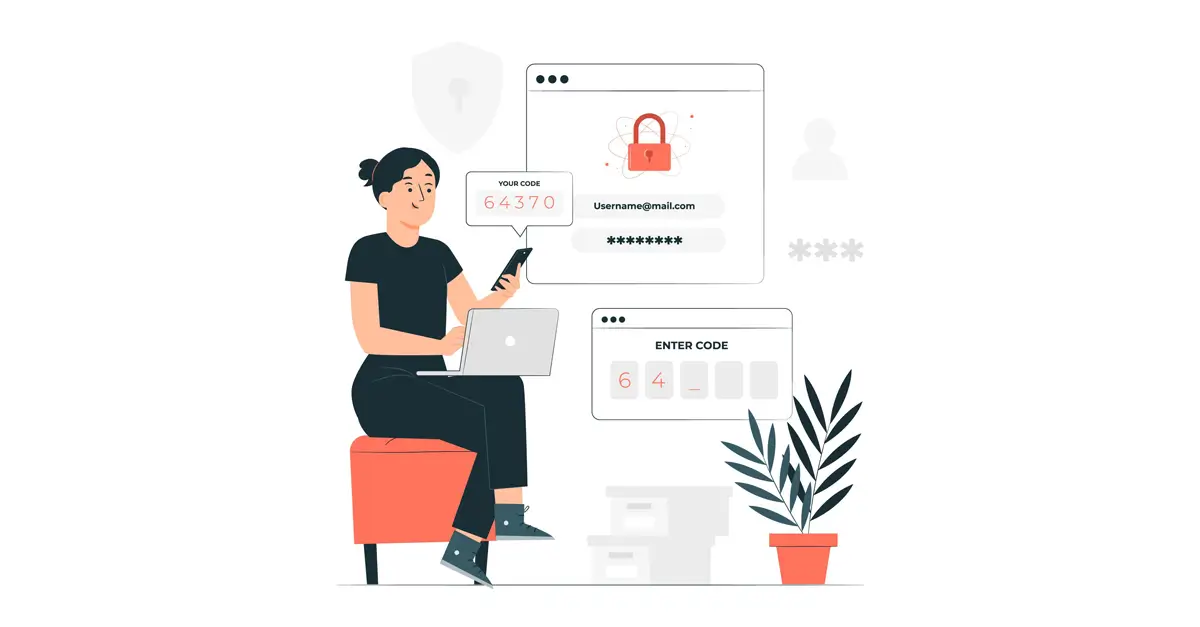
Even the best encryption won’t protect you if your accounts are easily compromised. Use a password manager and enable multi-factor authentication (MFA).
4. Support Pro-Privacy Legislation
Get informed about local laws affecting digital privacy. Support organizations like:
- Electronic Frontier Foundation (EFF)
- Privacy International
- Access Now
5. Contact Your Representatives
Let your elected officials know that you oppose encryption backdoors. Advocate for laws that preserve digital privacy rather than erode it.
Final Thoughts: Encryption Is Not the Enemy
In the digital era, privacy is power. Encryption is not a threat to public safety—it is a pillar of a secure society. From securing medical records and financial data to protecting journalists and vulnerable communities, encryption serves the public good in countless ways.
Creating backdoors doesn’t just weaken a single service—it compromises the integrity of the entire digital ecosystem. And while the intention might be to catch criminals, the real effect is to endanger the rest of us.
As governments continue to push for increased access, it’s crucial for citizens to push back. Our data, our messages, and our lives deserve protection. And encryption—without backdoors—is one of the few tools we have left to ensure that protection.