Artificial Intelligence is changing how businesses market their products, interact with customers, and make important decisions. Technology that once seemed advanced or limited to large companies is now widely available to businesses of all sizes. From automating everyday tasks to predicting customer behavior, AI is reshaping marketing by making campaigns smarter, faster, and more effective.
In today’s businesses, demands marketing that is quick, accurate, and personalized. These are areas where human teams alone often struggle, especially when dealing with large amounts of information. AI-powered marketing tools help fill this gap by analyzing large sets of data within seconds. They can spot trends and customer behaviors that would be difficult for people to find on their own, as per Roger (2025). This allows businesses to understand customers more clearly, what they like, what they need, and the best ways to reach them.
A study done by Annette (2025) highlights that “AI can improve daily marketing operations. It can schedule social media posts, group audiences into the right categories, create basic content, and adjust advertising budgets for better results.” By handling these repetitive or complex tasks, AI allows marketers to focus more on strategy, creativity, and building strong customer relationships.
Understanding AI-Powered Marketing Tools
AI-powered marketing tools are software programs that use artificial intelligence to help businesses plan, run, and improve their marketing activities. These tools can analyze data, predict customer behavior, automate routine tasks, and even create content. By doing so, they allow marketers to work faster, reduce errors, and make more informed decisions. At their core, these tools blend data analysis, machine learning, and automation to deliver smarter and more personalized marketing results.
Instead of relying solely on manual work, AI tools analyze customer actions, buying habits, and online behavior to uncover insights that people might miss. This helps businesses understand their audience better and craft messages that match customer needs and interests. Businesses can use artificial intelligence to suggest products, determine the best time to send an email, and identify trending topics online, thereby making marketing more targeted and effective.
Most importantly, AI-powered marketing tools allow businesses to manage campaigns with greater accuracy. In this way, they reduce guesswork, improve consistency, and ensure that decisions are based on real data rather than assumptions. By understanding how these tools work, businesses can boost engagement, save time, and achieve stronger marketing results.
Read Also: Understanding AI Agents: The Digital Minds Behind Modern Technology
Core Features of AI-Powered Marketing Tools
As AI becomes a bigger part of modern marketing, it brings several powerful features that help businesses work more efficiently and connect with customers in smarter ways. Understanding these core functions shows how AI turns everyday marketing tasks into strategic, data-driven actions. Below are the common features of artificial intelligence-powered marketing tools.
- Data interpretation: AI can analyze both organized information, such as website statistics and customer relationship management data. It can also interpret the unstructured content, such as social media comments and customer reviews. It finds patterns and trends that would take humans much longer to uncover. This helps marketers understand customer groups, behaviors, and emerging trends with much higher accuracy.
- Content generation and optimization-AI tools can help create and improve marketing through content creation by suggesting headlines, ad text, images, layouts, and different versions for testing. They review performance results and automatically adjust content over time to improve engagement and conversions.
- Personalization at scale-AI makes it possible to deliver personalized messages to different customer groups based on their behavior, preferences, past actions, or even factors like time of day and location. This level of personalization increases engagement without requiring marketers to manually tailor messages for each group.
- Predictive modeling: AI can forecast future customer actions, such as who might click an ad, make a purchase, or stop engaging. With these predictions, businesses can take proactive steps to increase conversions and reduce customer loss.
- Automation-AI can coordinate marketing activities across multiple channels, including email, search, social media, and digital ads. It can automatically launch campaigns when customers show certain behaviors, which ensures that the information is being delivered at the right time and to the right audiences.
Benefits of AI-Powered Marketing Tools
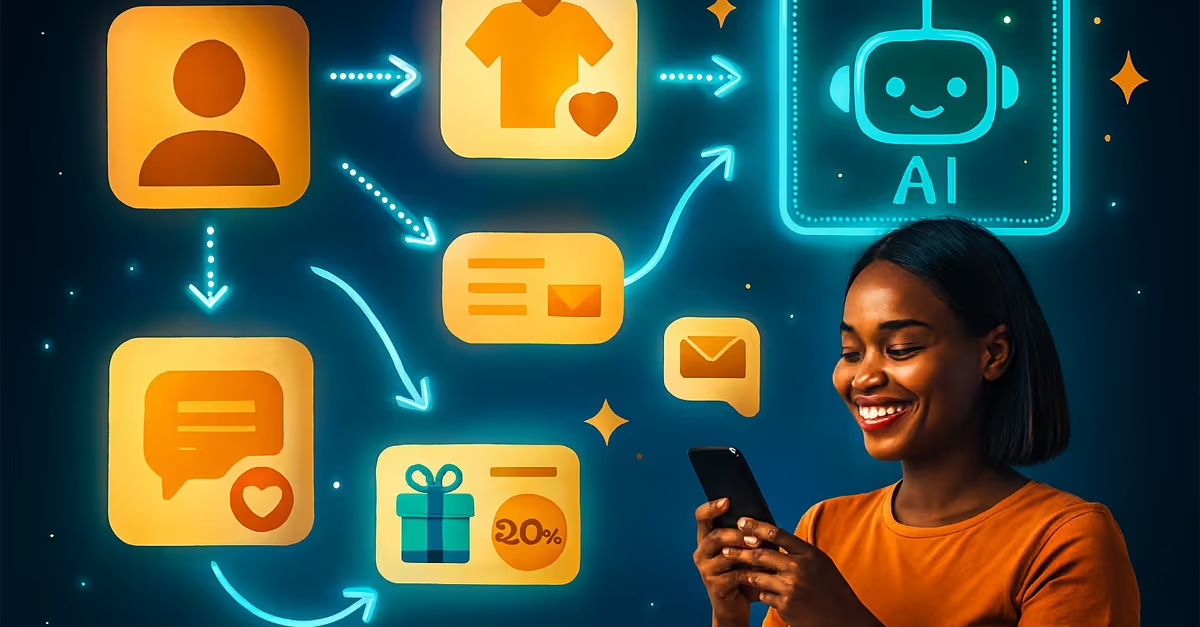
As more businesses integrate AI into their marketing activities, the technology offers clear advantages that improve performance and support smarter decision-making. A study by Neal (2025) highlights the following benefits a business can gain from using AI-powered tools in marketing.
- Deeper Customer understanding.
One step of business success is understanding your customers. AI-powered marketing tools help your business understand its customers better by analyzing behavior, preferences, and engagement patterns. Additionally, it can group audiences by behavior, such as loyal buyers, occasional shoppers, or browsers. This level of understanding allows marketers to design strategies that truly match the needs and interests of each group.
- Highly Personalized Campaigns
One of AI’s biggest strengths is its ability to deliver personalized messages at scale. Instead of sending generic content, AI creates tailored product recommendations, customized messages, and relevant offers for each individual. This makes marketing feel more human, boosts engagement, and increases conversions.
- Better Timing and Targeting
AI helps marketers reach customers at the right moment. By studying when people usually open emails or browse online, AI can suggest the best time to send messages. This improves open rates, click-through, and overall campaign success by aligning communication with customer behavior.
- Improved Marketing Efficiency
AI automates many time-consuming business tasks, including content testing, audience segmentation, and campaign optimization. This allows marketing teams to work faster and launch more campaigns with fewer delays. Even small businesses benefit, as AI helps them compete more effectively with limited teams or budgets.
- Stronger Return on Investment (ROI)
AI helps marketers use their budgets more wisely. It identifies which ads perform well, shifts spending toward high-performing sections, and recommends the best creative options. Predictive analytics also identifies people most likely to convert, helping businesses focus their resources where they matter most and improve overall ROI.
Practical Areas Where You Can Use AI in Marketing
AI-powered marketing tools can be applied in several key marketing areas, helping businesses save time, increase efficiency, and boost results. Below are the main areas where AI can make a significant impact, as per Emily (2025)
a. Content Creation
In today’s markets, creating content about your business across various social media platforms can help you gain new customers and improve brand awareness. Content creation mainly involves developing written, visual, or audiovisual content that engages audiences, communicates a brand’s message, drives conversions, and pulls audiences.
AI tools can help generate high-quality content quickly, including blog posts, social media captions, product descriptions, and ad copy. They can suggest headlines, optimize readability, and propose content ideas based on trending topics, allowing marketers to focus more on strategy and creativity.
b. Social Media Management
Social media management is the process of creating, scheduling, analyzing, and engaging with content posted on social platforms to build a brand’s presence and interact with its audience. In today’s business world, most targeted clients are found on social media, thus better management is required to attract them.
AI simplifies social media management by scheduling posts, analyzing engagement, and identifying the best times to publish content. It can also monitor conversations, track brand mentions, and suggest responses, helping businesses maintain consistent and meaningful interactions with their audience.
c. SEO and Analytics
Search Engine Optimization (SEO) is the practice of improving a website’s visibility in search engines. At the same time, analytics involves measuring and interpreting data to make informed marketing decisions. A well-optimized website can help your business attract more clients.
AI-powered tools can optimize websites for search engines by analyzing keywords, backlinks, and content performance. They also provide actionable insights through analytics, highlighting trends, audience behavior, and opportunities for improvement, ensuring marketing strategies are data-driven.
d. Email Marketing Automation
Email marketing automation is the use of software to send targeted and timely messages to specific segments of an email list without manual intervention. AI enables personalized email campaigns that adjust content, send times, and frequency based on user behavior. By segmenting audiences and predicting engagement patterns, businesses can deliver more relevant messages that increase open rates, click-through, and conversions.
e. AI-Powered Advertising Platforms
AI-powered advertising platforms use artificial intelligence to optimize digital ads, targeting, bidding, and performance analysis across multiple channels. AI enhances advertising campaigns by automatically optimizing bids, targeting the right audience, and testing various ad variations. These platforms ensure that marketing spend is used efficiently and campaigns continuously improve based on real-time data.
Read Also: Leveraging Artificial Intelligence for Small Business Success
Useful AI Tools for Marketing
a) Jasper AI – Content Creation for Marketing
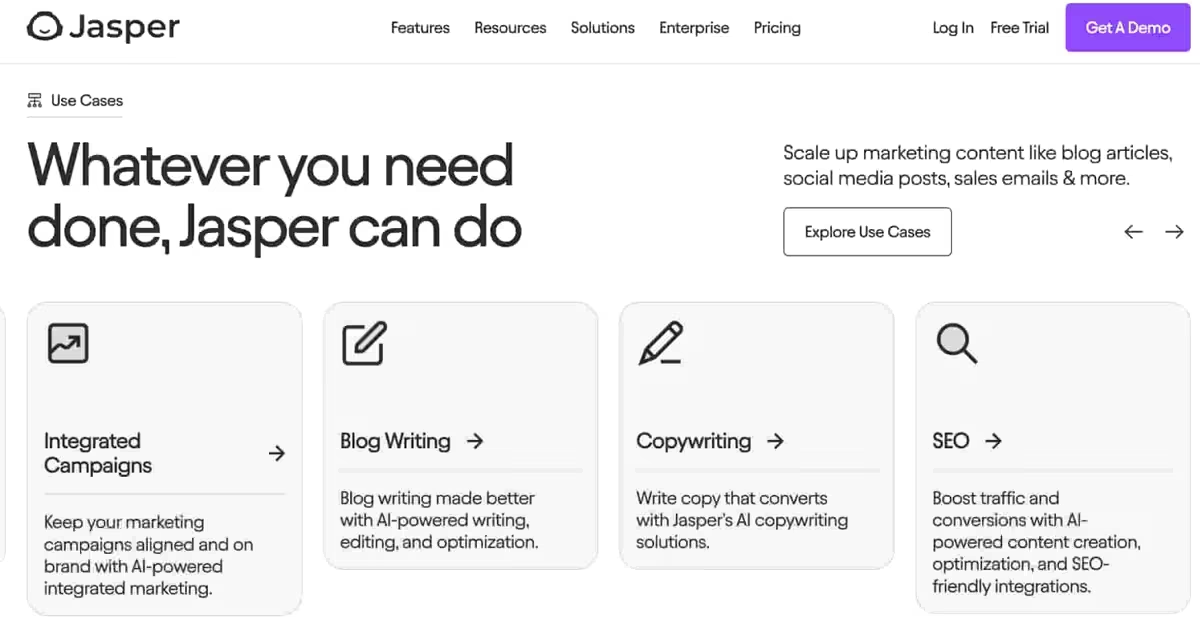
Jasper AI is widely used in marketing to create high-quality written content at scale. Marketers rely on it to draft blog posts, social media captions, ad copy, email newsletters, landing page text, and product descriptions. It speeds up the content production process and helps maintain consistent brand messaging.
Jasper AI offers a 7-day free trial, with its paid plans starting at $49 per month for the Creator plan, which includes core writing features. The Teams plan starts at $69 per month and offers more collaboration and content management tools for small marketing teams. Larger organizations can access a custom-priced Business plan that includes advanced features, higher usage limits, and tailored support.
b) Lexica Art
Lexica Art is used in marketing to generate branded images, blog thumbnails, social media graphics, and ad visuals. Marketers use it when they need quick creative assets without involving designers. It helps create consistent visuals for content marketing, social media, and digital ads. Lexica has both free and paid options, depending on image quality and usage needs.
c) Notion AI – Marketing Planning & Content Workflows
Notion AI supports marketing teams by helping them plan campaigns, organize content calendars, brainstorm ideas, and draft initial content. It is used to structure marketing workflows, manage tasks, and quickly outline social media or blog content. The tool improves organization and collaboration within marketing teams.
Notion offers a free plan with basic features and a small AI trial of about 20 responses per workspace. For complete AI tools and stronger team features, the Business plan costs $20/user per month with annual billing or $24/user per month with monthly billing. This plan unlocks all AI features and advanced collaboration and security tools.
d) Albert.ai – Automated Digital Advertising
Albert.ai is an AI-powered digital advertising platform used for managing and optimizing paid campaigns. It helps marketers automate audience targeting, bid adjustments, creative testing, and ad placement across Google, Facebook, and other channels. The tool continuously learns from performance data to maximize ad ROI. Albert.ai is a premium, enterprise-level solution used mainly by brands running large campaigns.
e) Surfer SEO – SEO-Driven Content Marketing
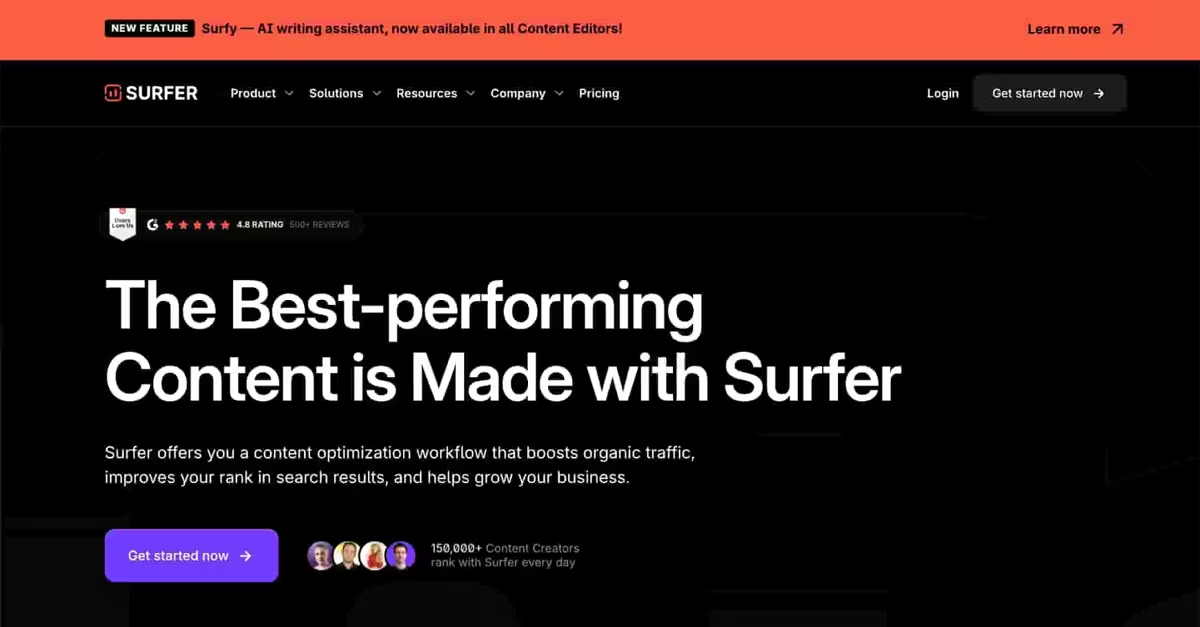
Surfer SEO is a core tool for SEO marketing teams. It analyzes keywords, competitor content, and search intent, then guides marketers on how to optimize their articles for higher Google rankings. It’s used to boost organic traffic, refine content structure, and identify SEO gaps.
This platform provides several subscription plans designed for different levels of marketing needs. The Essential plan starts at about $99 per month. For teams producing larger volumes of content, the Scale plan costs about $219 per month. For agencies or enterprises handling high-volume SEO operations, Surfer also offers a customized Enterprise plan, with pricing based on usage and team requirements.
f) FullStory – Conversion Optimization & User Behavior Insights
FullStory is used in digital marketing to understand how users behave on websites and apps. Marketers use it to identify friction points in the customer journey, discover where visitors drop off, and improve campaign landing pages to increase conversion rates. It enables data-driven marketing decisions based on real user interactions. FullStory offers a freemium model, with a free plan that includes basic analytics. At the same time, more advanced features, higher data limits, and team collaboration tools are available through paid plans.
g) Zapier- Marketing Automation
Zapier is an essential tool used in marketing automation. It connects marketing tools, for example, sending leads from forms to email lists, automatically posting content to social media, or triggering follow-up emails after someone takes an action. Marketers use it to eliminate repetitive tasks and ensure campaigns run smoothly.
Zapier offers a free plan with 100 tasks per month and basic single-step automations. For more features, the Professional plan starts at about $19.99/month on annual billing. It adds multi-step automations, more tasks, and premium apps. The Team plan starts at around $69/month on a yearly billing cycle. It includes shared access, collaboration features, and higher task limits. For large companies, Zapier also offers a customizable Enterprise plan with pricing based on specific needs.
h) Cap Cut – AI Video Editing for Marketing
Cap Cut is a popular AI-powered video editing app that lets marketers create professional-quality videos quickly, especially for social media platforms like TikTok, Instagram, and YouTube. It offers features such as automated captions, filters, transitions, background music, and AI-assisted video effects, helping brands produce engaging video content without advanced video production skills. Marketers use Cap Cut to make social media clips, short ads, and promotional videos efficiently, which is essential in content-driven marketing strategies.
Cap Cut has a free plan for basic editing, but the advanced features require a subscription. The Standard plan for mobile phones costs about $5.99/month and includes premium filters, no watermarking, and extra tools. The Pro plan, available on mobile, desktop, and the web, costs around $19.99/month and adds AI editing, 4K exports, cloud sync, and a complete asset library. Additionally, for agencies and teams, the Teams plan costs about $24.99/month per user, offering shared libraries, collaboration features, and team workflows as per Ebubechukwu (2025)
Conclusion
AI-powered marketing tools are a game-changer for businesses looking to market. They offer real benefits, such as a deeper understanding of your customers, the ability to deliver personalized advertisements, greater marketing efficiency through automated marketing, and better timing and targeting of information. You can use an AI-powered marketing tool across different areas of your marketing: content creation, social media management, SEO analysis, and email marketing. In the above categories, you can use a variety of AI tools, for instance, Jasper AI for content creation, Notion for planning marketing campaigns, Zapier for automating your marketing tasks, CapCut for all video editing, Full Story for understanding user behaviors, and Albert, AI, among others. Leverage an AI-powered marketing tool and help your business take marketing to the next level.