
Investing is now easier to access than ever before, but many people still feel unsure about how to start or how to grow the money they’ve already invested. The financial world moves quickly, there is plenty of information to sort through, and the number of choices can feel overwhelming. This is where investment brokers play an important role — they provide structure, guidance, and a clearer path forward.
For beginners interested in investing, a broker serves as a knowledgeable guide in a new environment. They help you understand basic concepts, walk you through your first trades, and explain how different investment products work. With a broker, you don’t have to figure out the market alone, and your confidence grows as you learn. On the other hand, experienced investors also benefit from brokers, but for more advanced reasons. They may need powerful trading platforms, detailed research, or lower transaction fees. A skilled broker gives them the tools and insights they need to apply their strategies effectively and respond quickly to market changes.
Understanding Investment Brokers and How They Work
An investment broker is a professional or a platform that helps investors buy and sell financial assets such as stocks, bonds, and mutual funds. They act as a link between you and the financial markets, as per True (2025). Without a broker, investors cannot directly access trading exchanges, so brokers make it possible for you to invest, trade, and manage your portfolio with ease.
To understand how investment brokers work, we start by looking at what they do. When you place a trade, whether you want to buy a stock or sell a bond, you do this with the help of the broker. In that, the broker receives your instruction and executes it on your behalf in the market. In return, they earn money through commissions, service fees, spreads, or management charges, depending on their business model. Some brokers also offer research reports, financial planning, portfolio monitoring, and access to advanced analytical tools to help you make more informed decisions.
Additionally, brokers use powerful technology that connects directly to stock exchanges and trading networks. When you place an order, these systems check the price, find the best execution option, and complete the transaction, often within seconds. Modern brokerage platforms also keep your investment records safe, track your portfolio’s performance, and ensure all trades follow financial regulations.
Types of Brokers

Investors can choose from several types of brokers. Each broker is designed for different needs, experience levels, and investment styles. Understanding the strengths and limitations of each type helps you to choose a broker that matches your goals, budget, and preferred approach to managing your money. A study by Tim (2025) highlights the following types of brokers.
a) Full-Service Brokers
This is a type of broker that provides personalised, one-on-one support. They offer investment recommendations, retirement planning, portfolio reviews, and, sometimes, tax guidance. This option is ideal for investors who want practical support, customized financial plans, and a professional to guide them through important and complex decisions in the financial markets.
b) Discount Brokers
Discount brokers offer low-cost trading platforms with limited or no advisory services. Their main focus is to give investors affordable access to the market rather than personalized advice. They are a great fit for self-directed investors — people who prefer researching, selecting, and managing their own investments.
c) Robo-Advisors
Robo-advisors are automated, technology-driven platforms designed to manage your portfolio for you. They use algorithms to consider your goals, risk tolerance, and investment timeline. After this, they create a diversified plan to guide your portfolio. This type of broker appeals to tech-friendly investors or anyone who wants a simple, low-cost, and hands-off investing experience.
d) Specialized Brokers
Specialized brokers focus on specific types of investments such as forex, commodities, options, cryptocurrencies, or real estate. They provide customized tools, expert insights, and platforms suited to these markets. These brokers are best for investors who want to explore advanced strategies or niche investment opportunities.
e) Stockbrokers and Investment Advisors
Stockbrokers mainly carry out buy and sell orders on behalf of clients. They are ideal for active traders who primarily need fast, reliable trade execution. On the other hand, Investment advisors offer ongoing financial advice and portfolio management. They cater to clients looking for long-term guidance, strategy, and broader financial planning.
Read Also: Shares Investment in Kenya: Everything You Need to Know
Key Services Offered by Investment Brokers
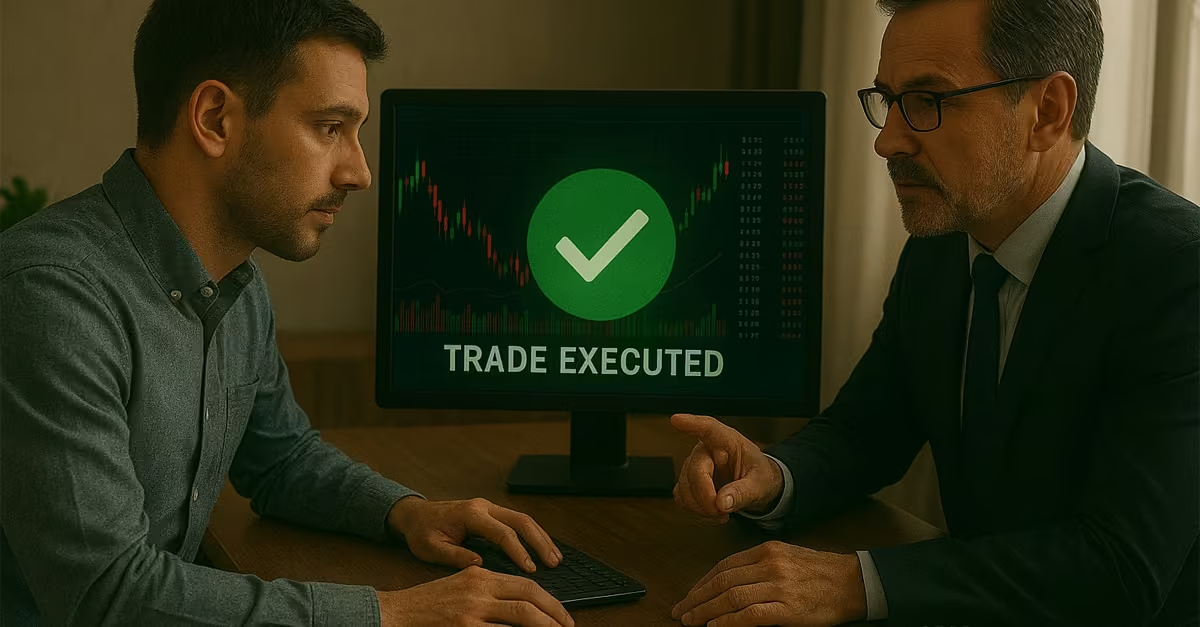
Investment brokers offer a variety of services that help both new and experienced investors manage their portfolios more effectively. These services make trading easier, improve decision-making, and give investors access to tools and insights that strengthen their overall strategy. The following are the services offered by Mette (2025)
- Trade Execution
Trade execution is the most essential service a broker provides. When you place an order to buy or sell an investment, the broker processes it through the correct exchange. A dependable broker ensures your trades are completed quickly and accurately, helping you secure the best available prices with minimal delays.
- Market Research
Many brokers give investors access to research reports, expert analysis, real-time market data, and investment insights. These resources help you understand market trends, compare opportunities, and make well-informed decisions based on reliable information rather than guesswork.
- Portfolio Management
Some brokers offer portfolio management services, which can include automated rebalancing or fully managed investment accounts. These services help you maintain a balanced, diversified portfolio that matches your goals, risk tolerance, and investment timeline, even if you prefer a hands-off approach.
- Advisory Services
Advisory services include personalized investment recommendations, financial planning, and strategic guidance. Brokers that offer these services help you choose suitable investments, set long-term goals, and adapt your strategy as market conditions change. This support is especially useful for investors who want expert input.
- Account Management Tools
Modern brokerage platforms come with digital tools that allow you to track your portfolio’s performance, analyze your holdings, monitor your fees, and manage transactions easily. These tools give you a clear, organized view of your investments and help you make confident, data-driven decisions.
Types of Brokerage Accounts
Understanding the different types of brokerage accounts is essential before choosing where to invest. Each account serves a specific purpose, carries its own rules, and offers unique advantages depending on your financial goals. The following are the types of accounts you may hold.
- Individual Taxable Accounts – An individual taxable account allows you to buy and sell various securities such as stocks, ETFs, mutual funds, and bonds without restrictions on contributions or withdrawals. However, any profits earned are subject to taxation based on your local tax rules.
- Retirement Accounts – Retirement accounts are designed to help individuals save and invest for their long-term financial future. In this account, they include contribution limits, withdrawal restrictions, and incentives to encourage disciplined, long-term investing. These accounts are best suited for individuals focused on building wealth slowly and tax-efficiently.
- Margin Accounts – Margin accounts allow investors to borrow from their broker to increase their buying power, enabling larger and more frequent trades. While this leverage can boost returns, it equally increases losses, making margin trading significantly riskier than standard investing. Margin accounts typically require higher approval levels, minimum balances, and ongoing monitoring of margin requirements. They are suitable only for experienced investors who fully understand leverage, interest costs, and maintenance margin rules.
- Custodial Accounts – Custodial accounts allow an adult, such as a parent, to open and manage an investment account for a minor. The adult controls the account until the child reaches the age of majority, at which point ownership is transferred to the child.
How to Choose the Right Investment Broker

Selecting the right investment broker is one of the most important decisions you’ll make as an investor. The right broker can make trading easier, reduce your costs, and support your long-term financial goals. To make a smart choice, it’s important to compare key factors that shape your overall investing experience. The following are the factors to consider, as per Akash (2025)
- Fees and Commissions-Broker fees determine how much a broker requires you to pay so that he can execute a trade on your behalf or maintain your account. Some brokers charge per-transaction fees, others charge monthly fees, and some offer zero-commission trading. Understanding how a broker charges helps you choose an option that fits your budget and your trading habits.
- Minimum Deposit Requirements-Many brokers set a minimum amount needed to open or keep an account active. These requirements can be very low or relatively high, depending on the platform. You are advised to choose a broker with a minimum deposit that aligns with your financial situation, so you can start investing comfortably and without pressure.
- Platform Features-A good trading platform should be easy to navigate, stable, and equipped with useful tools. Look for features like real-time market data, charting tools, mobile access, and educational content. The right platform should match your skill level.
- Customer Support-Reliable customer support gives you peace of mind when you need help. Check whether the broker offers support through chat, phone, email, or a help center. Strong support is especially valuable for new investors who may need assistance as they get familiar with the platform.
- Range of Tradable Assets-Each broker offers access to different types of investments. Your choice should match the assets you plan to trade, such as stocks, bonds, forex, cryptocurrencies, or commodities. You are advised to choose a broker with a wide selection that gives you more opportunities to diversify your portfolio.
- Security Standards-Security is a must when choosing a broker. Make sure the platform uses strong encryption, supports two-factor authentication, and complies with regulatory guidelines. High security standards protect your personal information, your funds, and your overall investment activity from potential threats.
Risks and Red Flags to Watch Out For
While brokers can offer valuable access to the financial markets, not all of them operate with transparency or integrity. Being aware of common risks and warning signs can help you avoid financial losses, scams, and unreliable platforms. Understanding these red flags ensures you protect your money and choose only reputable, trustworthy brokers. The following are the common red flags to monitor.
a) Unregulated Offshore Brokers
Unregulated or offshore brokers often operate outside the supervision of recognized financial authorities. Without proper oversight, your funds may not be protected, disputes may be difficult to resolve, and the broker could disappear without accountability. Always confirm that a broker is licensed and regulated by a reputable authority before you open an account.
b) Unrealistic Profit Guarantees
Any broker that promises guaranteed returns or very high profits with little or no risk should immediately raise suspicion. This is because the financial markets are unpredictable, and no legitimate broker can guarantee profits. These promises are common tactics used by scammers to attract investors into unsafe schemes.
c) Poor Platform Security
Weak security features, such as no encryption, missing two-factor authentication, or outdated systems, can expose your personal information and funds to cyberattacks. A trustworthy broker prioritizes strong security measures to protect your account at all times.
d) Hidden Fees
Some brokers advertise low trading costs but hide additional charges in the fine print. These can include withdrawal fees, inactivity fees, or unexpected commissions. Hidden fees can reduce your profits over time, so it’s important to review the full fee schedule before committing to any platform.
e) Ponzi-Style Schemes
Ponzi-style schemes are fake investment programs that promise high returns but do not earn real profits. Instead, the brokers use money from new investors to pay earlier investors, creating the illusion of a successful investment. These schemes eventually collapse when not enough new investors join or when too many people try to withdraw their money at once. You should avoid these kinds of brokers, as your money may be lost. To identify these kinds of brokers, Warning signs include unclear investment strategies, pressure to recruit new members, or rewards based mainly on referrals rather than real investment performance.
Common Mistakes New Investors Make With Brokers
Even with access to reliable brokers, new investors often fall into avoidable traps that can slow their financial progress. Being aware of these common mistakes helps you invest more carefully, make informed decisions, and build a stronger foundation for long-term success.
- Choosing Based on Low Fees Only
Low fees are appealing, but choosing a broker solely because it’s cheap can be risky. Some low-cost platforms may lack important features, strong security, and reliable customer support. It’s important to balance affordability with quality, safety, and the tools you need.
- Trading Without Understanding Risk
Many beginners start trading without fully understanding the risks involved in different investment products. Failing to manage risk can lead to major losses. Always research your investments, know your risk tolerance, and avoid putting money into investments you are not prepared to lose.
- Using Unverified Platforms
A common mistake is investing through unverified platforms. These may be fraudulent, poorly regulated, and technically unreliable. To protect your money, choose brokers registered with reputable regulators and with a proven history of reliability.
- Ignoring Terms and Conditions
Skipping the terms and conditions can leave you exposed to hidden fees, account restrictions, or unexpected rules. Taking the time to read and understand these details helps you avoid surprises and make informed choices.
- Neglecting Portfolio Diversification
Putting too much money into a single stock, sector, or investment type is another common mistake. Lack of diversification increases your risk and can magnify losses if one investment performs poorly. Building a well-balanced portfolio helps protect your funds and supports long-term growth.
Read Also: How to Start Investing in Government Securities
Conclusion
Investment brokers play an important role in guiding, protecting, and empowering investors. By understanding the different types of brokers, the services they offer, the regulations that govern them, and the fees involved, you gain the clarity needed to make smarter choices as you invest in the financial markets. To choose the right broker, consider factors such as fees, security, minimum deposit requirements, customer support, and the range of securities offered. There are different types of brokers to choose from, including discount brokers, robo-advisors, full-service brokers, specialized brokers, and stock and investment brokers. To make a trade, you need a broker account. To open this account, you need to follow simple steps that include choosing the right broker, completing an online application, verifying your identity, funding your account, and finally starting to trade. As you start trading, there are some mistakes you need to avoid, which may delay your progress and lead to losses. They include neglecting portfolio diversification, ignoring the terms and conditions, starting trading without understanding the risks, and choosing a cheap broker. Understanding investment brokers will help you avoid common mistakes investors make, enabling you to make informed decisions about what to invest in and thus meet your financial goals.