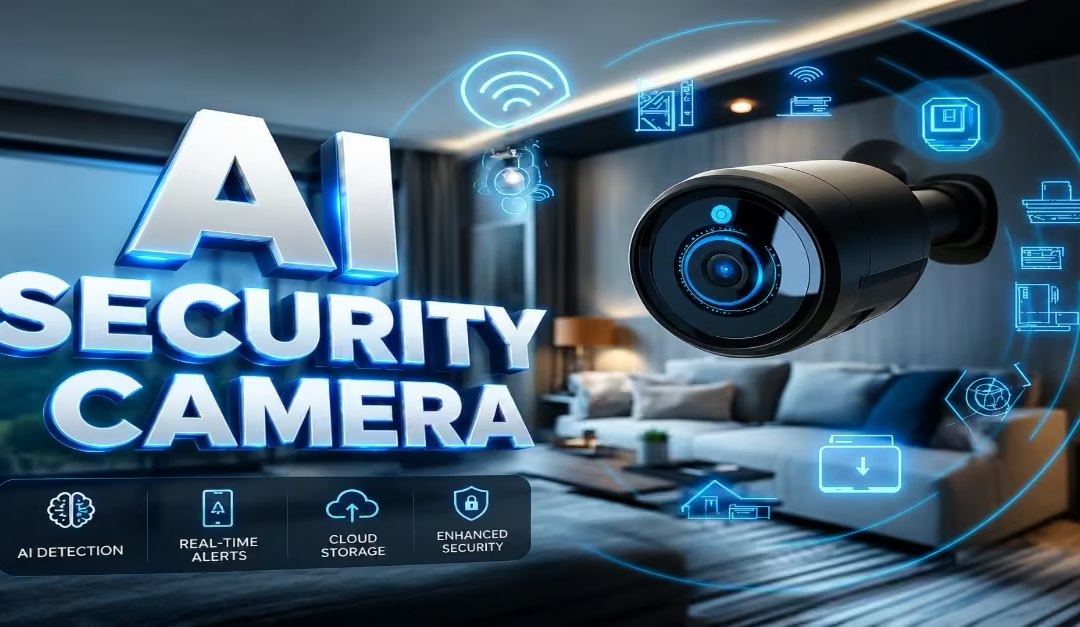
Security cameras have improved greatly over the years. Earlier surveillance systems were mainly used to record video footage, allowing users to review incidents only after they had happened. As technology advanced, modern CCTV and IP camera systems introduced features such as high-definition video, remote viewing, cloud storage, and mobile device access. These improvements have made security monitoring more practical and effective for homes, businesses, and public areas.
All this change has now been brought about by the use of artificial intelligence in security cameras. AI security camera systems can analyse video footage in real time, detect unusual behaviour, recognize faces, read vehicle license plates, and send intelligent alerts when potential security risks are identified. Instead of only recording what happens, these systems can understand and interpret the activity they capture, helping security teams respond more quickly and accurately. In this article, you will learn:
- What an AI security camera system is
- How it works, its main features
- Key benefits
- Common applications
- The important factors to consider before purchasing one.
What Is an AI Security Camera System?
An AI security camera system is a modern surveillance solution that combines traditional video recording with Artificial Intelligence (AI) technology. Like a standard CCTV camera, it captures and stores video footage, but it can also analyze and interpret what is happening within its field of view in real time, according to Pelco. These cameras usually use machine learning and advanced video analytics technologies to recognize patterns, identify objects, and understand activities as they occur, making surveillance more proactive and efficient.
Compared with traditional security cameras that record events, AI-powered cameras can automatically detect unusual behavior and alert security personnel when potential threats are identified. They can distinguish between people, vehicles, animals, and other objects, reducing false alarms caused by irrelevant movements. A study by Mammoth (2025) highlights that “AI cameras can also support features such as facial recognition, license plate recognition, people counting, and intrusion detection,” thereby providing a smarter, more accurate approach to security monitoring.
How Do AI Security Cameras Work?
AI security cameras use Artificial Intelligence (AI) and machine learning technology to analyse video footage in real time as it is being recorded. Instead of simply storing video for later review, the system continuously analyzes what is happening within the camera’s field of view to identify people, vehicles, objects, and various activities.
The AI is programmed to understand what is considered normal behaviour in a specific environment, either through built-in rules or by learning patterns over time.
When the camera detects activity that appears unusual or potentially suspicious, it automatically sends an alert to security personnel or the property owner. For example, it may detect an unauthorized person entering a restricted area, a vehicle moving where it should not be, unusual movement, or someone remaining in a location for an extended period. Because AI security cameras can distinguish between people, vehicles, animals, and other objects, they can significantly reduce false alarms and provide more accurate alerts than traditional security camera systems.
Read Also: Understanding AI Agents: The Digital Minds Behind Modern Technology
Key Capabilities of AI-Powered Security Cameras
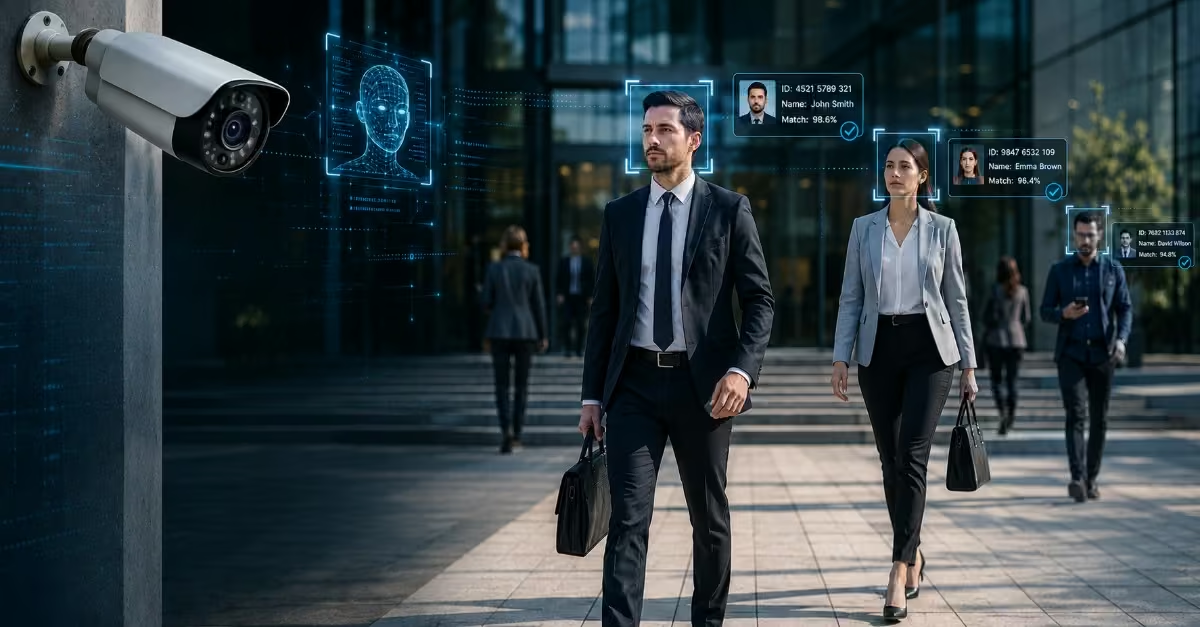
AI-powered security cameras do much more than record video footage. They use advanced AI and data analysis tools to monitor environments, identify potential security risks, and provide real-time information. A study conducted by Avigilon found the following capabilities of modern AI security cameras.
a) Object Detection
AI security cameras can recognize and differentiate between various objects within a monitored area, including people, vehicles, animals, and other items. This helps the system better understand what is happening in a scene and determine whether a detected object could pose a security concern. The ability to detect different types of objects helps AI cameras reduce false alarms and improve threat-detection accuracy.
b) Facial Recognition
Facial recognition technology allows AI cameras to identify individuals by analysing their facial features and comparing them with stored records. This feature can help recognize employees, authorized visitors, or individuals who may require special attention. When a match is detected, the system can automatically notify security personnel so they can take the appropriate action.
c) Unusual Activity Detection
One of the most useful features of AI surveillance systems is their ability to detect unusual behaviour. After learning what normal activity looks like in a specific location, the system can identify events that seem out of the ordinary. Examples include people loitering, unauthorized entry, suspicious movement, or objects left in unexpected places. When such activity is detected, the system sends an alert for immediate review.
d) License Plate Recognition
Many AI security camera systems include License Plate Recognition (LPR) technology that automatically reads and records vehicle registration numbers. This feature helps businesses and organizations monitor vehicles entering or leaving a property, identify approved vehicles, and detect unfamiliar or suspicious vehicles when necessary.
e) Occupancy and Crowd Monitoring
AI security cameras can count the number of people entering and leaving a building or area in real time. This helps organizations monitor occupancy levels, manage crowds more effectively, and comply with safety requirements. If the number of people exceeds a set limit, the system can automatically alert security personnel or management teams.
f) Object Tracking
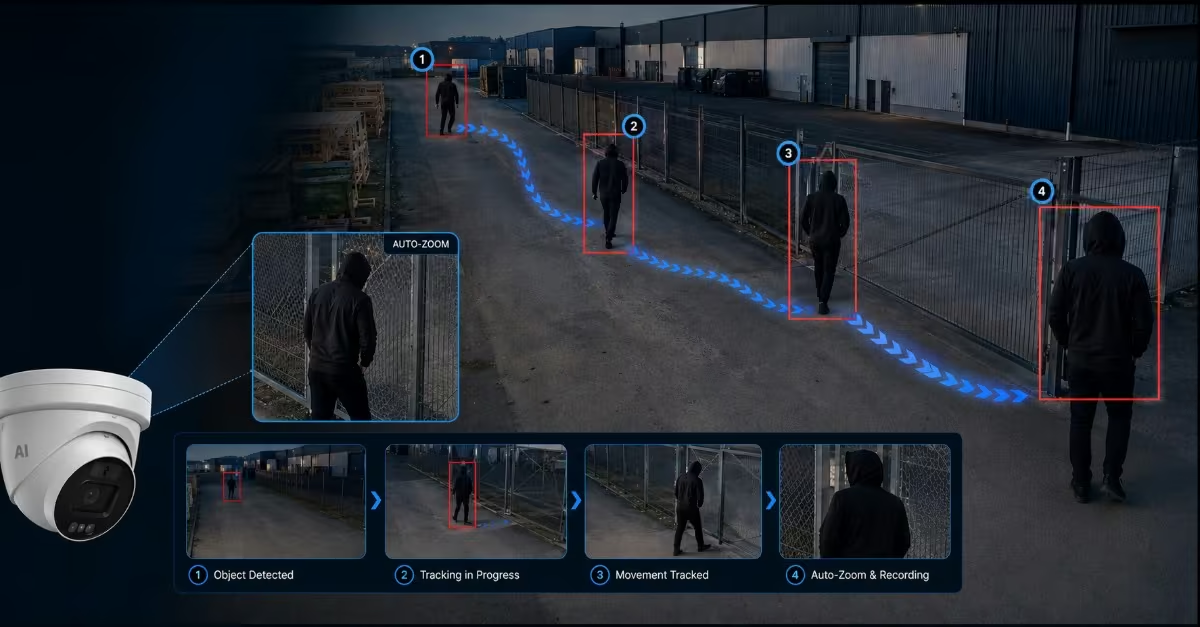
AI cameras can automatically track the movement of people, vehicles, or objects throughout a monitored area. For example, if someone enters a restricted area without permission, the camera can track their movements and continue recording. Some systems can also automatically zoom in to capture clearer images, making it easier to identify individuals and investigate incidents.
Benefits of AI Security Camera Systems
AI security camera systems offer several advantages over traditional surveillance solutions. By combining video monitoring with intelligent analysis, these systems help organizations strengthen security, reduce manual labor, and respond more effectively to potential threats. Below are some of the main benefits.
a) Enhanced Security
One of the greatest advantages of AI security cameras is their ability to identify potential threats in real time. By continuously analysing activities, behaviours, and patterns within a monitored area, the system can quickly detect suspicious events and send immediate alerts. This enables security personnel to respond more quickly and take action before a situation becomes more serious, helping protect people, property, and valuable assets.
b) Improved Efficiency and Productivity
Traditional surveillance systems often require security personnel to monitor multiple camera feeds for extended periods, increasing the risk of missed incidents due to fatigue or human error. AI security cameras automate much of this process by monitoring footage continuously and highlighting only important events. This reduces the workload on security teams and allows them to focus on genuine security concerns rather than routine activities or false alarms.
c) Faster Investigations
When a security incident occurs, AI-powered cameras can speed up and improve the efficiency of investigations. Instead of manually reviewing hours of recorded footage, security teams can use AI-generated alerts, event records, and search features to find specific people, vehicles, or activities quickly. This helps organizations respond to incidents more effectively and collect evidence more quickly.
d) Reduced False Alarms
AI surveillance systems are designed to recognize and differentiate between various objects and activities, including people, vehicles, animals, and environmental movements. As a result, they can eliminate many unnecessary alerts commonly triggered by traditional motion-detection systems. With fewer false alarms, security personnel can focus their attention on genuine security threats.
e) Seamless Integration with Other Security Systems
AI security cameras can work together with other security technologies, such as access control systems, alarm systems, sensors, and communication platforms. This creates a more comprehensive security solution by allowing different systems to share information and respond together. For instance, a study by Spotter Security Team found that “if an alarm or sensor detects unusual activity, nearby AI cameras can automatically focus on the affected area and provide valuable visual information to help security teams assess and respond to the situation.”
Key Factors to Consider When Choosing an AI Security Camera System
AI security systems are used in many settings, and choosing the right one involves more than just comparing camera features and specifications. The ideal system should deliver reliable performance, strong security, and sufficient flexibility to meet both your current and future requirements.
- Detection Accuracy – The effectiveness of an AI security camera system largely depends on how accurately it can identify people, vehicles, objects, and suspicious activities. You must look for a solution that performs consistently in different conditions, including low-light environments, harsh weather, and crowded areas. Higher detection accuracy helps minimize missed incidents and reduces the number of false alarms.
- Cybersecurity and Compliance – Because AI security cameras collect, process, and store sensitive information, cybersecurity should be a major consideration. Choose a system that includes strong security measures such as data encryption, secure user access controls, and regular software security updates.
- Software and AI Updates – AI technology is constantly improving, and regular software updates help keep a security system effective and up to date. A quality AI camera solution should receive ongoing updates, new features, security improvements, and enhancements to its AI capabilities. These updates help maintain performance and increase the system’s long-term value.
- Scalability and Integration – Consider whether the system can expand as your security needs grow. The best AI security platforms make it easy to add more cameras, locations, or users without requiring major changes to the existing setup. The ability to integrate with other security solutions, such as access control systems, alarm systems, and video management software, can also strengthen overall security operations.
- Alert Management and False Alarm Reduction – A reliable AI security camera system should allow users to customize alerts based on their specific security needs. Intelligent filtering technology can reduce unnecessary notifications generated by harmless activities, helping security personnel focus on genuine threats rather than dealing with a large number of false alerts.
How AI Camera Systems Are Used Across Industries
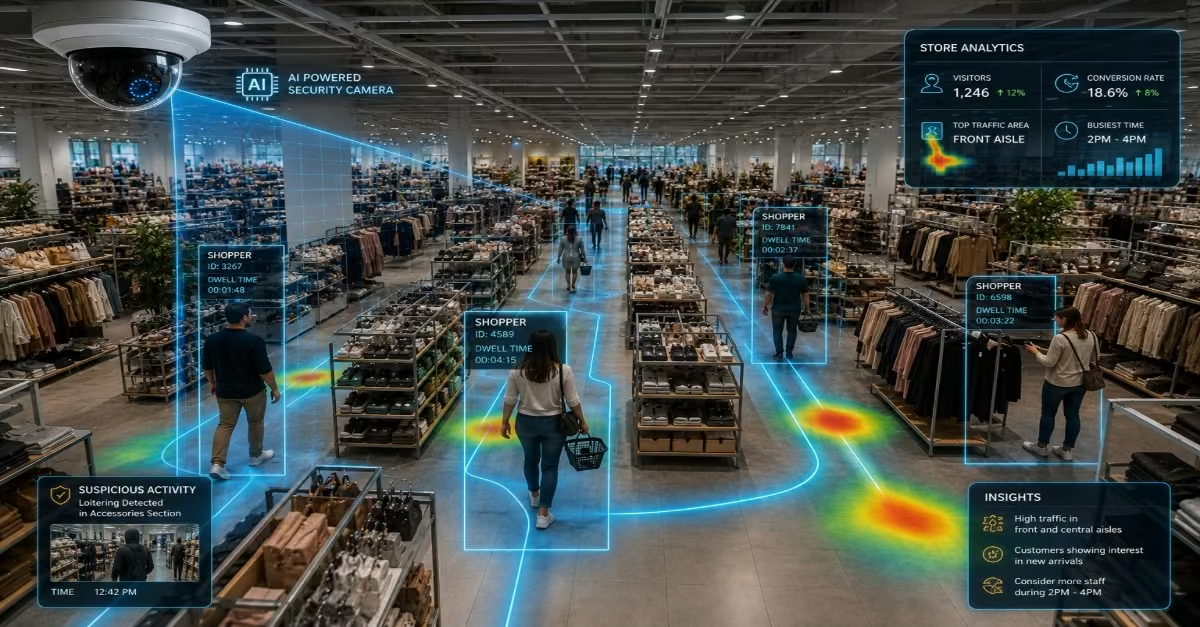
AI-powered security cameras are much more versatile than traditional surveillance systems. Their ability to analyse, understand, and respond to video footage in real time makes them useful across many industries. Below are major areas where they are being used.
Retail
Retail businesses use AI security cameras for a wide range of purposes. In addition to preventing theft and reducing losses, AI cameras can analyse customer behaviour by monitoring foot traffic, tracking how long shoppers spend in certain areas, and identifying busy shopping periods. These insights can help retailers improve store layouts, optimize product placement, and make better staffing decisions, turning surveillance systems into valuable business intelligence tools.
Commercial Businesses
For businesses of all sizes, AI security cameras provide much more than basic video recording. They continuously monitor premises for suspicious activity, unauthorized access, and potential security threats, helping protect employees, customers, and property. Because the system can distinguish between normal and unusual behaviour, security teams receive more accurate alerts and spend less time dealing with false alarms.
Manufacturing & Warehouses
In manufacturing facilities and warehouses, AI cameras serve both security and operational purposes. From a security perspective, they provide continuous monitoring of large sites that would otherwise require an extensive workforce to patrol.
From an operational standpoint, managers can use the cameras to observe workflows, identify inefficiencies, and detect potential productivity issues. This makes AI cameras valuable tools for improving both safety and business performance.
Smart Buildings
When connected to smart building systems, AI cameras become part of a larger safety and monitoring network. Building managers can oversee multiple areas at the same time, respond more quickly to incidents, and identify potential dangers before they become serious problems. These dangers may include smoke, flooding, unauthorized access, or movement within restricted areas.
Public Safety & Smart Cities
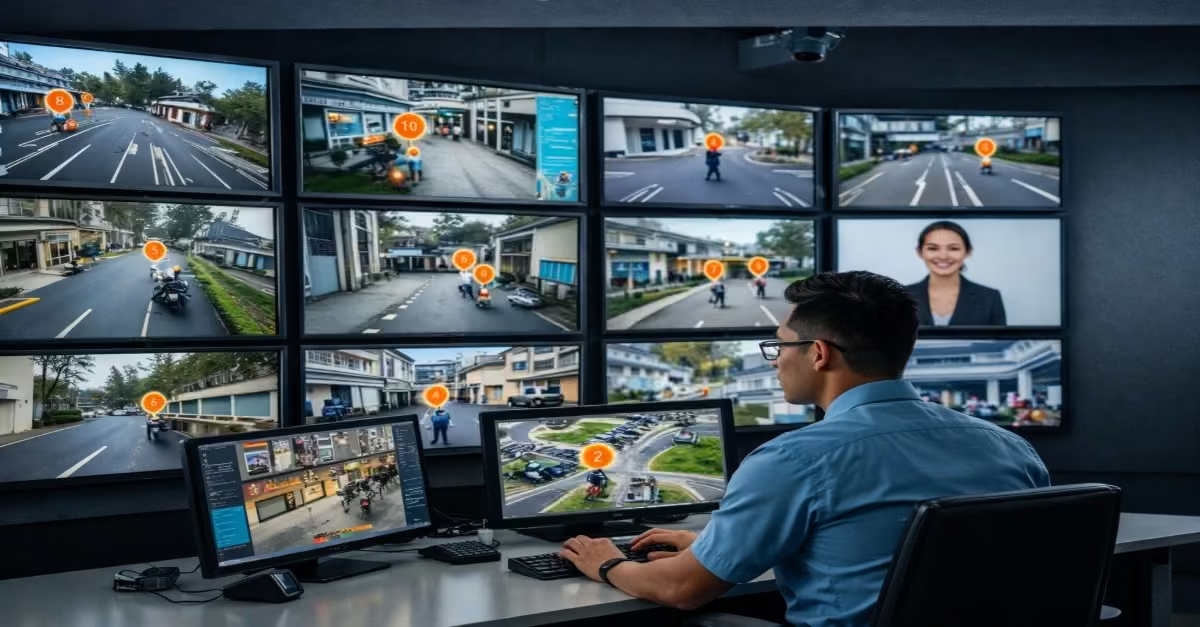
Many cities are adopting AI-powered cameras as part of their smart city programs. These systems can help manage traffic flow, detect accidents, monitor public spaces, protect critical infrastructure, and support law enforcement with real-time information. The goal is not only to improve security but also to create safer and more efficiently managed urban environments.
Read Also: The Rise of Smart Glasses: Features, Uses, and How They Work
Conclusion
AI security camera systems are transforming the way organizations monitor and protect people, property, and assets. Unlike traditional surveillance systems that mainly record footage, AI-powered cameras can analyse video in real time, identify potential threats, reduce false alarms, and provide valuable insights that support faster decision-making. Due to their abilities, they are used across a wide range of industries, such as commercial businesses to monitor unauthorized access and potential security threats, retail to prevent theft and monitor customer behaviour, smart homes for safety and to detect potential dangers, and smart cities to detect traffic flows and accidents.