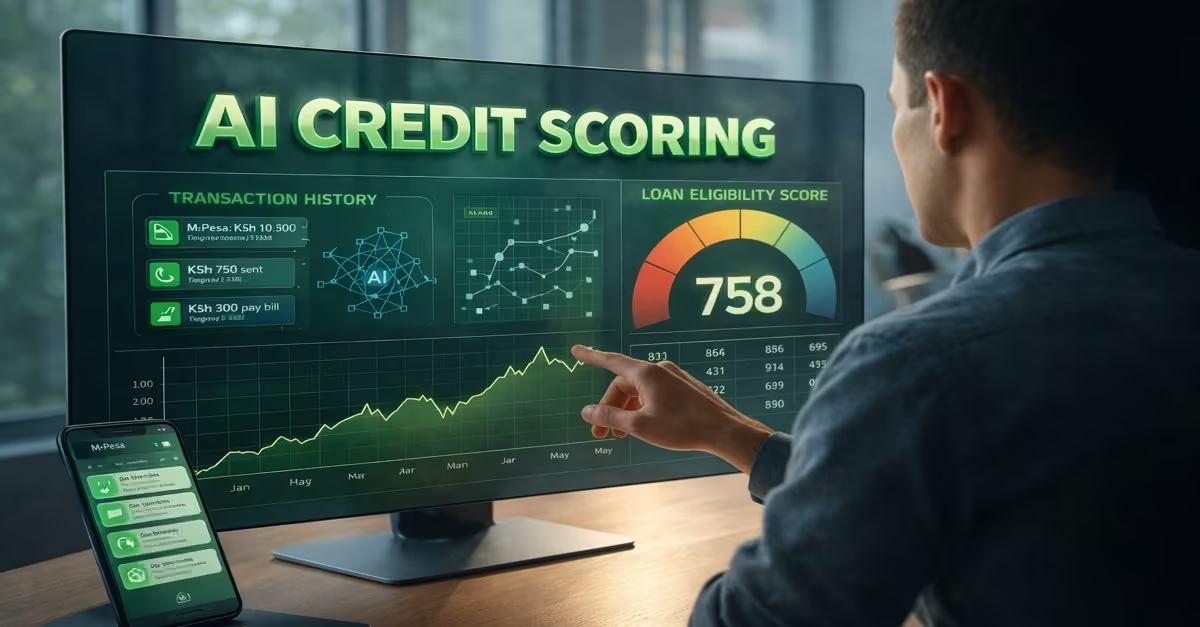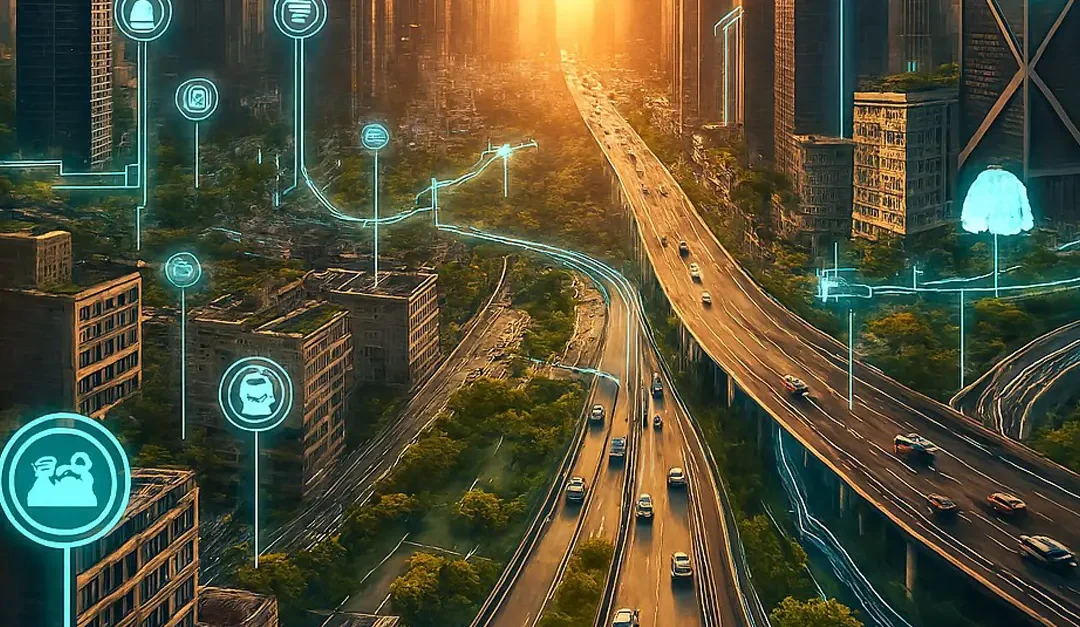
Cities are growing faster than ever before. A large portion of the global population lives in towns and cities, and that number continues to grow rapidly. This rapid urban growth creates serious challenges such as providing enough housing, building reliable infrastructure, managing energy use, reducing traffic congestion, improving public services, and protecting the environment. To address these issues, many cities are adopting the idea of the “smart city.” Smart cities uses modern technologies, especially the Internet of Things (IoT), to collect and share data that helps improve the way cities are managed. When combined with other innovations like artificial intelligence (AI), 5G networks, and digital twins (virtual models of real-life systems), IoT is helping cities become more efficient, sustainable, and responsive to citizens’ needs. This article explores smart cities, understands the technologies that are being used in smart cities, the various applications of IoT in smart cities, the cyber-risks that are exposed in smart cities, and various strategies to prevent cyber-attacks on smart cities.
Understanding Smart Cities
Smart cities refer to the towns and cities that are using modern technology to solve the challenges associated with rapid growth in urban centers and to support sustainable development. These cities employ a network of interconnected IoT devices, such as sensors, lighting systems, and meters, to gather and analyze data efficiently, as per Matellio. Citizens actively engage with smart city solutions through their smartphones, connected vehicles, and smart homes. The main goal of smart cities is to use technology and data to improve people’s quality of life, support sustainability, and make essential services more efficient. To understand the smart cities, below are the common characteristics.
- Use of Technology- Smart cities apply technology in areas like transport, healthcare, and utilities to improve connections and make services work better.
- Decisions Based on Data-smart cities collect and analyze large amounts of data to guide their choices and deliver better services.
- Focus on Sustainability-They aim to protect the environment by using clean energy, improving waste management, and creating greener transport options.
- Putting Citizens First-The main goal is to improve people’s daily lives, so services are designed around the needs and well-being of residents.
- Efficient Leadership and Management-Digital tools are used to make government processes faster, more transparent, and more engaging for citizens.
Core Technologies Powering Smart Cities
a. Internet of Things
The most essential technology used in every smart city is the Internet of Things (IoT). The Internet of Things refers to the network of interconnected devices, sensors, and communication systems that are always on the job of gathering and sharing real-time data about the urban landscape. For instance, sensors can keep an eye on traffic patterns, track energy consumption, or assess air quality. When this data is fed into digital platforms, city managers can respond quickly and make better decisions.
In the Internet of Things (IoT), most network connections are wireless, which makes them more complex to manage. Therefore, an IoT architecture is required. An IoT architecture is the overall plan that outlines all parts of an IoT system, such as devices, sensors, and networks, how they are arranged and connected, how they work together, the rules they follow, and the formats they use to share data. A study done by GeeksforGeeks highlights the following layers of the architecture of IoT.
- The perception layer – this is the first layer, which mainly comprises Sensors and actuators embedded in utilities, transport systems, buildings, and even wearable devices that are used to gather information, such as sounds and temperature, from the surroundings and pass the data into another layer so that action can be taken.
- Network Layer –this layer is used to connect between the perception layer and the middleware layer. This layer uses Connectivity like 5G, Wi-Fi, and low-power wide-area networks so as to pass the data received from the perception layer to the middleware level.
- Middleware layer– this is where the data is processed and stored, often combining local and cloud-based computing.
- Application Layer – Based on the information obtained from the middleware layer, this layer is used to manage all the application processes. The application mainly entails sending emails, activating alarms, and turning on or off a device.
This layered structure allows information to move seamlessly across systems, breaking down traditional barriers in urban management.
b. Artificial Intelligence of Things (AIoT)
When Artificial Intelligence (AI) is combined with IoT, we get artificial intelligence of things (AIoT). This is a powerful tool that makes smart city systems more intelligent and adaptive. While IoT devices gather real-time data from sources like traffic lights, energy meters, or environmental sensors, AI analyzes this information, identifies patterns, and makes decisions automatically. This allows cities to predict problems such as equipment failures, optimize the use of resources like water and electricity, and improve security through more intelligent cameras.
c. The 5G-Advanced

The emergence of 5G-Advanced is a breakthrough for smart cities. This is due to its capabilities to deliver faster speeds, extremely low delay, and the ability to connect a massive number of devices at once. This is essential for applications like live video surveillance, real-time mobility services, and emergency response systems used in smart cities.
With features such as dedicated virtual networks for specific uses and massive Machine-Type Communications (mMTC), 5G can reliably support everything from police body cameras to water pipeline sensors.
For instance, as per Simon (2024), in Singapore, a government-led initiative known as “the Smart Nation program” is leveraging 5G to power large‑scale IoT applications across transportation, environmental monitoring, and e‑governance. The availability of ultra‑fast, low‑latency 5G networks supports intelligent transport systems such as smart traffic management, electronic road pricing, and autonomous vehicle trials, and also Environmental monitoring networks that use IoT sensors to track air quality, water usage, and waste levels in real time, enabling data‑driven sustainability measures.
d. Edge Computing
Edge computing is a computing model where data is processed closer to where it is generated, like on sensors, and local servers instead of sending everything to a distant central data center or cloud. In smart cities, edge computing brings data processing closer to where it is generated at the “edge” of the network rather than relying only on distant cloud servers. This reduces delays, improves privacy, and allows faster decision-making. This helps mostly in smart trafficking systems where data needs to be collected and processed so that a decision can be made very quickly. In this case, edge computing provides a way to reduce the time the data is processed.
Read Also: The Impact of IoT on IT Systems and Networks
Application of IoT in Smart Cities
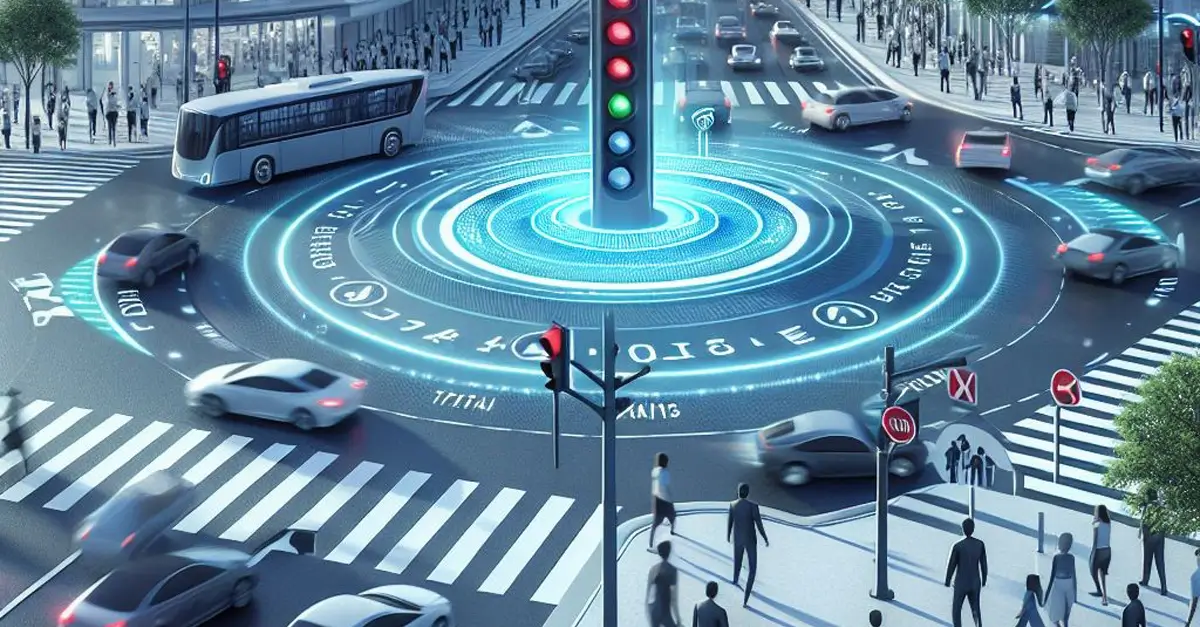
The Internet of Things (IoT) is one of the most critical drivers of the smart city revolution. By connecting everyday objects such as vehicles, streetlights, healthcare devices, and energy meters to the internet, IoT allows cities to collect and use real-time data for smarter decision-making. This technology transforms how urban services are delivered, making them more efficient, reliable, and sustainable. Below are the ways IoT is applied in smart cities.
Smart Mobility and Transport
Efficient and reliable transportation is at the core of every modern city. As populations grow, urban areas struggle with traffic congestion, road safety, pollution, and inefficient public transport systems. Smart mobility, powered by the Internet of Things (IoT), addresses these challenges by connecting vehicles, roads, infrastructure, and commuters through real-time data. With this technology, cities can better manage traffic, improve safety, and provide greener, more convenient transportation options. A good example is being given by Jackie (2017), where in Pittsburgh, USA, they have successfully deployed the Scalable Urban Traffic Control (SURTRAC) system. This system uses an AI‑driven adaptive traffic management technology that uses sensors to monitor vehicle flow in real time. Scalable Urban Traffic Control dynamically adjusts traffic signal timings to reduce congestion, travel times, and vehicle emissions. This has shown average travel time reductions of over 25% and wait time reductions of around 40%, demonstrating how intelligent traffic control can significantly improve urban mobility.
Smart Waste and Environmental Monitoring
Managing waste and protecting the environment are significant challenges for modern cities. Traditional waste collection often relies on fixed schedules, which can lead to overflowing bins in some areas and unnecessary collection trips in others. A study done by Kaalo t technologies states that “ With IoT, cities can now monitor waste levels in real time, optimize collection routes, and encourage better recycling habits. “These smart systems make waste management more efficient, cost-effective, and environmentally friendly while also improving public health.
Smart Energy Management
As cities expand and demand for electricity rises, managing energy efficiently has become a top priority. Traditional grids struggle to balance supply and demand, especially as renewable sources like solar and wind are added to the mix. IoT-enabled smart energy systems help cities build more flexible, reliable, and sustainable power networks. Research done by Gareth (2025) highlights that Smart grids integrate sensors, data analytics, and automation to monitor electricity usage in real time continuously. This enables utilities to detect faults early, prevent outages, and optimize energy distribution. At the same time, consumers gain greater control over their energy use through smart meters and connected apps, allowing them to adjust consumption patterns, reduce costs, and support a more sustainable grid.
Smart Healthcare and Public Services

Healthcare is one of the most critical areas where smart city technologies are making a difference. By combining IoT devices, data analytics, and digital platforms, cities can improve healthcare delivery, expand access to medical services, and strengthen crisis response. These innovations are especially valuable in rapidly growing cities, where hospitals and clinics often struggle to meet rising demand. With smarter systems, healthcare becomes more proactive, efficient, and accessible to all citizens. For instance, Predictive disease tracking, where Analytics and real-time environmental sensors help identify and predict outbreaks, and Remote health monitoring, where Wearable devices track vital signs such as heart rate, blood pressure, and oxygen levels, alerting both patients and healthcare providers when risks arise, as per Yasmin (2025)
Cybersecurity in Smart City IoT
As cities become more connected, the blending of physical and digital systems also introduces new risks. Every connected device, from traffic sensors to smart meters, can serve as a potential entry point for cybercriminals. This expanded attack surface makes cybersecurity one of the most critical concerns in building and managing smart cities. Without proper safeguards, attacks on smart city infrastructure could disrupt essential services, compromise sensitive data, and undermine public trust in digital systems. Below are the major key risks exposed to smart cities as per Ambler (2022)
- Critical service disruption – Smart cities depend on interconnected networks to run vital services such as electricity, water supply, and transportation. A cyber-attack on any one of these systems could create a chain reaction, bringing multiple services to a stop.
- Data privacy – Smart cities collect and process large amounts of sensitive data, including personal health information, travel patterns, and even financial details. If this data is not adequately secured, it can be intercepted, stolen, and misused. Protecting citizen privacy is therefore as important as maintaining service reliability.
- Device heterogeneity – Smart city ecosystems often use devices from different vendors, with varying levels of security. Some legacy systems may not have been designed with cybersecurity in mind, creating weak points in the network. Hackers can exploit these gaps to gain access to critical systems.
- Supply chain threats – Cybersecurity risks do not only come from within the city’s network. Vulnerabilities in third-party hardware or software, such as a compromised update from a vendor, can provide attackers with backdoor access. This makes supply chain security a vital part of protecting smart city systems.
Strategies to Mitigate the Cyber Risks Exposed to Smart Cities
Building secure smart cities requires more than just advanced technology; it calls for a proactive, layered approach to cybersecurity. Since IoT systems are interconnected and constantly exchanging data, cities must adopt strategies that protect devices, networks, and people at every level. Below are some of the leading practices shaping secure smart city design:
I. Zero-trust network architectures
This approach assumes that no device or user can automatically be trusted, even if they are already inside the network. Every request for access must be verified. By applying continuous checks, zero-trust frameworks reduce the risk of unauthorized access to critical systems.
II. Strong identity and access management (IAM)
Every connected device and user in a smart city should have a unique digital identity. IAM solutions ensure that only authorized individuals or machines can access sensitive systems and data, using tools like multi-factor authentication and digital certificates.
III. Federated security frameworks
Technologies like blockchain and federated learning distribute how data is stored and analyzed, making it harder for hackers to breach entire systems. For instance, federated learning allows different devices to “learn” from shared data trends without exposing private details. At the same time, blockchain ensures that data records cannot easily be tampered with.
IV. Collaborative policy frameworks
Cybersecurity cannot be left to technology alone; it also depends on governance. National and county governments, together with private stakeholders, must create shared standards for data protection, conduct joint training, and establish rapid-response protocols to handle incidents when they occur. This will also make the citizens aware so that they take part in data protection.
Conclusion
The Internet of Things (IoT) and related digital technologies like artificial intelligence of things, 5G advanced network, and Edge computing have become the backbone of smart cities. These technologies help smart cities to collect data, store data, and process data effectively, so that quicker decisions can be made, which is then mainly applied In Smart traffic systems, smart waste and environmental monitoring, smart energy management, and finally smart health and public services. With the above application, most challenges of urban environments are being solved, and people living in cities have better lives. Despite the advantage of the innovative technologies, they are being exposed to various cyber-attacks like data privacy, device heterogeneity, supply chain threats, and disruption of vital services. The Government and users, therefore, are advised to apply measures like the Collaborative policy frameworks, strong identity and access management, zero-trust network architectures, and federated security frameworks techniques.