One of the most transformative forces in the technology sector is the evolution of artificial agents. This emerging technology is advancing what machines can achieve and reshaping how companies, governments, and individuals interact with digital systems. Over time, artificial intelligence has been associated with chatbots and rule-based programs. It was also perceived as an automation tool designed to execute predetermined tasks. The situation has changed in recent days. Today’s AI agents are automated systems that can make their own decisions, analyze information, perceive their environment, and carry out complex actions with minimal human oversight, all with the aim of achieving a specific objective (Melissa, 2025). Unlike their predecessors, these agents are not static executors but adaptive problem solvers; they continually learn, plan, and collaborate in dynamic settings. In this article, we will delve into understanding AI agents, how they have evolved, the setups that enable them to function, their applications across various industries, the benefits and risks they bring, and the ethical and societal considerations they raise.
Understanding AI Agents and their Key Characteristics
An AI agent is defined as an innovative software program designed to act on its own. Instead of waiting for detailed instructions at every step, it can observe its surroundings, make decisions, and carry out tasks to reach a specific goal. In simple terms, it’s a software that, on behalf of its users, can do tasks. They achieve this by organizing their own workflows and making decisions that complete tasks effectively on behalf of the user, rather than relying on step-by-step instructions. A study done by Adnan (2025) highlights the following characteristics of the AI agents.
A. Autonomy
AI agents can work independently without needing constant instructions. They make decisions and take actions based on the goals they’ve been given and the situation they’re in. This independence sets them apart from simple software scripts that only follow fixed commands.
B. Goal-Driven Behavior
Instead of reacting to one command at a time, AI agents are designed to work toward bigger objectives actively. For instance, if you ask an agent to “plan and optimize our social media campaign,” it won’t just post once; it will break the task into smaller steps, organize them, and manage the campaign from start to finish.
C. Continuous Operation
Unlike tools that run once and then stop, AI agents can operate continuously over extended periods. They keep track of past actions and results, allowing them to adapt and improve as they go. This is similar to how a person remembers what they’ve already done when working on a project and uses that memory to guide their next steps.
D. Perception
AI agents “sense” their surroundings through different types of inputs. This could be a camera feed, audio recordings, or data pulled from online systems and applications (APIs). By gathering this information, the agent gains awareness of its environment, which it then uses to determine the subsequent actions to take.
Read Also: Leveraging Artificial Intelligence for Small Business Success
How AI Agents Work
To understand how AI agents work, it is helpful to think of them as systems composed of different modules that constantly interact in a feedback loop. In this way, they gather information, make sense of it, decide what to do, and then take action while continuously learning from the results. A study by Vishnu (2025) highlights the process by which these agents operate, as illustrated below.
A. Perception
Perception is the process of “sensing” the environment. At this stage, the AI agent collects and interprets information from its environment. Just like humans use their eyes and memory to understand what is going on around them, it uses the following ways.
- Visual Perceptions – The agent uses computer vision to analyze images or videos, for example, recognizing faces
- Auditory Perception – through speech recognition, agents listen to sounds and spoken words to gather information around them.
- Textual Perception – The agent reads and interprets text using natural language processing (NLP), enabling it to understand documents, messages, or instructions.
- Sensor and API Inputs – It gathers live data from devices, such as temperature sensors, cameras, and online systems, through APIs to stay updated.
B. Reasoning
Reasoning is the “thinking” part of an AI agent. It takes the raw data from perception and transforms it into informed decisions, practical strategies, and actionable plans. Without reasoning, an agent would only react to inputs, and it wouldn’t know how to solve problems or plan ahead. It uses the following ways:
- Rule-Based Logic – it uses this to solve simple situations. In this, the agent follows “if-this-then-that” rules to reason.
- Heuristics and Search Algorithms – For more complex problems, it uses smarter shortcuts and problem-solving techniques to find good solutions.
- Planning and Decomposition – In this method, the agent breaks down a big goal into smaller tasks and then executes each task until the broader main objectives have been achieved.
- ReAct and ReWOO Patterns – These are advanced methods where the agent alternates between thinking, acting, and observing, which makes it more flexible and adaptive.
- Self-Reflection and Critique – The agent can review its own actions, learn from mistakes, and improve its future performance.
C. Action
After the agent has gathered information from the surroundings and the reasoning process has been completed, at this stage, the agent executes the decisions to achieve the designed objectives. It uses the following forms:
- API and Function Calls – The agent can retrieve or update information from databases or applications, such as booking a calendar slot.
- UI Automation – The agent performs repetitive tasks on software interfaces that are similar to those of robotic process automation.
- Communication – The agent might send an email, message, or chatbot reply to interact with humans or other agents.
- Physical Actions – In robotics, this includes moving, navigating spaces, or picking up objects.
- Collaboration – in this form, involves the Agents working together, dividing tasks or coordinating efforts to achieve more complex goals.
D. Learning and Adaptation
Instead of remaining static, the AI agents adapt based on data, feedback, and experience, thereby improving over time.
At this stage, it used the following approaches to learn:
- Machine Learning Approaches – in this method, they learn from labeled data, find patterns in unlabeled data, or improve through trial and error with feedback
- Retrieval-Augmented Generation (RAG) – In this method, the agents can access up-to-date knowledge from external sources to make smarter and more accurate decisions.
- Human-in-the-Loop (HITL) – This method involves humans stepping in to provide feedback, correct mistakes, and approve important decisions. It is mainly used in sensitive areas or topics.
Types of AI Agents

AI agents can be categorized into various groups based on their operational mechanisms and the complexity of their decision-making processes. These categories range from simple agents that only react to their environment to advanced ones that can set goals, make trade-offs, and even learn from experience. Understanding these types helps us see how AI agents evolve in capability and where they are applied in real life.
- Simple Reflex Agents
These are the most basic forms of agents. They react directly to the current input without considering past experiences or future consequences. A good example is the parking sensor in vehicles, which usually beeps whenever a car gets close to an object. In this case, it responds only to the current proximity.
- Model-Based Agents
Unlike reflex agents, these agents keep an internal “memory” or model of the world, allowing them to make more informed decisions. For example, self-driving cars, according to Alexander (2024), take in massive amounts of data from cameras, sensors, and maps to understand the world around them. Then, they make complex decisions about steering, accelerating, and braking in an instant. They have an internal memory that enables them to keep data and make more informed decisions.
- Goal-Based Agents
These agents go beyond reacting and memory; they actively choose actions that move them closer to achieving specific goals. They are primarily designed to help users achieve their objectives. A good example is given by Scott (2025), a personal AI fitness coach. This AI agent enables the user to come up with possible actions against a specific goal. In this case, it generates workouts based on the goals of the user so that the user can build endurance and help in choosing exercises that align with that outcome.
- Utility-Based Agents
Utility-based agents don’t just aim to reach goals; they also weigh different options to maximize overall satisfaction or value. For instance, stock trading systems evaluate multiple factors before deciding, and the AI-powered investment advisor that balances risk, return, and personal financial goals to recommend the most useful portfolio for the user.
- Learning Agents
These are the most advanced type of AI agents. They continuously improve their performance by learning from past experiences. For instance, a spam filter, as noted by Cora (2025), improves over time by learning from user feedback. Each time a user marks an email as spam or retrieves a legitimate email from the spam folder, the filter updates its internal model. Over time, this allows it to recognize new spam patterns, adjust its filtering rules, and better distinguish between genuine and unwanted emails.
Read Also: Smart Ports & Autonomous Shipping: Redefining maritime Trade Logistics
World Application of the AI agents
AI agents have moved from experimental tools to mainstream drivers of efficiency and innovation. According to Cloudera’s 2025 Global Survey, 58% of companies are already deploying AI agents in their operations, while 35% are actively exploring potential use cases. Only 7% of organizations remain undecided about adoption. Below are the main areas where AI agents are being used:
- Customer Service
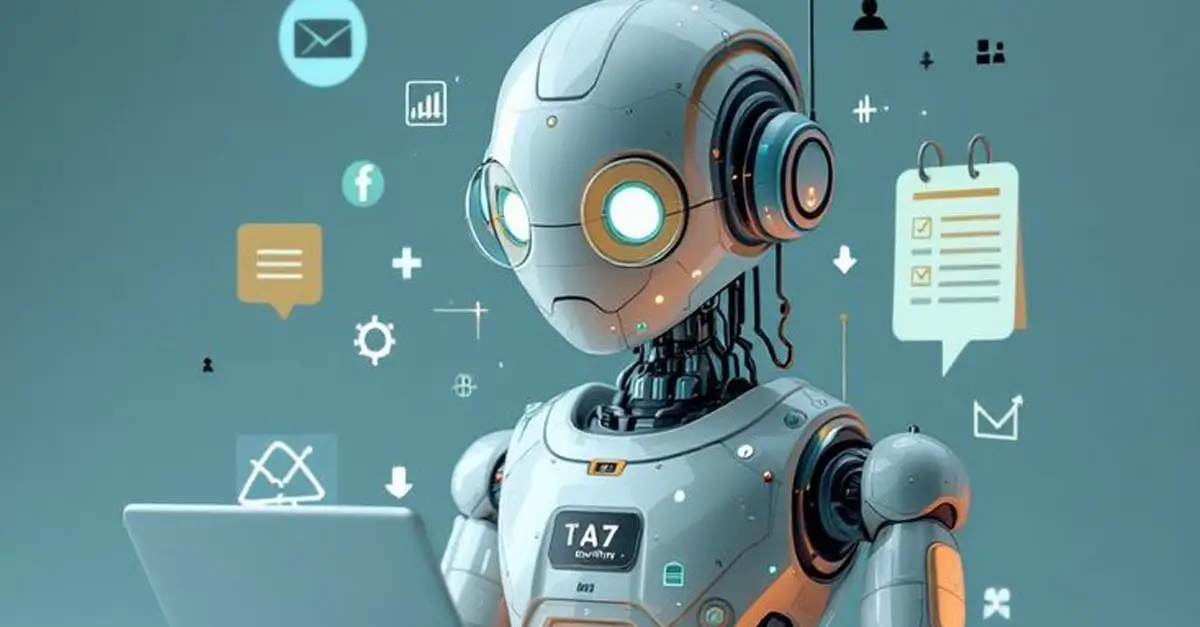
This is the most widespread application. AI agents power chatbots, virtual assistants, and support platforms that handle millions of customer queries daily. They not only reduce costs but also provide 24/7 availability, making them essential for businesses of all sizes.
- E-Commerce and Retail
Online shopping has become inseparable from AI. This is because AI agents help in driving personalized recommendations, managing inventories, handling checkout processes, and recovering abandoned carts. Companies like Amazon and Shopify heavily depend on these systems to increase sales and improve customer experience.
- Finance
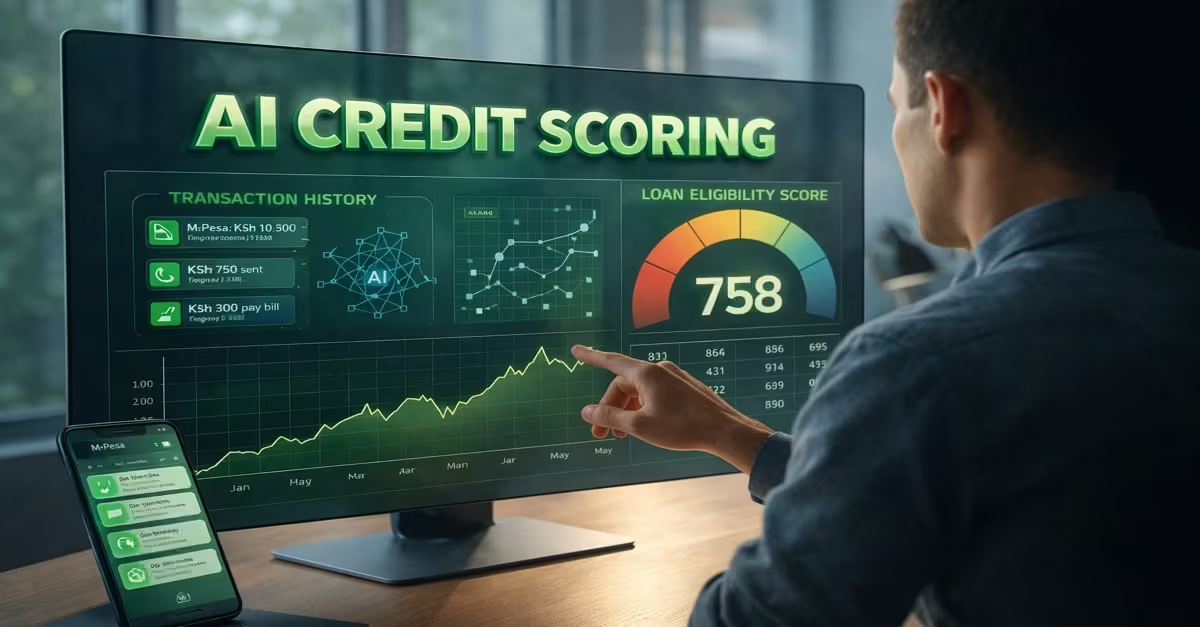
Banks and fintech companies rely on AI agents for credit scoring, fraud detection, risk management, and compliance. Real-time monitoring and automation make finance one of the fastest-growing sectors for AI adoption.
- Healthcare
AI systems are transforming healthcare by prioritizing patient care. This is done through virtual consultations, interpreting medical images, monitoring vital signs from wearables, and speeding up drug discovery. This industry shows both immediate benefits and long-term promise.
- Manufacturing
Factories increasingly use AI agents for predictive maintenance, production optimization, and quality control. By minimizing downtime and defects, these systems save companies billions annually and improve supply chain reliability.
Cross-Cutting Benefits of AI Agents
As AI agent brings specific advantages to specific sectors, they also deliver universal benefits that cut across all industries. These cross-cutting strengths highlight why AI agents are increasingly seen as crucial in today’s businesses and economy. A study done by Ajay (2024) highlights the following benefits.
- Scalability
AI agents can efficiently handle large-scale workloads. A single agent or a network of them can manage hundreds or thousands of tasks simultaneously, ensuring organizations meet demand without sacrificing quality or speed.
- Personalization
By analyzing detailed user data, agents can deliver hyper-personalized services, marketing offers, and even healthcare recommendations. This ability to tailor experiences enhances customer satisfaction and builds stronger loyalty.
- 24/7 Operation
Unlike human teams, AI agents never need rest. They operate continuously, providing around-the-clock support, monitoring, and service delivery, boosting efficiency while improving customer experience.
- Multi-Agent Collaboration and Teamwork
In complex or highly regulated environments, multiple specialized agents can work together, each focusing on a specific task. This teamwork enhances accuracy, ensures compliance, and improves the overall quality of outcomes.
Challenges and Limitations of AI Agents

Even though AI agents are advancing quickly and showing great potential, they are not perfect. Businesses and researchers still face challenges that limit how well these agents can be trusted, used, and scaled. These challenges include technical issues, practical difficulties, and human concerns. Below are the demerits of AI agents:
- Memory and Context Management-AI agents often struggle to maintain long-term memory. When conversations or workflows extend across multiple steps or days, agents may lose track of context, leading to incomplete or inconsistent results.
- Hallucinations and Reliability-Large Language Model (LLM)-based agents sometimes produce inaccurate, irrelevant, or even fabricated outputs commonly referred to as “hallucinations.” In high-stakes domains like healthcare and finance, this lack of reliability poses significant risks, leading to serious losses.
- Complex Reasoning and Adaptation-While agents are improving in structured planning, they still stumble in ambiguous or multi-step reasoning tasks. They lack the common-sense knowledge and causal understanding that experienced humans naturally bring to problem-solving.
- System Integration-Connecting modern agents to legacy systems, outdated workflows, and fragmented data sources is often complex and resource-intensive. Without seamless integration, their full potential remains untapped.
- Data Privacy and Security-Deploying agents across sensitive data environments raises compliance and security concerns. Risks of breaches, unauthorized access, or regulatory violations remain a serious barrier to adoption.
- High Costs and Resource Requirements-Developing, deploying, and maintaining enterprise-grade agents requires significant investment in infrastructure, integration, and expertise. For small and mid-sized enterprises (SMEs), these costs often outweigh short-term returns.
Conclusion
AI agents are no longer ideas for the future, but they are here with us, learning the digital systems and shaping today’s technology. The agents are characterized by autonomy, continuous operation, and, more significantly, they are goal-driven. They are built on perception, reasoning, and action, and powered by new advances in language models and frameworks. Several AI agents have been developed, ranging from simple reflex, model-based, utility-based, learning, and goal-based agents. Due to their broad applications in e-commerce, healthcare, finance, customer service, and manufacturing, they are transforming how we work, live, and interact with the global economy. They bring huge benefits such as efficiency, personalization, scalability, and 24/7 operations, but also raise serious challenges around trust, fairness, reliability, and proper governance and data privacy. Thus, as one thinks of utilizing one in your business and even your Personal goals, the negative impacts should also be considered.