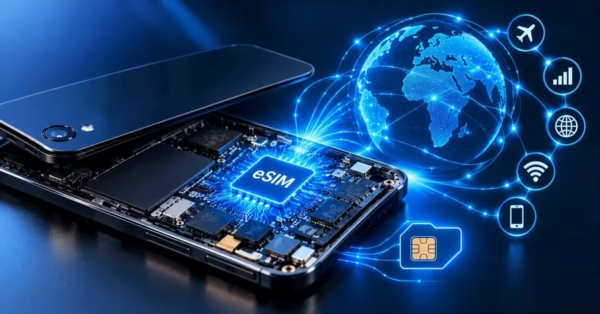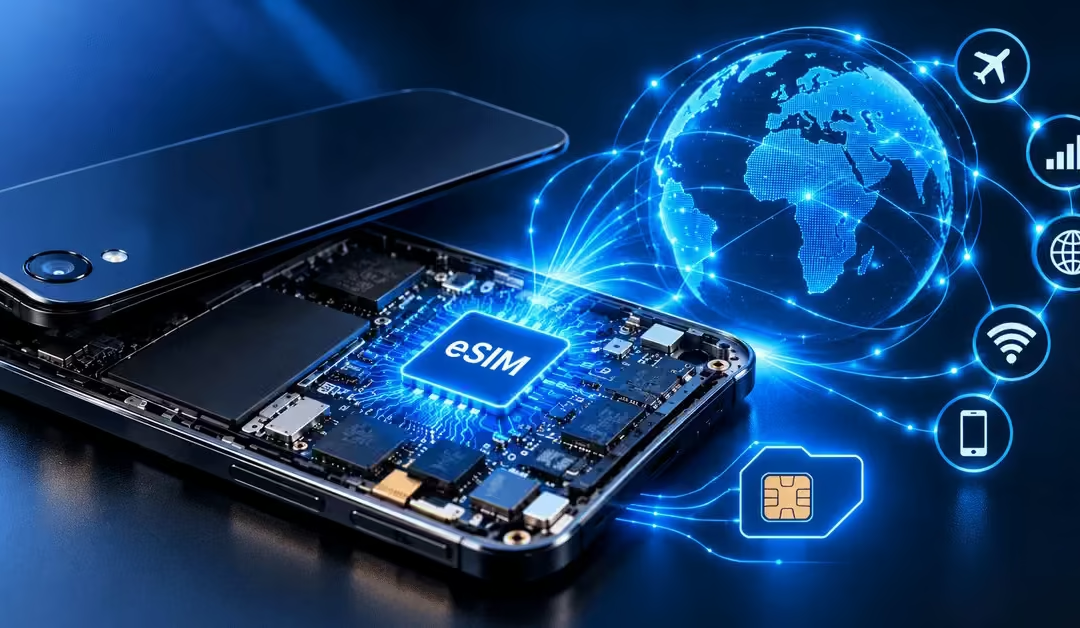
For years, using a mobile phone meant inserting a small physical SIM card before you could make calls, send messages, or use mobile data. This is changing with the rise of eSIM technology, which lets compatible devices connect to a mobile network without a traditional removable SIM card. Instead, the SIM functionality is built directly into the device, giving users a more convenient way to manage their mobile connection.
Users download and activate an eSIM digitally using information from their mobile network operator. This allows users to switch between mobile plans more easily, use multiple numbers or network profiles on supported devices, and activate mobile connectivity without waiting for a physical SIM card.
But how does an eSIM actually work, and is it better than a traditional SIM card? This guide explains:
What Is an eSIM?
An eSIM (embedded SIM) is a programmable SIM built directly into a compatible device, such as a smartphone, tablet, smartwatch, or laptop. An eSIM carries a built-in UICC that stores subscription data, so no SIM card insertion into a tray is needed. Although the technology works differently, an eSIM performs the same basic function as a physical SIM card: it identifies and authenticates your device on a mobile network, allowing you to make calls, send messages, and use mobile data, as per the Global System for Mobile Communications (GSMA)
What makes an eSIM different is that you can download and manage the mobile subscription digitally instead of storing it on a removable plastic card. When you sign up for an eSIM service, the mobile network operator provides a digital profile that you can usually install by scanning a QR code or following activation steps on your device. This allows you to add, change, or manage supported mobile plans without physically replacing a SIM card. However, available features depend on the device and mobile network operator.
Read Also: What is an AI Security Camera Systems? Everything You Need to Know
eSIM vs Physical SIM: What Is the Difference?
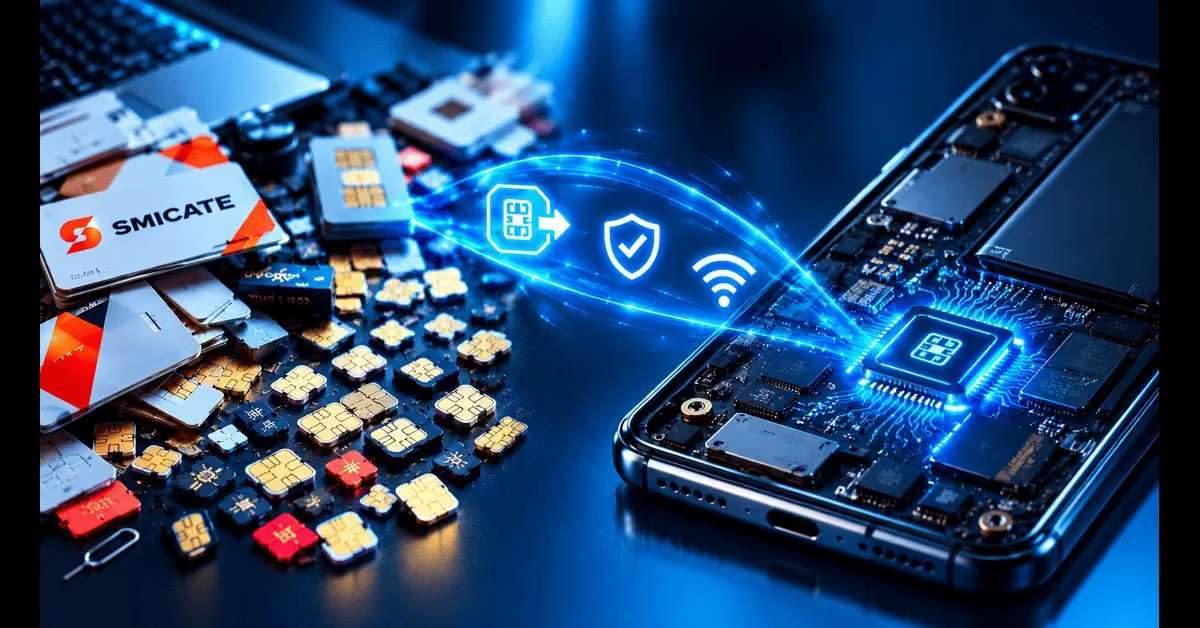
Both eSIMs and physical SIM cards serve the same basic purpose: they identify a mobile subscriber and allow a device to connect to a mobile network. The main difference is how the SIM is provided and managed. An eSIM is built directly into the device and can be activated digitally, while a physical SIM is a removable plastic card that is inserted into the phone’s SIM tray. The following are some of the differences between the two:
| Feature | eSIM | Physical SIM |
| Form factor | Built directly into the device | Removable plastic card |
| Activation | Activated digitally, often using a QR code or mobile network operator’s app | Activated by inserting the SIM card into the device |
| Changing carriers | Allows users to switch between supported plans without replacing the SIM card | Usually requires replacing the physical SIM card. |
| Switching Devices | Requires digital transfer or reactivation when you switch devices, depending on the network operator and device | Can usually be moved directly to another compatible device |
| Multiple plans | Can store multiple profiles on compatible devices | Usually requires multiple SIM slots to use more than one SIM card |
How to Check If Your Phone Is eSIM Compatible
Before purchasing or activating an eSIM, confirm that your phone supports the technology. A phone can support an eSIM only if it has an eSIM identifier or an eSIM feature. There are two simple ways to check this, which are explained below:
Method 1: Dial *#06# to Find Your eSIM Identifier
- Open your phone’s dialer and enter *#06#.
- Your device will display various identification numbers or device information
- Look for an “eSIM Identifier”. If an eSIM Identifier appears, it generally means that your phone supports eSIM technology.
Method 2: Check iPhone and Android Phone Settings
You can also check directly through your phone’s settings:
- iPhone: Go to Settings → Cellular/Mobile Service and look for “Add eSIM” or “Add Cellular Plan”
- Android: Go to Settings → Connections/Network & Internet → SIM Manager/SIMs and look for an option such as “Add eSIM”
How Does an eSIM Work? Step-by-Step Activation Process
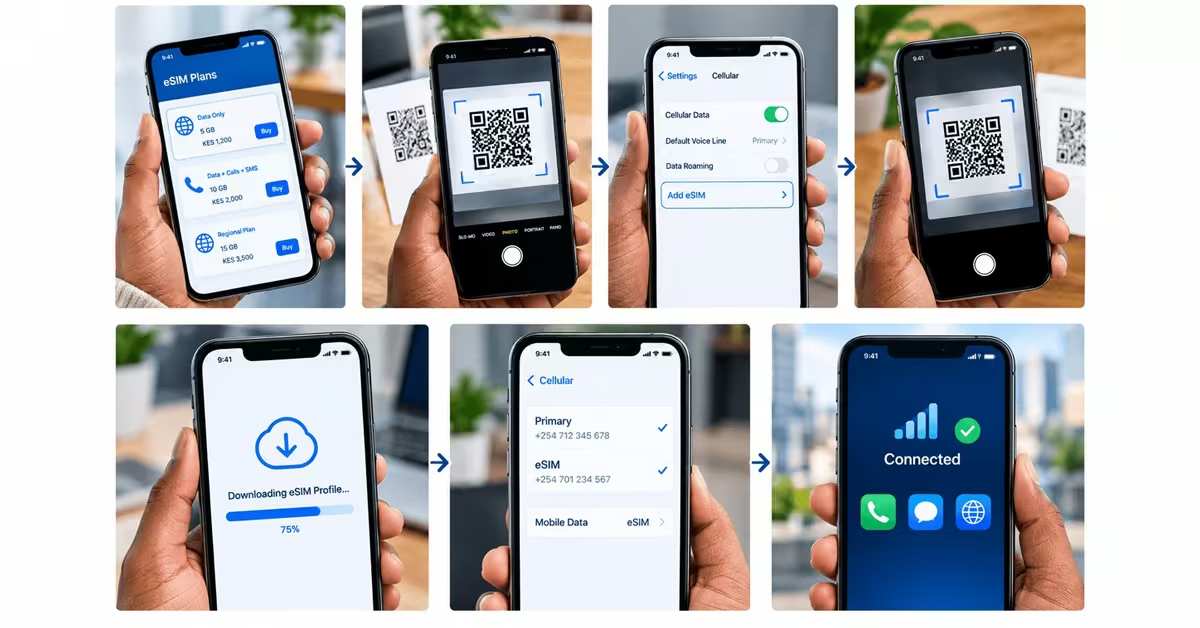
Unlike a physical SIM card, which must be inserted into a phone’s SIM tray to work, an eSIM is built directly into the device and can be programmed with a mobile network subscription. When you purchase an eSIM plan, the mobile network operator or eSIM provider gives you the information needed to activate the service, usually through a QR code. Your device uses this information to connect to the provider’s eSIM system, download the subscription profile, and securely store it on the built-in eSIM chip. Once activated, the eSIM allows your device to connect to the mobile network. The Hola SIM guide to eSIM technology highlights the following steps for how eSIM works.
Step 1: Choose an eSIM Mobile Plan
First, choose and purchase an eSIM plan from a mobile network operator or eSIM provider. The plan may include mobile data, calls, and SMS, depending on what the provider offers. Before purchasing, confirm your device supports eSIM and that the plan works with your device and in your location.
Step 2: Get Your eSIM QR Code or Activation Code
After you purchase the plan, the provider will give you the information you need to install the eSIM. In many cases, they provide this as a QR code you can scan with your phone. Some providers may instead let you activate the eSIM through their mobile app or provide activation details you can enter manually.
Step 3: Open Mobile Settings on Your Phone
- Open your device’s Mobile Network, Cellular, or SIM settings
- Look for an option such as “Add eSIM” or “Add Mobile Plan.”
- Select this option to begin the installation process.
- The exact name and location of this setting will depend on whether you are using an iPhone, Android phone, or another compatible device.
Step 4: Scan the QR Code
Use your device’s camera to scan the QR code your eSIM provider provides. The QR code contains the information your device needs to find and download your mobile subscription. If your provider does not use a QR code, you may need to enter the activation details manually.
Step 5: Download and Install the eSIM Profile
Once the activation process begins, your device connects to the provider’s eSIM management system and downloads your eSIM profile. This profile contains the subscription information needed to identify your account and connect to the mobile network. The profile is then securely installed on the eSIM chip inside your device.
Step 6: Activate Your eSIM Line
After the profile downloads, you can activate the eSIM through your device’s mobile-network settings. If you have both a physical SIM and an eSIM, your phone may allow you to choose which line to use for calls, SMS, and mobile data.
Step 7: Connect to the Cellular Network
Once the eSIM is activated, your device uses the stored profile to authenticate with the mobile network and connect. You can then use the services included in your plan, such as mobile internet, calls, and text messages. From this point, the eSIM works much like a traditional SIM card. The main difference is that the SIM functionality is built into the device and the mobile subscription is installed digitally.
Key Advantages of Using an eSIM
eSIM technology offers several advantages over traditional physical SIM cards, especially in convenience, flexibility, security, and device design. Here are some benefits of eSIM technology.
a) Easier International Connectivity
eSIMs make it easier to stay connected when traveling abroad. Instead of purchasing and physically inserting a local SIM card, travelers can purchase a compatible eSIM plan and activate it digitally, often before arriving at their destination. This saves time and makes it easier to get mobile connectivity as soon as they arrive.
b) Cannot Be Easily Lost or Damaged
Because an eSIM is built into the device, you can’t physically remove, misplace, or damage it the same way you can with a traditional SIM card. This can also help if a phone is lost or stolen because the eSIM can’t be removed from the device like a physical SIM card.
c) Supports Multiple Numbers or Plans
Compatible devices can store multiple eSIM profiles, allowing users to manage different mobile plans or numbers on one device. For example, you could have one line for personal use and another for work, although the number of profiles you can store or keep active at the same time depends on the device.
d) Easier to Switch Between Mobile Plans
With a compatible device and supported network, users can add or change mobile plans digitally without obtaining and inserting a new physical SIM card. This is especially convenient when changing providers or adding a temporary data plan while traveling. However, the ability to switch plans depends on the device and the network provider’s support for eSIM technology.
Where Is eSIM Technology Used Today?
eSIM technology is used beyond smartphones and travel. Because eSIMs can be activated, updated, and managed digitally, they are useful in situations where devices need reliable connectivity without requiring a physical SIM card. Today, eSIM technology is being used across consumer devices, vehicles, businesses, and connected equipment in different industries. The following are the main areas where eSIM technology is used.
a) Travel and Consumer Connectivity
eSIMs make international travel easier by allowing users to purchase and activate mobile plans digitally. Travelers can install a compatible plan before arriving at their destination, allowing them to connect to a local or international network without searching for a physical SIM card. This can also help reduce reliance on expensive international roaming services, depending on the eSIM plan and destination. Milo (2026) gives a good example: instead of looking for a local SIM card vendor at the airport or paying high international roaming charges, travelers can purchase a mobile data plan online and activate it digitally, often before leaving home. This means they can have mobile internet as soon as they arrive at their destination, making it easier to connect quickly when traveling from one country to another.
b) Wearables
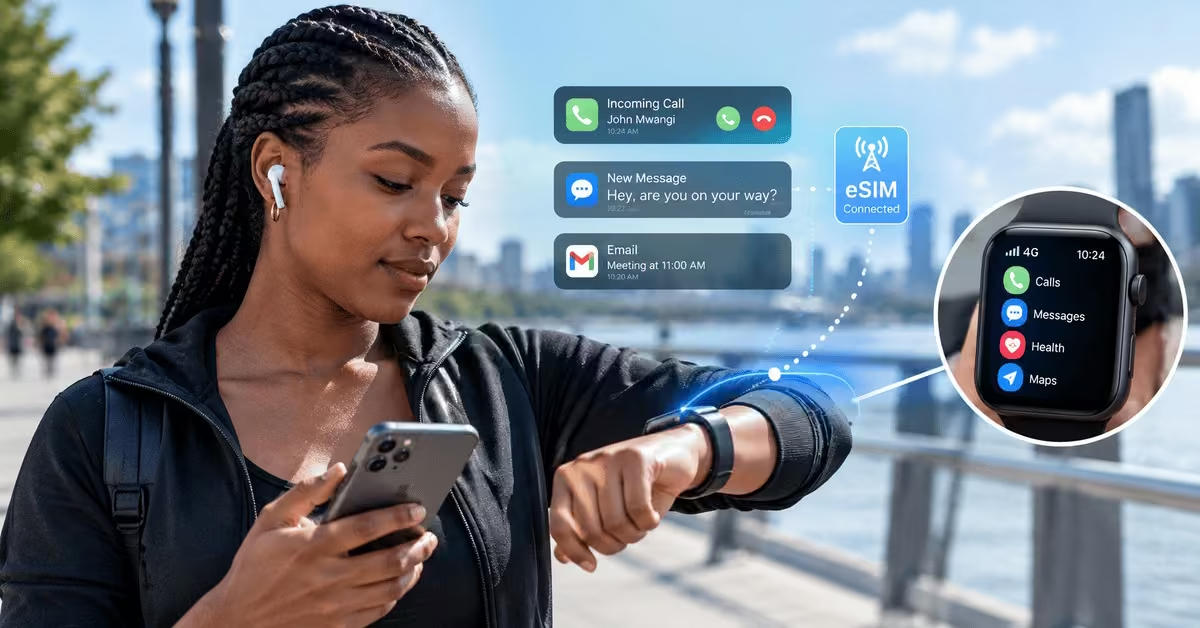
. eSIM technology allows cellular-enabled smartwatches and other wearables to connect directly to mobile networks. This means users can make calls, send messages, receive notifications, and use mobile data even when their smartphone is not nearby. As a result, wearables can provide more independent connectivity instead of relying entirely on a paired phone.
This is common in wearables like Apple Watches: instead of a physical SIM slot, the watch has a built-in eSIM that a mobile network operator can activate digitally. Once activated, the watch can use its own cellular connection to make calls, send messages, receive notifications, and access mobile data even when the paired iPhone is not nearby.
c) Industrial IoT and Logistics
Companies can use eSIMs in tracking devices installed on vehicles, shipping containers, machinery, and other equipment. Since network profiles can be managed remotely, businesses can maintain connectivity even when equipment moves between countries or networks. This reduces the need for workers to physically access thousands of devices to replace SIM cards.
d) Utilities and Smart Infrastructure
Smart electricity meters, security systems, monitoring equipment, and industrial sensors can use eSIM technology to stay connected for long periods. Once installed, operators can manage connectivity remotely, reducing the need for technicians to visit each location to replace or update a SIM card. This is particularly useful where equipment is installed in remote or difficult-to-reach areas.
e) Automotive
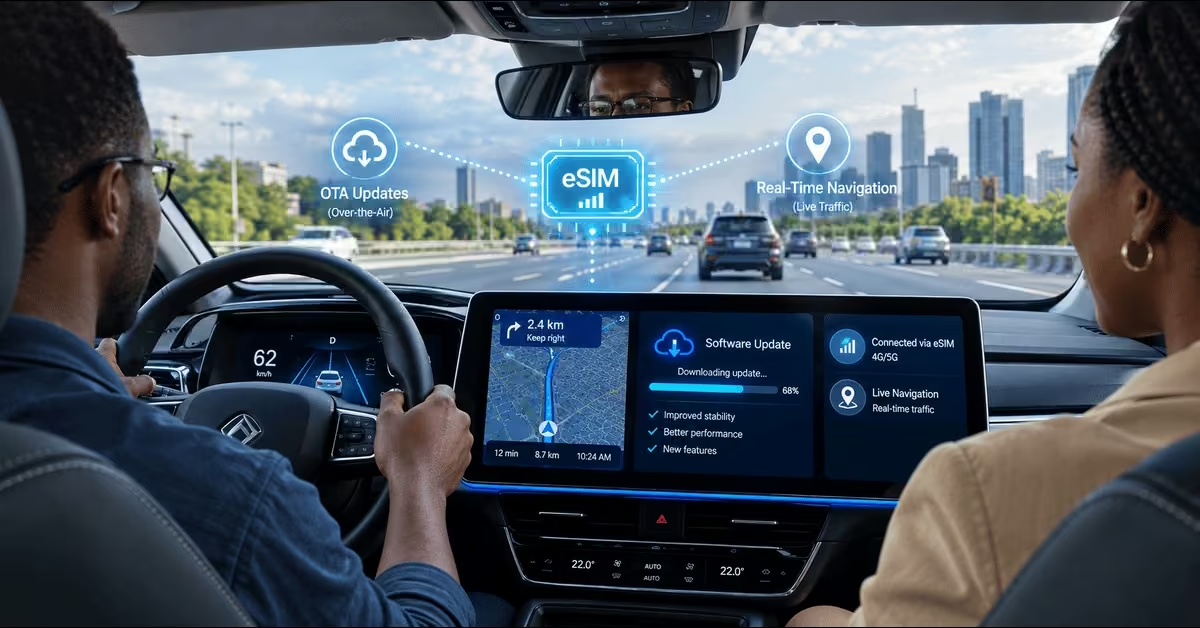
Modern vehicles increasingly use built-in eSIMs to provide connected services. These can include real-time navigation, emergency calling, software updates, vehicle diagnostics, and other online features. Manufacturers install the eSIM in the vehicle, enabling remote connectivity management by providers without requiring the owner to replace a physical SIM card.
This industry is increasingly adopting eSIMs; for instance, autonomous cars use eSIMs. This is because the car needs to stay connected even when it changes owners, moves between countries, or travels across different mobile networks. With a built-in eSIM, the vehicle’s mobile connection can be managed digitally without physically replacing a SIM card. This makes eSIM technology particularly useful for connected and smart vehicles.
Additionally, built-in eSIM connectivity lets modern cars support several connected features. For instance, it can receive software updates remotely without requiring a visit to a dealership, provide navigation with live traffic information, make automatic emergency calls when needed, and send diagnostic alerts to the owner’s phone. As connected-car technology continues to develop, eSIMs are expected to become increasingly common in new vehicles sold around the world.
f) Agriculture
Farmers can use eSIM-enabled sensors to collect information such as soil moisture, temperature, and other farm conditions in areas where Wi-Fi may not be available. These sensors can transmit data over mobile networks, allowing farmers to monitor conditions remotely. This information can then support decisions such as when to irrigate crops or identify areas that need attention.
Limitations of eSIMs
Although eSIM technology offers greater convenience and flexibility, it has its limitations. These limitations include device compatibility, internet access during installation, network restrictions, and the process of transferring an eSIM between devices.
a) Not All Devices Support eSIM
An eSIM requires compatible hardware, so it isn’t available on every smartphone, tablet, or smartwatch. Some older devices and certain budget models may only support physical SIM cards. Check your specific device model before purchasing an eSIM.
b) Requires an Internet Connection for Installation
You generally need Wi-Fi or an existing mobile data connection to download and install an eSIM profile. This can be inconvenient if you arrive somewhere without internet access and have not installed the eSIM beforehand. For this reason, it is often a good idea to complete the installation before traveling or while you still have a reliable internet connection.
c) Transferring an eSIM Can Be More Complicated
Moving a physical SIM to another compatible phone is usually as simple as removing it and inserting it into the new device. With an eSIM, transferring the service may require re-downloading or reactivating the eSIM profile, depending on the provider and device. Some providers may also require you to complete a new activation process before you can use the eSIM on the new device.
d) Troubleshooting Can Be More Difficult
If an eSIM stops working, you cannot simply remove it and replace it with another physical SIM while troubleshooting. If you are traveling and don’t have another internet connection available, contacting the provider or reinstalling the eSIM may also be more difficult. This means having access to support or an alternative connection can be useful when dealing with eSIM problems.
e) Some eSIM Plans Are Data-Only
Not every eSIM provides a phone number, calls, and SMS. Many travel eSIMs are designed mainly for mobile data, meaning users may need to keep their regular SIM active for calls, text messages, and services such as bank verification SMS. Always check what an eSIM plan includes before purchasing so you know which services are available.
Read Also: How to Generate and Accept QR Code Payments: Complete Business Guide
Conclusions
eSIM technology is changing how people connect to mobile networks by replacing the traditional removable SIM card with a programmable SIM built directly into compatible devices. It offers users benefits such as easy international connectivity, easy switching between plans, support for multiple numbers, and a line that cannot be lost. Because of this, the technology is used in various industries, such as autonomous cars, agriculture, eSIM-enabled sensors that help farmers gather soil information, international travelers, and wearable devices that support eSIM. However, eSIMs also have limitations, including a set number of devices and more complicated transfers between devices. They also still require an internet connection during setup.