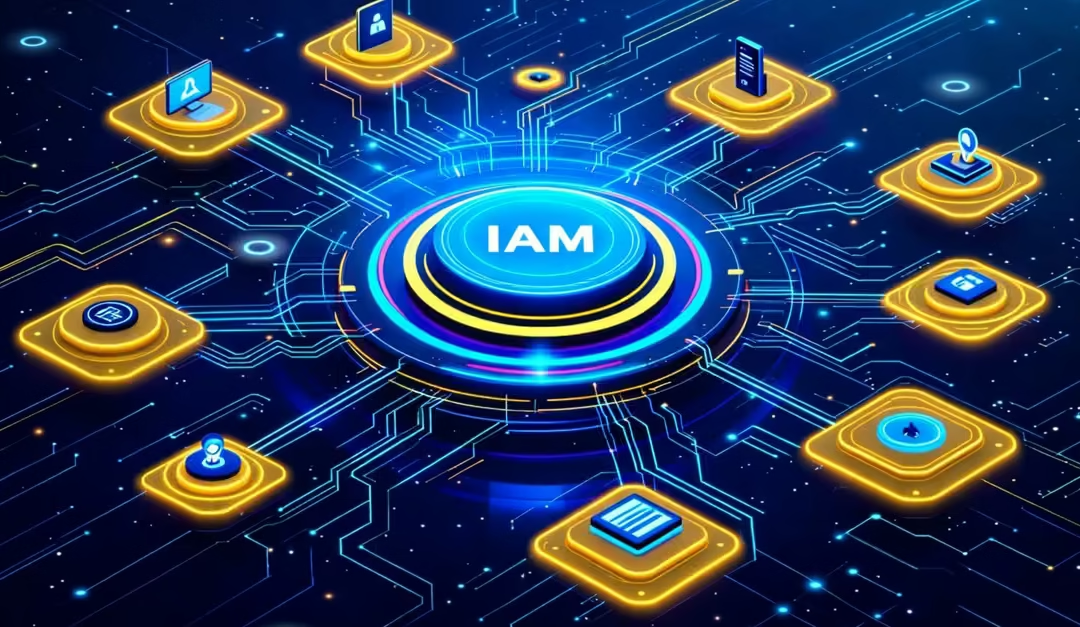
In today’s digital-first world, individuals, businesses, and governments highly depend on connected digital systems to deliver services, manage information, and communicate efficiently. Everyday activities such as online banking, shopping on e-commerce platforms, accessing government services, and working remotely are now powered by digital technologies. As a result, large amounts of sensitive information are constantly being created, stored, and shared across digital networks. This growing dependence makes security and trust important factors to consider in modern technology. One of the biggest challenges in this environment is ensuring that only authorized users can access specific digital resources, while unauthorized users are kept out. Cyber threats such as hacking, data breaches, and identity fraud have become more advanced, often taking advantage of weak login systems and poor access controls. At the same time, organizations must ensure that systems remain easy to use and accessible. This challenge shows the importance of digital Identity and Access Management (IAM). Digital Identity refers to the online information that uniquely represents a user, device, or system. This may include usernames, passwords, and biometric data. Identity and Access Management, on the other hand, refers to the rules and processes used to confirm identities and manage what users are allowed to access.
Understanding Digital Identity
A digital identity refers to the set of information that represents a person, device, or system in a digital environment. It includes details such as usernames, passwords, unique identification numbers, and additional features, such as user roles, access permissions, and activity records, as per Lorna (2025). Just as physical identities are verified by documents like national identity cards and passports, digital identities exist entirely online. They can be used across multiple platforms and services simultaneously.
In modern technology, digital Identity is built from several connected components that work together to establish trust and confirm authenticity. Passwords, PINs, and cryptographic keys are the basic credentials used by organizations to verify Identity. As technology evolves, more advanced methods, such as biometric technologies, are being used to verify Identity. This technology uses fingerprints, facial recognition, and voice identification. In addition, a study by Ryan (2025) highlights that systems are currently being designed to use adaptive authentication to confirm Identity. In this way, the system can analyze user behaviour, such as login times, device usage, and location, to confirm Identity. This helps to improve security without interrupting the user experience.
Understanding Digital Identity and Access Management
Identity and Access Management (IAM) refers to the systems and processes used to control who can access digital resources and under what conditions, according to SailPoint. Its main aim is to ensure that only verified and approved users can access systems, applications, and data, while unauthorized users are blocked. IAM combines policies, procedures, and technologies to verify user identities and enforce access rules across an organization’s digital environment.
Access management relies on two main steps: authentication and authorization. Authentication refers to the process of confirming a user’s Identity, often with passwords or biometric data. After that, authorization decides what actions the user can take. For instance, someone at work might be able to view specific files but not change or delete them. To improve security, many organizations use role-based access control (RBAC). In this method, an employee is allowed to access only the resources and information of the organization necessary for their assigned job role. They also use multifactor authentication, which requires employees to provide multiple forms of verification before they are granted access to company resources and information.
Read Also: Data-Driven Decision-Making for Businesses
Key Components of IAM Systems
Identity and Access Management systems are built on several interconnected components that work together to secure digital environments. Each element has a specific function: identifying users, verifying their authenticity, granting appropriate access, and monitoring activities. A study by Mirren (2025) highlights the following components of Identity and access management.
- Identification
This is the first step in the IAM process, which involves recognizing who or what a person is requesting access to the system of the organization. This usually occurs when a user presents an identifier such as a username, employee ID, email address, or device identity. Identification alone does not confirm whether the user is genuine. Still, it establishes a digital reference that the system can evaluate during subsequent security checks.
- Authentication
Authentication is about making sure a user is really who they say they are. This is done by checking things like passwords, PINs, biometrics, or one-time codes. Modern IAM systems often combine multiple authentication factors to increase security and reduce the risk of unauthorized access caused by stolen credentials.
- Authorization
After a person has been granted access to an organization’s resources and information, authorization defines what the authorized user can access and what actions they can perform within the system. Permissions are typically assigned based on predefined policies and roles, ensuring that users have access only to the resources necessary for their responsibilities. By doing this, the security risks are being minimized as the exposure to sensitive data and important systems is reduced.
- Auditing and Monitoring
After an authorized employee accesses the organization’s resources and information, auditing and monitoring help the organization track activities performed by that employee in digital environments. IAM systems log authentication attempts, access requests, and system actions, enabling organizations to detect suspicious behaviour, investigate incidents, and ensure that the organization is complying with regulatory requirements. Continuous auditing ensures accountability and strengthens the overall security posture by identifying potential weaknesses and misuse.
Key Technologies Driving IAM Today

A range of technologies designed to power modern Identity and Access Management. This technology aims to balance security and usability. They enable entities to efficiently manage the identities of the people who access their resources and information across cloud computing environments, financial platforms, and enterprise systems. The following are the technologies that facilitate Identity and access management, as per Dodson (2024)
- Multifactor Authentication (MFA)
This is the technology used to verify the Identity of the user by requesting them to confirm their Identity using two or more independent factors. One can use credentials such as passwords, security tokens, and biometrics to verify their Identity. Multifactor authentication helps an entity reduce unauthorized access to accounts when passwords are stolen or compromised, requiring verification with a second independent factor to grant access. This technology is widely used to protect sensitive data and critical operations in banking applications, corporate systems, and cloud platforms.
- Single Sign-On (SSO)
This is the technology used in Identity and access management, which allows users to authenticate once and gain access to multiple applications and systems without needing to log in repeatedly. Single sign-on makes things easier for users by allowing them to log in with a trusted identity provider. This reduces the need to remember many passwords and helps keep accounts secure. Many businesses, cloud services, and productivity platforms use this technology so employees can easily access different tools during their workday.
- Biometric Authentication
Uses unique physical or behavioural characteristics—such as fingerprints, facial recognition, or voice patterns—to verify Identity. Biometrics provide a higher level of assurance than traditional passwords because they are difficult to replicate or steal. This technology is increasingly embedded in smartphones, laptops, financial services applications, and secure enterprise systems, offering both strong security and a frictionless user experience.
- Role-based Access Control (RBAC)
Role-based access control (RBAC) is an access management approach where permissions are assigned to users based on their roles within an organization rather than on an individual basis. Each role—such as administrator, manager, or employee—comes with predefined access rights that determine which systems, applications, or data a user can access. This model simplifies access management, improves security by enforcing the principle of least privilege, and reduces the risk of unauthorized access. RBAC is widely used in organizations to ensure that users can access only the information necessary for their job responsibilities.
- Access Certification and Recertification
This technology is used in an organization to ensure that authorized users still need the resources and information they are accessing. This is done by regularly confirming and reviewing to determine whether users still need their assigned access rights. Organizations perform these reviews to ensure permissions remain appropriate as roles or responsibilities change. Regular validation helps reduce the risk of over-privileged accounts, insider threats, and compliance violations, while supporting accurate and secure access controls, particularly in regulated environments. This also helps ensure access controls are accurate and secure, which is especially important in regulated industries.
- Certificate-based Access Control
This security method uses digital certificates to verify the identity of users or devices before granting them access to systems or networks. The certificates function like electronic ID cards issued by trusted sources and verify that an access request is valid. Unlike password-based methods, certificate-based authentication is harder to compromise and reduces the risk of identity theft. It is especially effective for securing network communications, encrypted connections, and enterprise environments that require high levels of trust and security.
How IAM Works in Everyday Digital Activities
In everyday digital activities, Identity and Access Management (IAM) operates quietly in the background to ensure secure and authenticated access to systems, applications, and online services. Although users may not always notice it, IAM is a foundational component of secure digital interactions across many sectors. The following are areas where identity and access management are used in digital activities.
- Logging into Mobile Apps and Online Services
When you log in to mobile apps like social media, Identity and access management systems verify your identity using your username, password, and multifactor authentication codes. Additionally, many modern systems use adaptive authentication. Adaptive authentication can look at details of the user, such as the device used to log in to the mobile application and the location where the login took place. This helps keep accounts secure while making the login process easy and user-friendly.
- Government and Public Services
Government agencies use IAM to safeguard public records, manage citizens’ digital identities, and protect sensitive information. IAM helps provide secure logins for online public services, central identity management, and strong access controls. These steps help build trust, meet regulations, and protect important public data.
- Online Banking and Financial Services

Customer accounts and financial information need to be protected from unauthorized access and data breaches. For financial institutions and banks to do that, they use Identity and access management, using methods such as strong authentication, session controls, and ongoing monitoring to verify users and prevent fraud. Within the company, IAM ensures employees only see the financial data they need for their jobs, helping prevent insider threats and unauthorized access.
- Enterprise Work Systems and Remote Work Environment
In companies, IAM controls how employees access work email, collaboration tools, file storage, and internal apps. Tools like Single Sign-On and role-based access control make it easier for employees to get what they need while ensuring they use only the resources that fit their jobs. This kind of access control is especially important for remote and hybrid work.
- Healthcare Systems
The laws required healthcare organizations to follow strict data protection rules to ensure the safety of electronic health records. This necessitates them to make use of Identity and access management so as to avoid security issues with these records and information. IAM makes sure doctors, nurses, and staff can only see the patient information they need for their work. Access is usually logged and monitored, which helps keep people accountable and protects sensitive medical data.
- E-Commerce
Online stores use IAM to verify customer identities, protect payments, and safeguard user accounts and purchase history. IAM helps stop account takeovers, supports fraud detection, and makes logging in both secure and easy. For expensive purchases, extra identity checks are often used to keep customers safe.
Why Digital Identity and Access Management Matters for Today’s Businesses
Keeping critical systems and sensitive data safe is now a top concern for businesses. As companies use more digital tools, cloud services, and remote work, Identity and Access Management (IAM) helps control who can access specific resources and when. The following are the benefits of having Identity and access management in your business.
- Protects Sensitive Data and Systems From Unauthorized Access
IAM ensures that only authorized users can access sensitive data and important systems. This is done using tools such as role-based access control and ongoing monitoring. By doing this, IAM helps prevent accidental data breaches and cyberattacks across many organizations, keeping intellectual property, key assets, and customer data safe.
- Supports Compliance With Regulatory Requirements
Many industries must comply with strict data protection rules established by the relevant authorities. IAM helps companies meet these standards by establishing clear access policies, maintaining audit logs, and generating compliance reports. This reduces the risk of fines, security issues, and reputational harm.
- Enables Secure Remote and Hybrid Work Environments
As employees work from different places and devices, IAM uses multifactor authentication (MFA) and flexible access controls to keep systems secure. These steps confirm user identity and let staff work from anywhere while keeping company data safe.
- Reduces Risks From Insider Threats and Account Misuse
IAM uses least-privilege access, so people only get the permissions they need for their jobs. By monitoring user activity and spotting anything unusual, IAM can catch insider threats, mistakes, or compromised accounts before they cause major problems.
Challenges of IAM Implementation
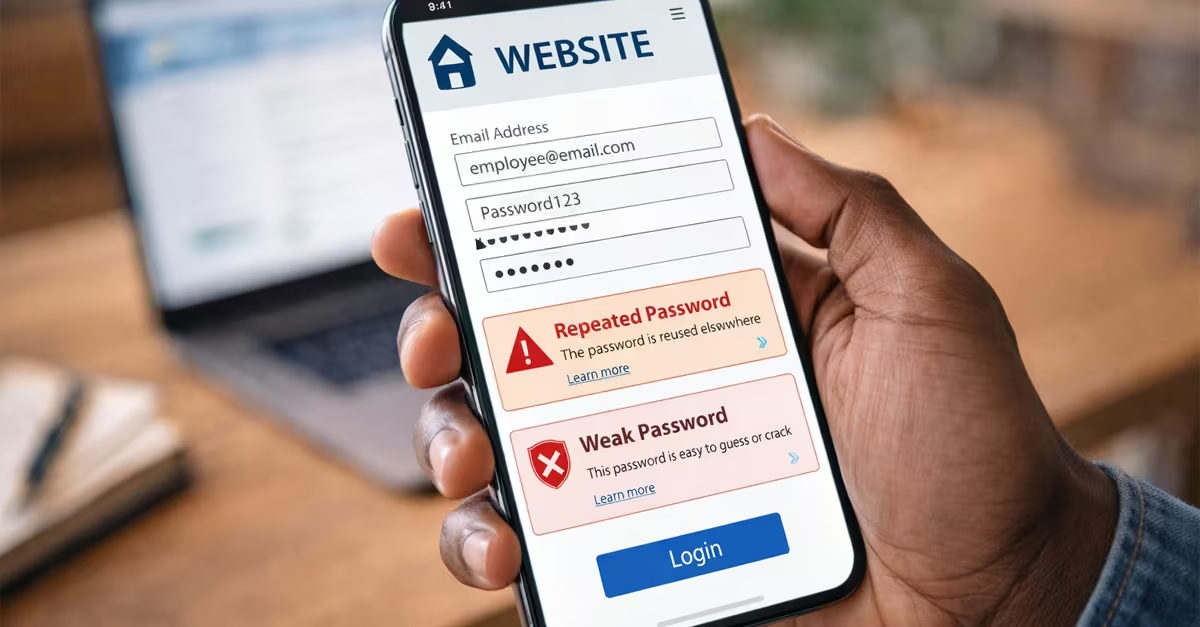
While Identity and Access Management (IAM) offers strong security and operational advantages, implementing and maintaining IAM systems comes with several challenges. Organizations must carefully address technical complexity, cost considerations, and user-related issues to ensure IAM solutions enhance security without disrupting daily operations or user experience. The following are the challenges entities face as per Fernando (2025)
- Password Management Issues-The major thing that results in security breaches in most entities is weak and reused passwords. Even if an organization installs a robust identity and access management system, poor security practices will still expose the organization to cyberattacks. Without strong password policies or passwordless authentication options, attackers may exploit compromised credentials to gain unauthorized access.
- Access Privilege Mismanagement-This occurs when users are granted more access to the organization’s information and systems than necessary. This risk is an origin of insider threats and accidental data exposures. This often occurs when access rights are not updated after role changes or when former employees retain system access.
- User Resistance to Security Measures– Employees may resist IAM security controls, such as multifactor authentication, due to concerns about convenience and usability. If authentication processes are seen as time-consuming or disruptive, users may attempt to bypass them, thus weakening overall security.
- Integration Complexity– IAM solutions need to work well with existing systems, such as cloud services and tools from other companies. Integration can get complicated when these systems use different technologies or identity standards. If integration is not done well, it can lead to inconsistent access, additional administrative work, and security problems.
Read Also: How Kenyan Businesses Can Boost Sales and Efficiency with Digital Payments
Conclusion
As digital technologies continue to shape business operations and everyday interactions, the ability to securely identify users and control access to digital resources has become a fundamental requirement for every business. Without structured IAM policies and systems, organizations face higher risks of unauthorized access, data breaches, and identity theft. By applying effective IAM technologies, such as authentication and authorization controls, role-based access control, multifactor authentication, single sign-on, biometric authentication, and continuous monitoring, organizations can ensure users are correctly identified and granted only the access they need. Identity and Access Management (IAM) presents several challenges that organizations must address before implementation. These include integration complexity, employee resistance to security measures, mismanagement of access privileges, and poor password practices. Install identity and access management systems now in your business to secure your data and critical systems.