
If you are a foreign national living, working, studying, or doing business in Kenya, having a valid Alien ID is important, as the document serves as proof of your legal stay in Kenya. It is generally required for foreigners staying in the country for more than 90 days under a valid pass or permit. To ensure legal stay, any foreigner needs to know the correct process and procedure to renew or replace an alien ID.
A valid Alien ID may also be needed when accessing services such as banking, SIM card registration, contracts, immigration services, and other identification-related services. If your Alien ID has expired, been lost, or damaged, you may need to renew or replace it. Many parts of the process can be started online through eCitizen and immigration platforms, although you may need to visit an immigration office for biometric verification or collection.
In this article, we have illustrated:
- how to replace your lost alien ID
- how to renew your alien ID
- the cost incurred in replacing and renewing the alien ID
- The processing time for an alien ID application
- the required documents.
Who Must Renew or Replace an Alien ID in Kenya?
Foreign nationals living in Kenya are required to renew or replace their Alien ID under certain situations in order to comply with Kenyan immigration laws. Since the Foreigner Certificate is linked to a person’s immigration status, it must always remain valid, accurate, and in good condition. The following are the circumstances where you are required to renew your Alien ID.
- Your current Alien ID or Foreigner Certificate is close to expiring
- Your work permit, dependent pass, student pass, or residence status has been renewed or extended
- Your card has already expired but you still legally live in Kenya
- Immigration authorities require you to obtain an updated card after changes to your immigration records
Requirements for Alien ID Renewal in Kenya (2026)
Renewing an Alien Card in Kenya requires foreign nationals to submit updated documents and complete an online renewal application through the immigration portal. You will require the following documents as per Bright (2025)
a) Existing Alien Card
Applicants are generally required to present their current or recently expired Alien Card during the renewal process. In most cases, the old card may be surrendered after the new Foreigner Certificate has been issued.
b) Valid Passport and Immigration Permit
You must have a valid passport together with an active Kenyan immigration status such as a work permit, dependent pass, student pass, or residence permit. Immigration officers use these documents to confirm that you are legally permitted to continue living in Kenya.
c) Completed Online Application Form
The renewal application is completed online through the immigration or eCitizen platform. Applicants must choose the Alien Card renewal service and carefully fill in all required personal and immigration details correctly.
d) Proof of Residence in Kenya
Immigration authorities may request proof of your current residential address in Kenya. Accepted documents can include utility bills, tenancy agreements, bank statements, or official correspondence showing your local address.
e) Recent Passport-Size Photographs
Applicants may also be required to provide updated passport-size photographs that meet immigration photo requirements, including a clear white background.
f) Immigration Appointment
After successfully submitting the online application and making payment, applicants may be required to book or attend an appointment at a designated immigration office to present original documents and complete verification procedures.
Read Also: How to Apply for a Kenya Alien ID (2026 eFNS Registration Guide)
Kenya Alien Card Fees and Renewal Cost
Below is a breakdown of the main costs applicants should expect.
Renewal and Issuance Fee
The current government fee for issuing or renewing an Alien Card is KES 5,000 per year. This was increased from the previous fee of KES 1,000 per year, making it five times higher than before. The total amount you pay depends on the number of years covered by your immigration permit or pass. For example:
- A 1-year renewal costs KES 5,000
- A 2-year renewal costs KES 10,000
Lost or Stolen Card Replacement Fee
If your Alien Card has been lost, stolen, or destroyed, the government replacement fee is KES 2,000.
How to Renew an Alien ID Online Through eCitizen (Step-by-Step)
Step 1 – Create an Account or Log In

- Visit the official eFNS portal.
If you already have an eCitizen account, you can use the same login details to sign in, meaning you do not need to create a separate account. - If your eCitizen account is registered as an eVisa or business account, you may need to create a separate eFNS account. New users should first register on the Government of Kenya Single Sign-On portal at ecitizen.go.ke before using those details to access the eFNS portal.
Step 2 – Start Your Renewal Application
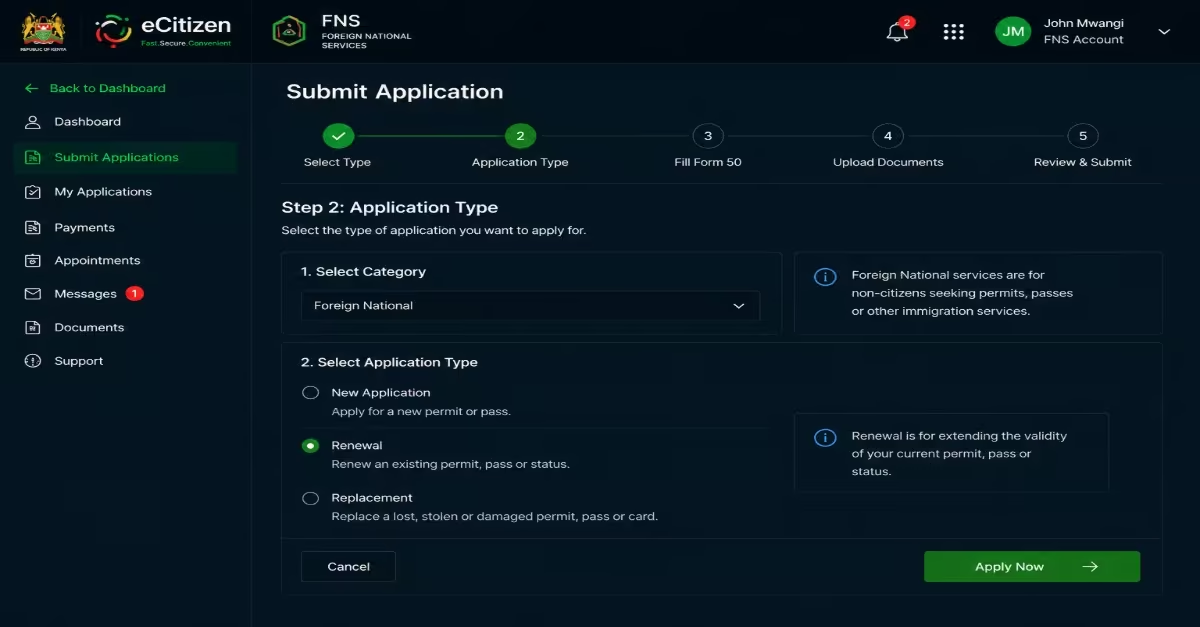
- After logging in, click on the “Submit Applications” tab.
- Select “Foreign National” from the available options, then click the “Apply Now” button.
- When asked to choose the application type, select “Renewal.” Carefully fill in all the required details in Form 50, including your personal information, passport details, and immigration information.
Step 3 – Upload Your Documents
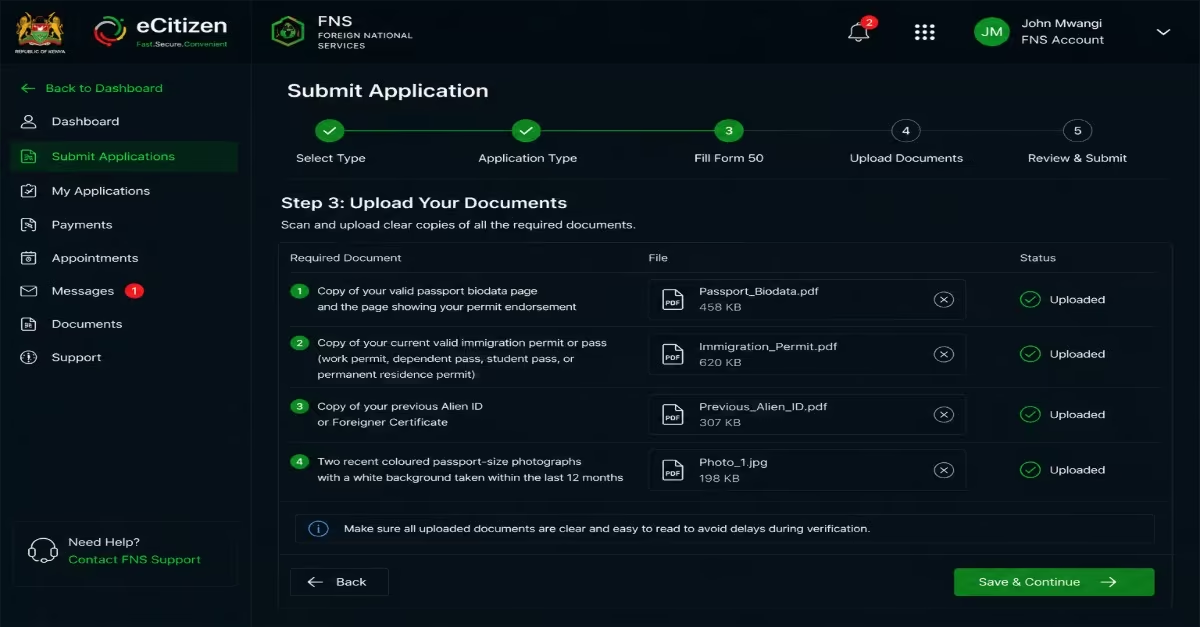
Scan and upload clear copies of all the required documents, including:
- Copy of your valid passport biodata page and the page showing your permit endorsement
- Copy of your current valid immigration permit or pass, such as a work permit, dependent pass, student pass, or permanent residence permit
- Copy of your previous Alien ID or Foreigner Certificate
- Two recent coloured passport-size photographs with a white background taken within the last 12 months
Make sure all uploaded documents are clear and easy to read to avoid delays during verification.
Step 4 – Pay the Renewal Fee
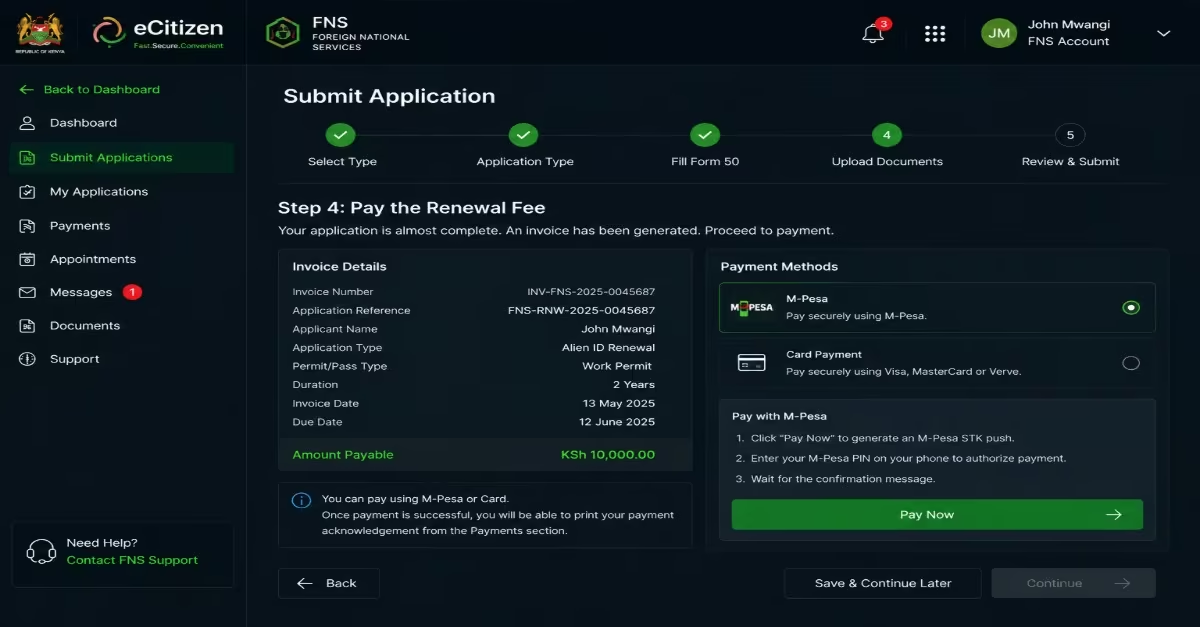
- After completing the application form, the system will automatically generate an invoice.
Go to “Dashboard” → “Payments” to view the invoice and make payment through M-Pesa or card using the portal.
Step 5 – Print Your Documents
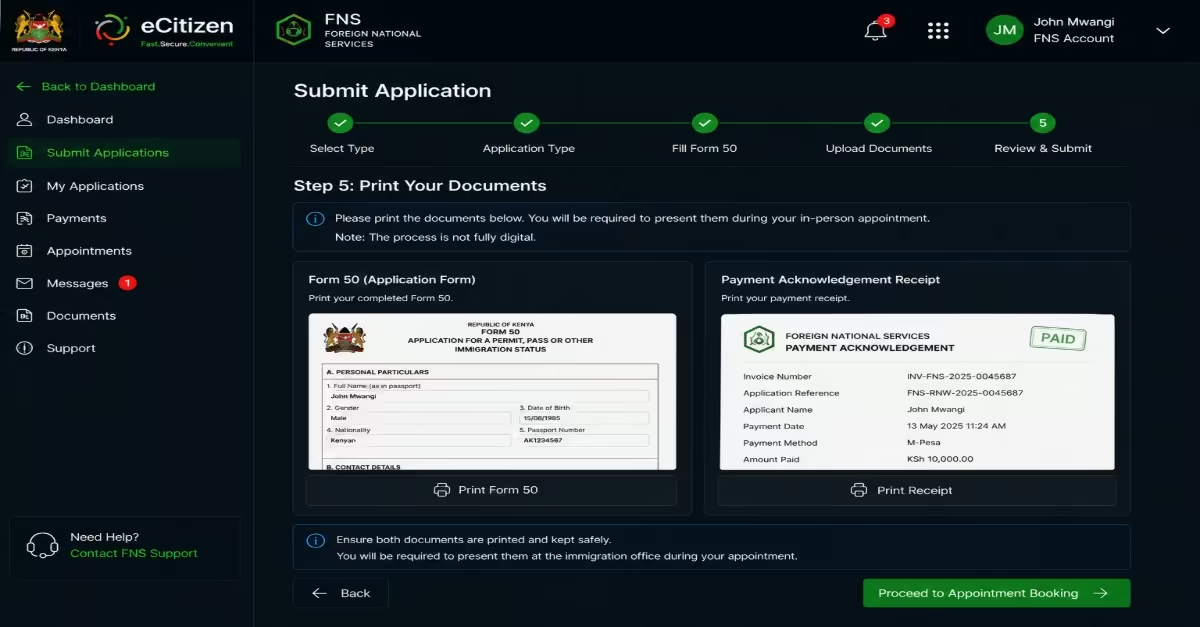
- Go to “Dashboard” → “My Applications” and print your completed Form 50.
- Then go to “Dashboard” → “Payments” and print the payment acknowledgment receipt.
Quick Tip: Both documents must be physically presented at the immigration office during your appointment because the process is not fully digital.
Step 6 – Book Your In-Person Appointment
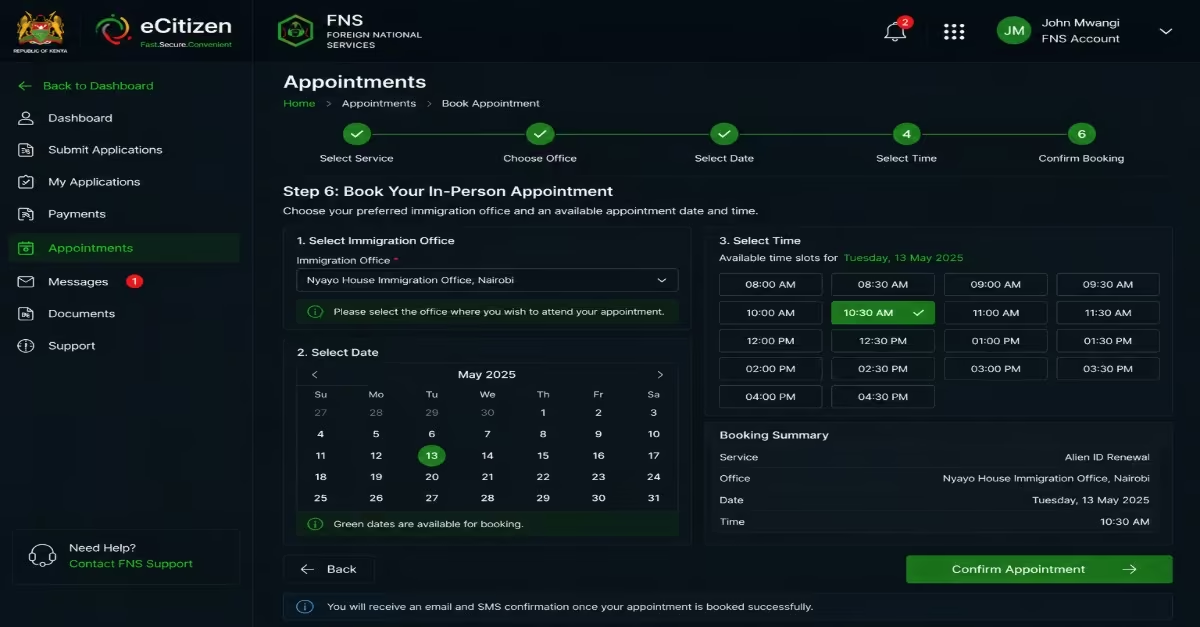
- Open the “Appointment” tab on your eFNS dashboard and select your preferred immigration office together with an available appointment date.
Step 7 – Attend Your Appointment
On the appointment day, visit the immigration office with the following documents:
- Original passport together with copies of the biodata page and permit-endorsed page
- Original valid immigration permit or pass together with a copy
- Original previous Alien ID card together with a copy
- Two recent coloured passport-size photographs with a white background
- Printed Form 50 signed and stamped
- Printed payment acknowledgment receipt
Submit all documents to the immigration officer for verification, review, and approval.
Step 8 – Biometric Capture

- After your documents are accepted, immigration officers will capture your fingerprints and facial photograph at the office.
- This biometric process is compulsory for all applicants and cannot be skipped or completed through another person.
- After completion, you will receive a waiting slip confirming that your application is being processed. Keep this slip safely because it may be required later.
Step 9 – Collect Your New Alien Card
- Once the card is ready, you will receive a notification through your eFNS dashboard and/or SMS message. Production of Alien Cards is handled centrally by the National Registration Bureau, and it usually takes at least 5 weeks. It may take between 6 and 12 weeks depending on the number of applications being processed and possible system delays.
Quick Tip: Collection must be done in person because agents, employers, or representatives are not allowed to collect the card on behalf of the applicant. You must carry your original passport to the issuing office for identity verification.
Before releasing the card, the immigration officer will confirm your identity using the system, inspect your passport, and request your signature. If you have changed your residence or contact details since applying, make sure you update the information on the eFNS portal and confirm your selected collection office.
How Long Does Alien ID Renewal Take in Kenya?
Alien ID renewal in Kenya typically takes at least 5 weeks. It may take up to 3 months depending on application volumes and processing delays at the National Registration Bureau, which prints the cards centrally after biometric capture. Most applicants receive their renewed card within 6 to 8 weeks under normal conditions. Since the eFNS system only allows renewal when the card is close to expiry, some applicants may experience a temporary gap where the old card has expired while the new one is still being processed. During this period, the waiting slip issued at the immigration office serves as temporary proof that your renewal is in progress and should be carried together with your passport until the new Alien Card is collected.
Penalty for Late or Non-Renewal
Foreign nationals who fail to renew or obtain an Alien Card when required may be charged a penalty of KES 10,000 per year. This is also an increase from the previous penalty of KES 1,000 per year. The penalty is charged for every year, or part of a year, that a person remains without renewing or registering the card. It is paid in addition to the normal renewal fee.
How to Replace a Lost Alien ID in Kenya (Step-by-Step Guide)
Step 1 – Report the Loss and Obtain a Police Abstract
- As soon as you notice that your Alien ID has been lost or stolen, the first step is to report it at the nearest police station. You will need to provide your full name, nationality, Alien ID number (if you have it), and explain where and when the loss happened.
- After making the report, you will be issued with a police abstract. This is an official document that confirms your Alien ID is lost, and it is a required document when applying for a replacement.
Quick tip: Make sure you keep the original copy safe because you will need it during the entire application process. The police abstract is usually valid for about three months, so it is important to start your replacement process as soon as possible.
Step 2 – Log Into the eFNS Portal
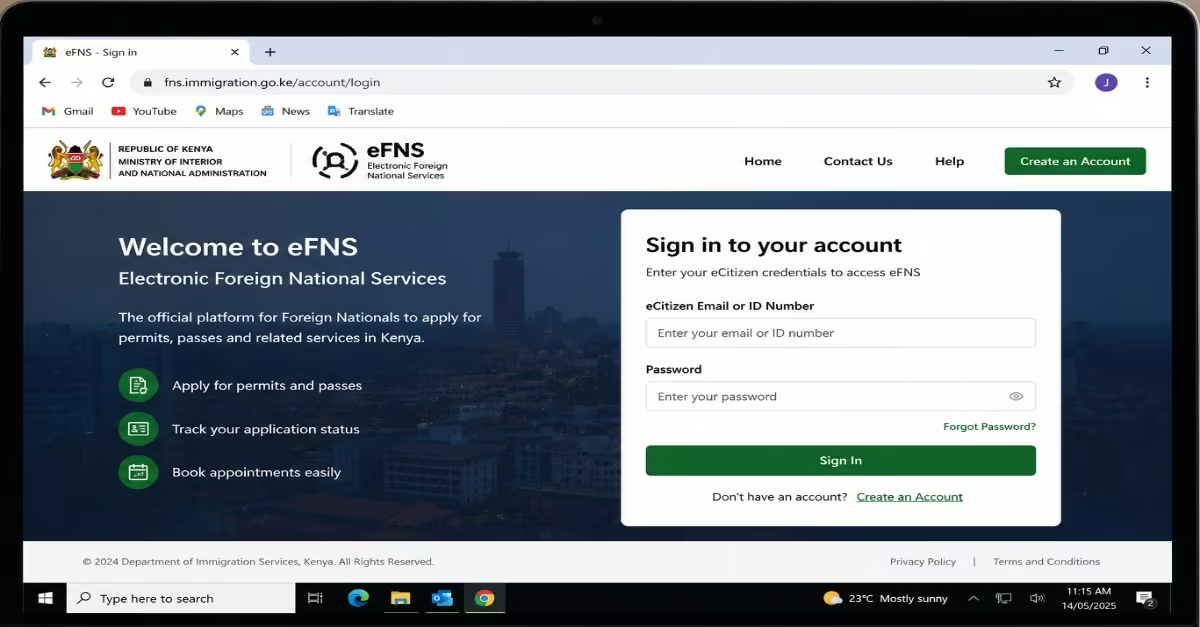
- Visit the official immigration portal at fns.immigration.go.ke.
- Log in using your eCitizen Single Sign-On details. If you already have an eCitizen account, you do not need to create a new one.
- New users must first register on ecitizen.go.ke, then use those login details to access the eFNS system.
Step 3 – Select the Duplicate Application
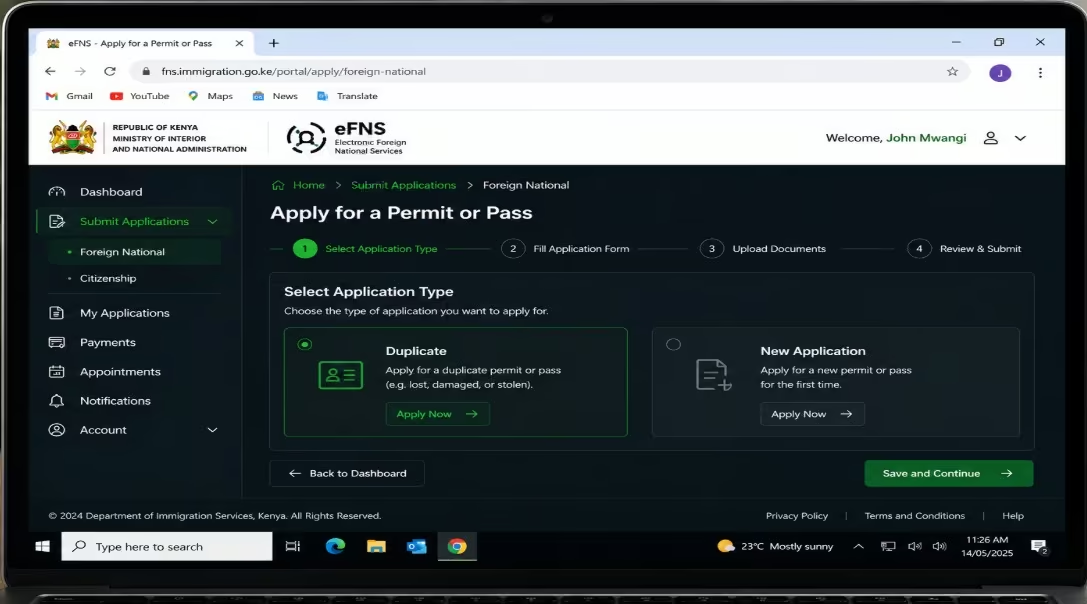
- After logging in, go to the “Submit Applications” section.
- Choose “Foreign National” from the available options, then click “Apply Now.”
- When asked for the application type, select “Duplicate,” which is the official category used when replacing a lost or damaged Alien ID card.
- You will then be required to fill in your personal details, passport information, and immigration details carefully using Form 50.
Step 4 – Upload Your Supporting Documents
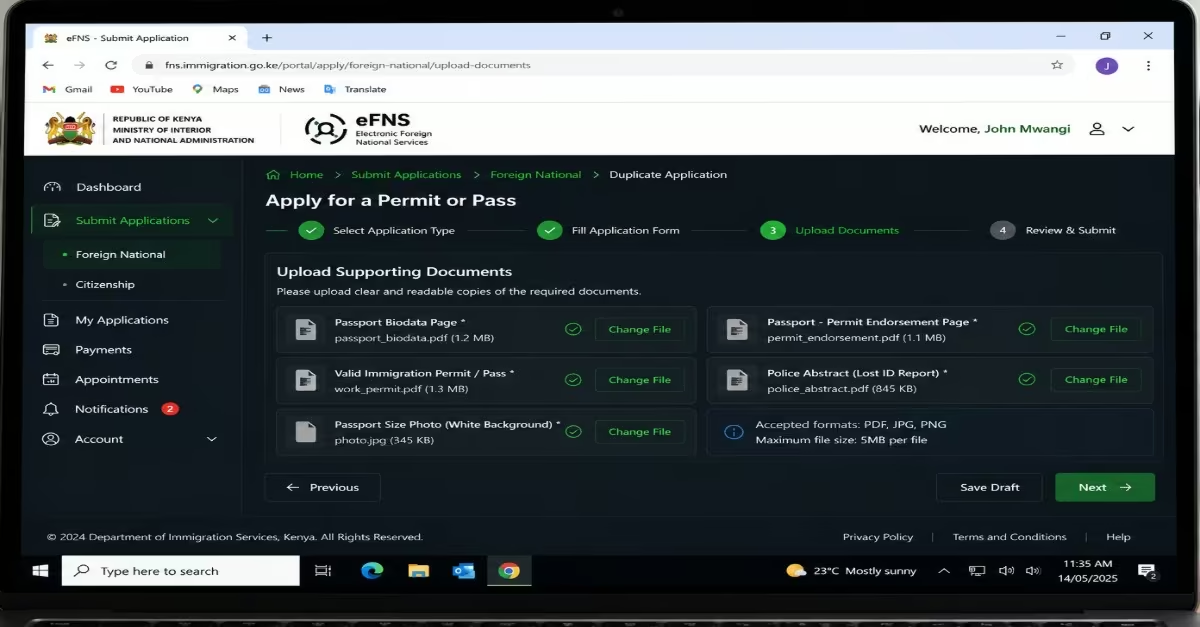
You will need to scan and upload clear copies of the following documents:
- Your valid passport biodata page and the page showing your permit endorsement
- A valid immigration permit or pass (such as work, student, dependent, or residence permit)
- Police abstract confirming the loss of your Alien ID
- Two recent coloured passport-size photos with a white background (taken within the last 12 months)
Make sure all documents are clear and readable to avoid delays in processing.
Step 5 – Pay the Replacement Fee
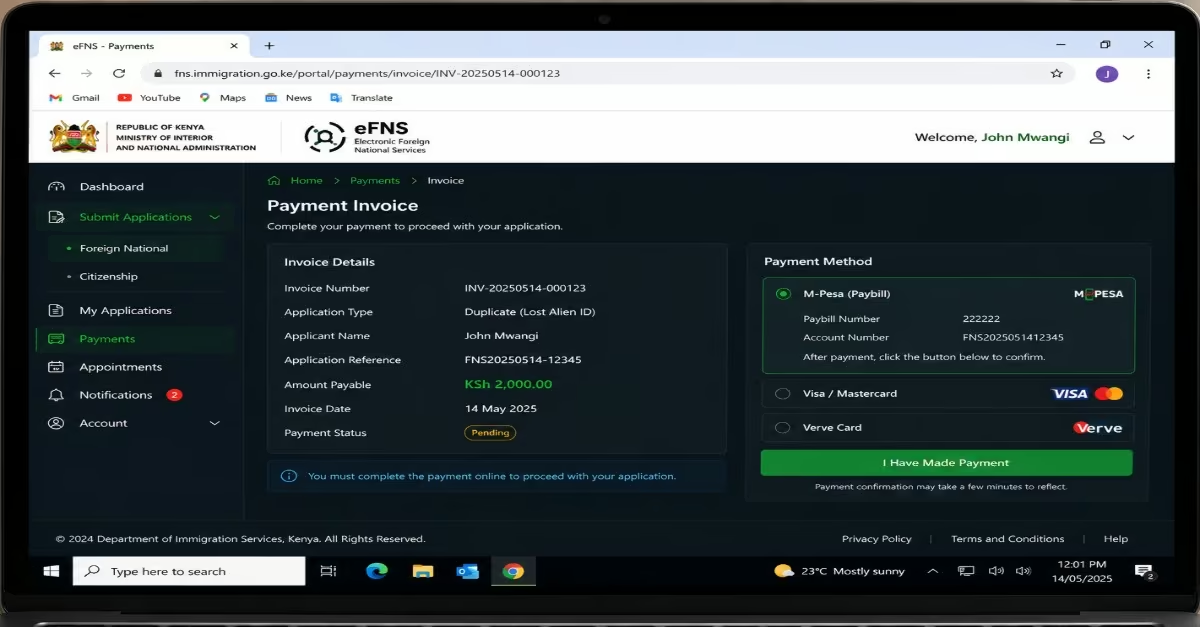
- Once you complete the application form, go to the “Dashboard” and select “Payments” to view your invoice.
- The replacement fee is KES 2,000, which you can pay using M-Pesa or a card directly through the portal.
- Cash payments are not accepted at immigration offices, so all payments must be made online before attending your appointment.
- After payment, save or print the payment receipt as you will need it later.
Step 6 -Print Documents and Attend Your In-Person Appointment
- Go to the “My Applications” section in your dashboard and print your completed Form 50. Also print your payment receipt from the “Payments” section.
- Book an appointment through the “Appointment” tab.
- On your appointment day, visit your nearest immigration office and your biometric data (fingerprints and photograph) will be captured again. This is a required step for all replacements.
- You will then be given a waiting slip as proof that your application is being processed. Keep it safely until you collect your new card.
Step 7 – Track Your Application Status
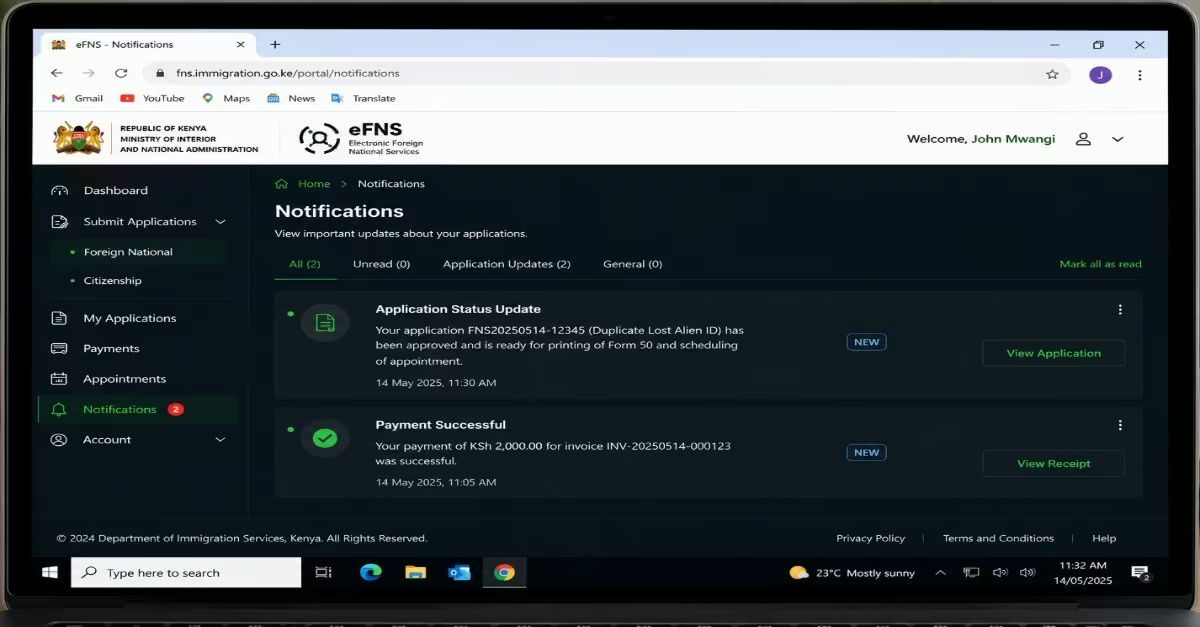
- You can monitor your application progress by logging into your eFNS account and checking the “Notifications” section.
Step 8 – Collect Your New Alien ID
- Once your new Alien ID is ready, you will be notified through your eFNS dashboard and possibly via SMS. You must collect it in person, as no one else is allowed to collect it on your behalf.
- Bring your original passport for identity verification at the collection point. An immigration officer will confirm your details, check your documents, and request your signature before issuing the new card.
- If you have changed your contact details or location, update them on the eFNS portal before collection to avoid communication issues.
Read Also: How to Apply for a Kenyan Passport in 2026: Full Guide for First-Timers
Conclusion
Renewing or replacing an Alien ID in Kenya can be done partially online, then after that one should visit the immigration center for biometrics capture as long as you have the required documents like the existing Alien ID, proof of residence, recent passport, and proof of residence in Kenya. To renew or replace, you should follow the step-by-step procedures illustrated above. After application, your application usually takes between 5 weeks to 3 months for it to be fully processed. Failure to renew will attract fines amounting to KES 10,000 per year.