
In today’s highly competitive business environment, businesses face much pressure to make faster, more innovative and more strategic decisions. In the past, companies were making decisions based on instincts, industry trends, and personal experience. While these methods worked in the past, the advancement of technology and the rise in access to data have played a crucial role in reshaping how decisions are made in various business environments. Data-driven decision-making has been developed to be a very crucial tool which belongs not only to large business enterprises but can also be utilised by small and medium enterprises who has objectives to remain competitive in the market, adapt easily to various market conditions, and become resilient. By making use of data, even the smallest businesses can acquire optimised operations, build long-term sustainability and uncover growth opportunities.
In this article, we will explore the key principles, practical tools, strategies to foster a data-oriented culture, and unique advantages.
Importance of Data-Driven Decision-Making
The importance of using data-driven decision-making in a business goes further than just tracking numbers. It provides a tangible advantage that directly impacts the growth, survival and enables a company to have a competitive edge for an extended period of time. Research conducted by Databird highlights the following advantages:
Risk reduction -Making decisions using data helps an enterprise reduce the expensive mistakes which may come as a result of using trial and error strategies to make decisions. By analysing the customer behaviour, financial data, and the market trends, a company is able to forecast the challenges the business is about to encounter, thus making proactive decisions.
Better allocation of resources- resources are always a scarce component in a business. Using data will help a company to allocate money and other resources to where it will earn the highest return for the benefit of the business.
Enhanced customer understanding- by a business analysing the customer data, it is able to understand the customer buying patterns, identify the pain points and forecast the future demand. This enables a business to design products that meet and exceed the customers’ satisfaction.
Stronger competitive edge- in the market, there is much competition, thus for a business to survive, it must find a competitive advantage over others. Using data to make decisions will help a business to be able to spot when there are opportunities in the market before other competitors notice. This makes a business adaptable to market changes and position itself well in the market.
Facilitate accountability and transparency- this is where data-backed decisions are easier to explain and justify to key stakeholders, whether investors, lenders, or internal teams. This transparency not only builds trust but also creates a culture of accountability where decisions are evaluated based on measurable results rather than opinions.
Key Types of Data Used in Decision-Making

They are different categories of data which businesses can leverage while making decisions. Below are the key categories:
- Customer data – this mainly involves the purchase history, preferences and feedback. It enables enhanced customer experience, strong client retention and customised marketing.
- Transactional data – this data helps an entity to monitor revenue patterns, spot trends, and optimise the inventory. They include payments and returns made, sales receipts and invoices.
- Marketing data – the business obtains this data after conducting website analytics, market campaigns and social media engagements. They can evaluate their market segments, refine their channels and know the targeted audiences.
- Financial data – this category entails profit or loss statements, statements of financial position, and statements of cash flow. They are vital in a business as they help it measure the financial health, draft budgets and gain the trust of investors.
- External data – this data helps a business to make decisions that will strengthen its competitive edge, and take proactive actions to the changes of market conditions. They consist of market trends, regulatory changes and competitors’ actions.
- Operational data – this data helps a business to evaluate whether there is efficiency and smoother processes. They mainly include production metrics, inventory levels, and logistics.
The quality of the decision made will depend on the quality used to make a decision. Below are the affordable and adaptable methods businesses should use to collect the above categories of data as per Neely (2025)
Direct tracking of transactions- this can be done through capturing data from different forms that businesses use to do sales, such as ecommerce platforms, payment records, and data from point of sale systems.
Interviews and focus groups- this method involves conducting interviews with the customers of an entity so as they can gather feedback, complaints and get to understand customer satisfaction.
Web and social analytics- today, many businesses use social media and websites to do sales and also advertisements. This method involves tracking website usage, search queries, and social media engagement. It helps in providing a clear view of digital behaviour and impressions.
Surveys and questionnaires- this method is common for many businesses. It can be conducted through various media like phone calls, emails, online forms, in-person, and offering direct feedback from the suppliers and customers of an entity.
Read Also: Customer Retention Strategies That Drive Long-Term Business Success
Affordable Analytics Tools for Businesses
One of the most common barriers businesses face when adopting data-driven decision-making is the assumption that analytics tools are expensive and complex. In reality, the market offers a wide range of affordable and even free solutions that allow small businesses to collect, analyse, and act on data effectively. Below are some of the most practical tools that SMEs can adopt.
- Google Analytics and Looker Studios
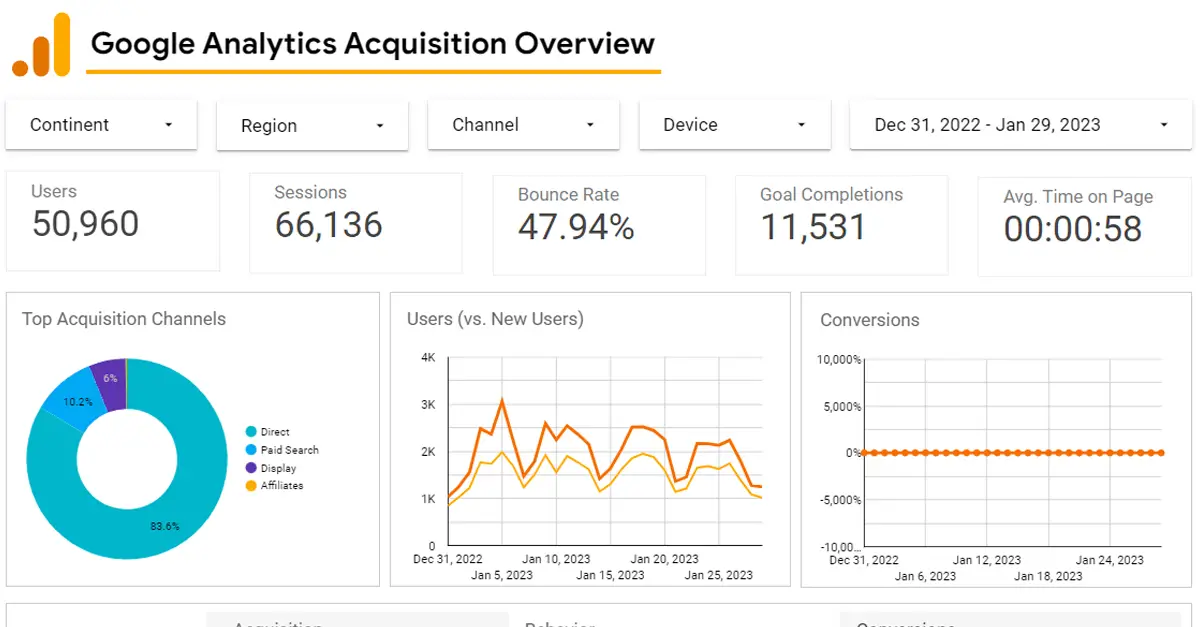
This is one of the widely used free tools for small businesses. Google Analytics tracks website traffic, user behaviour, and campaign performance. At the same time, Looker Studio, formerly Google Data Studio, enables users to turn this data into easy-to-read dashboards and reports. Together, they provide real-time insights into how customers find and interact with a business online, helping enterprises refine their digital strategies without incurring extra costs.
- Tableau Public
This data analytics tool has both a free version and a paid version. It’s a powerful tool used in data visualisation, thus allowing businesses to create interactive dashboards and share insights with ease. Its free version is sufficient for many small businesses, while the paid plans offer advanced features. Tableau is especially useful for SMEs looking to transform raw data into visuals that make trends and patterns that are easy to understand, particularly when communicating insights to non-technical teams.
- Power Bi
Microsoft developed this tool. It integrates seamlessly with Microsoft Excel, Outlook, and other productivity tools that many businesses already use. Power BI allows businesses to pull in data from multiple sources, create customised dashboards, and drill down into details, making it ideal for organisations that want a more holistic view of their operations.
According to Microsoft’s official Power BI pricing page, Power BI offers four main pricing options. It has a free and paid version. Free lets you create and view reports for personal use. Pro version requires you to pay about KES 1800 per user/month, adding sharing and collaboration tools. Premium per user also pays about KES 3000 per user/month, which gives them access to features of analysing bigger data capacity and advanced features. Finally, the Embedded version has usage‑based pricing for adding Power BI reports into your own app.
- Zoho Analytics
It is designed for reporting and creation of a dashboard, but it goes beyond basics by using AI-powered insights to detect anomalies and highlight trends. Businesses can use it to blend data from multiple sources, such as sales, marketing, and finance, into one unified view, simplifying decision-making and improving efficiency.
As per Zoho Analytics (2025), this tool offers several paid plans to suit different business sizes. The Basic plan is the cheapest, where one is required to pay KES 2000 per month and works for two users with up to 0.5 million data rows. Standard supports five users and 1 million rows. In this package, a business is required to pay KES 4000 per month, while Premium requires payment of KES 10,000 per month and allows 15 users, 5 million rows, and adds advanced AI analytics. Enterprise is for larger teams, with 50 users and 50 million rows, and there’s also a Custom option for very large or special needs. All paid plans include unlimited reports and dashboards, and you can add more users or data storage for an extra cost.
Building a Data-Driven Culture in Your Business
Data-driven culture is not just about technology, it is about mindset, leadership, and daily habits. A strong culture ensures that using data becomes part of how decisions are made at every level of the business. Research done by Dataday highlights the following ways in which a business can build a data-driven culture.
- Educate and Train Staff – data is only helpful if employees know how to understand and apply it. Providing practical training and ongoing support helps staff develop the confidence and skills to use data in their daily work.
- Start with Leadership Buy-In – a data-driven culture begins at the top. Business leaders must show genuine commitment to using data in their decisions, whether it’s setting prices, managing staff, or planning growth. When owners and managers lead by example, it signals to employees that data is not just an option but a standard practice. Without this visible commitment, even the best tools and systems may be ignored.
- Promote Openness and Collaboration – Data should be treated as a shared resource, not locked away in one department. Making data accessible across teams encourages collaboration and helps employees see the bigger picture. For instance, sales teams can share customer feedback with the operations department, which in turn can adjust production. This cross-functional approach leads to more coordinated and informed decision-making.
- Celebrate Data-Driven Wins – Positive reinforcement strengthens culture. When a decision backed by data, like adjusting a marketing campaign based on customer analytics, leads to success, leaders should highlight and celebrate it. Sharing these stories demonstrates the real impact of data-driven thinking, building motivation and showing employees that their efforts matter.
- Invest in the Right Tools – Even the best intentions will fail if the tools are too complex or inaccessible. Businesses should choose user-friendly analytics platforms and dashboards that employees can easily navigate. The right tools lower resistance to adoption and help integrate data into daily workflows, ensuring it becomes second nature rather than a burden.
Data Security and Privacy Considerations are Needed in a Business

Protecting customer information and safeguarding business data is not only a legal requirement but an important aspect for building trust. Adopting strong security and privacy practices is essential to avoid costly breaches and reputational damage in a business. A study done by Mark (2025) highlights the practices below that a company must adopt to safeguard its data.
A. Implement Strong Access Controls
In this case, not every person in the business should have access to sensitive data. Using a role-based access strategy, strong passwords, and multi-factor authentication ensures that only authorised staff can reach critical systems. This reduces the risk of accidental leaks and insider misuse.
B. Encrypt Data
Data should be encrypted both when stored) and when being shared or transmitted. Whether businesses use cloud solutions or on-premises systems, encryption provides a crucial layer of defence against hackers.
C. Back Up Data Regularly
Businesses should follow the 3-2-1 rule: This rule states that a business needs to keep three copies of data, on two different storage types, with one copy stored offsite. There must be regular testing of backup methods used to ensure they work. This safeguards against hardware failures, ransomware attacks, and accidental deletions.
D. Educate Employees
Staff are often the weakest link in data security. Training employees on privacy best practices, such as recognising phishing emails, handling customer information correctly, and using secure devices, helps prevent breaches before they happen, thus safeguarding data.
E. Conduct Regular Audits
A business needs to carry out regular Security audits to check whether the systems are vulnerable to data leakage. Internal checks help spot weaknesses early, while external specialists can provide an unbiased review of a company’s defences. Regular audits build resilience and keep the business ahead of evolving cyber threats.
Read Also: Mastering Product Differentiation in Competitive Markets
Conclusion
For businesses, data-driven decision-making is not just about using new technology. Still, it is a way of thinking and making decisions that will enable an enterprise to survive in today’s uncertain market. By collecting the correct data, using affordable analytics tools, keeping information safe, and building a culture that values data, even the smallest companies can gain insights that drive innovation, improve customer experiences, cut costs, and open new opportunities. The shift to data-driven decision making is a gradual process. It will look different for each business, but those that invest early in skills, tools, and culture will enjoy long-term rewards well into the future.