
University education in Kenya can be expensive, especially for students from low-income households. Beyond tuition fees, comrades must pay for accommodation, meals, transport, textbooks, internet bundles, and other academic expenses. For many families, meeting these costs throughout an academic year is a significant financial challenge.
Fortunately, several funding opportunities can help students pursue higher education without depending entirely on their parents or guardians. These include government student loans, scholarships, university bursaries, county education funds, and support from private organizations.
However, many students miss financial assistance opportunities because they do not know where to apply, misunderstand eligibility requirements, or submit incomplete applications.
Whether you are joining university for the first time or continuing your studies, understanding the available funding options can make a meaningful difference.
- Understanding the Types of Financial Aid Available in Kenya
- I. Apply for HELB Loans Through the Official Portal
- II. Explore Government Scholarships Through the Universities Fund
- III. Find County Government Bursaries
- IV. Apply for NG-CDF Education Bursaries
- V. Check University Scholarships and Financial Aid Offices
- VI. Explore Private and International Scholarships
- Documents Required When Applying for Scholarships
- Step-by-Step Guide to Applying for Financial Aid
- Common Scholarship Application Mistakes to Avoid
- Important Scholarship Application Dates
- Frequently Asked Questions About Scholarships in Kenya
- Conclusion
- Useful Scholarship and Financial Aid Websites in Kenya
This guide explains how to find scholarships in Kenya in 2026, apply for HELB loans, explore government financial aid, and identify university bursaries, including important documents, application procedures, and mistakes to avoid.
Understanding the Types of Financial Aid Available in Kenya

Before applying for financial assistance, students should understand the differences between scholarships, bursaries, and loans. Scholarships are financial awards that generally do not require repayment. They may be awarded based on financial need, academic performance, leadership, or other eligibility criteria. Bursaries primarily assist students facing financial difficulties. They often cover part of tuition fees and are awarded through government programs, counties, constituencies, or educational institutions.
Student loans, including those administered by the Higher Education Loans Board (HELB), must be repaid according to the applicable loan terms. Some students may qualify for more than one form of assistance. However, receiving one award does not guarantee approval for another. Understanding these differences helps students make informed decisions about financing their education.
I. Apply for HELB Loans Through the Official Portal

The Higher Education Loans Board (HELB) is one of Kenya’s major providers of higher education financial assistance. HELB supports eligible students pursuing approved undergraduate and other higher education programmes.
Students can apply through the Higher Education Financing (HEF) portal.
For first-time applicants, the process generally involves creating an account, verifying personal details, completing the required sections, uploading supporting documents, and submitting an application.
Continuing students may use the designated subsequent-application channels, including the HELB mobile application or the *642# USSD service, where applicable.
HELB undergraduate loans are repayable and carry applicable interest and charges. Students should read the current loan conditions before accepting funding.
Useful links: HELB official website | HEF application guide
Read Also: How to Apply for HELB Loan in Kenya: Requirements & Complete Guide
II. Explore Government Scholarships Through the Universities Fund
Kenya’s student-centred higher education funding framework combines government scholarships, loans, and household contributions.
Under this approach, financial support is determined partly by an assessment of a student’s financial circumstances and programme costs.
The Universities Fund administers government scholarships for eligible students placed in public universities through KUCCPS.
Government scholarships are not ordinarily full scholarships. They cover an assessed portion of tuition fees, while the remaining costs may be met through loans and household contributions.
Students should not assume that university placement automatically guarantees financial assistance. A separate funding application is required.
For eligible students, applying for both scholarship and loan consideration may provide broader support than applying for only one.
The Universities Fund also provides a review mechanism for students who believe their scholarship allocation does not accurately reflect their financial circumstances.
Official website: Universities Fund Kenya
III. Find County Government Bursaries
County governments are another potential source of financial assistance for Kenyan university students. Some counties operate education bursary schemes targeting students from financially disadvantaged households.
Depending on the county, applicants may need to demonstrate residence, provide proof of university admission, and submit evidence of financial need.
For example, a student from Busia County studying at a university in Nairobi may investigate bursary opportunities offered through their home county.
Application requirements, funding amounts, and deadlines vary by county and financial year.
Students should regularly check their county government’s official website, education department announcements, and public notices.
It is also important to confirm whether the bursary is available to university students, TVET trainees, or both.
Do not rely exclusively on social media advertisements because some may contain outdated information.
IV. Apply for NG-CDF Education Bursaries
The National Government Constituencies Development Fund (NG-CDF) provides education bursary opportunities through constituency-level programmes. These bursaries may support eligible students attending universities and other recognized educational institutions. Applications are generally handled through constituency offices or officially announced application channels.
Students may be asked to provide admission letters, fee statements, identification documents, and evidence of financial need. Priority may be given to applicants experiencing significant economic hardship, including vulnerable households and students with disabilities. Because bursary allocation depends on available resources and local procedures, students should confirm the requirements for their constituency.
Applying early and submitting complete documentation can reduce avoidable processing problems.
Students can explore the NG-CDF official website for information about bursary programmes and announcements.
V. Check University Scholarships and Financial Aid Offices
Many universities provide financial assistance through internal scholarship programmes, donor partnerships, and student welfare initiatives.
For example, Kenyatta University announced partial undergraduate scholarships for the 2026/2027 academic year, targeting eligible students facing financial difficulties. The scholarships cover part of tuition fees, subject to selection requirements.
Similarly, the University of Nairobi operates a Financial Aid and Work Study Section that helps eligible students access bursaries, scholarships, and work-study opportunities.
Students should contact their university’s Dean of Students office or financial aid department to learn about available opportunities.
Useful resources include:
Scholarship availability changes between academic years, so students should verify current announcements before applying.
VI. Explore Private and International Scholarships

Besides government funding, Kenyan students can explore scholarships supported by foundations, charitable organizations, and international education programmes.
One example is the Mastercard Foundation Scholars Program at USIU-Africa.
The programme supports eligible young Africans facing socioeconomic barriers and considers factors such as academic ability, leadership potential, and community involvement.
Scholarship benefits may include tuition, accommodation, learning materials, and other forms of student support. However, eligibility requirements are specific, and application windows are competitive.
Students should investigate whether a programme supports undergraduate, postgraduate, or continuing students before applying.
Official programme: Mastercard Foundation Scholars Program at USIU-Africa
Documents Required When Applying for Scholarships
Although requirements vary, many Kenyan scholarship and financial aid applications request similar documents.
Preparing these materials early can make the application process easier.
| Document | Purpose |
| National ID or birth certificate | Confirms identity |
| University admission letter | Confirms admission |
| Student identification number | Identifies enrolled students |
| KCSE certificate or results | Provides academic information |
| Parent or guardian identification | Supports household verification |
| Fee statement | Shows education costs |
| Passport-size photograph | Identifies the applicant |
| Bank or M-Pesa details | Supports eligible disbursements |
| Recommendation letter | Supports applications where required |
For HELB loan applications, students may also need guarantor details and examination index numbers.
Always follow the requirements stated in the specific scholarship announcement.
Read Also: How to Check HELB Loan Balance, Pay Your Loan & Get HELB Compliance Certificate (Step-by-Step)
Step-by-Step Guide to Applying for Financial Aid
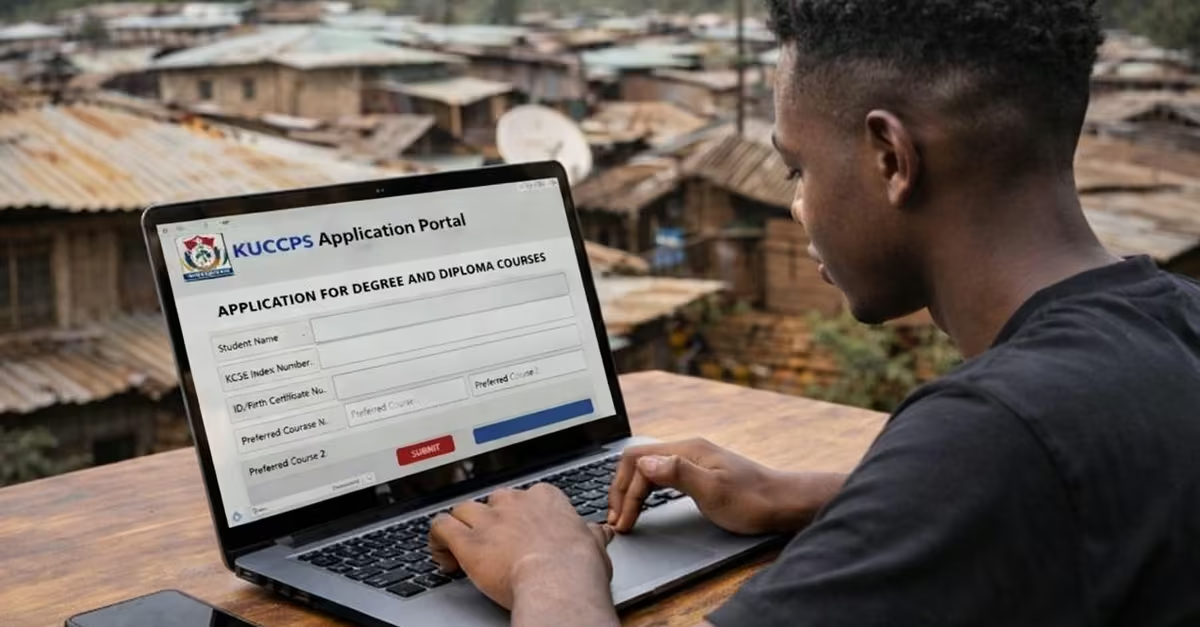
The application process differs across funding programmes, but students can follow a general approach.
First, identify a legitimate scholarship or bursary through an official website or recognized institution.
Next, read the eligibility requirements carefully. Confirm that your course, university, academic level, and financial circumstances match the programme’s criteria. Prepare the required documents and ensure your personal details are consistent. Complete the application form accurately, including financial information and supporting explanations.
Before submitting, review the application for missing information and incorrect attachments.
Finally, save the submission confirmation and monitor your email or application portal for updates.
For HEF applications, students can track their application status through the official student portal.
Common Scholarship Application Mistakes to Avoid
Many students lose opportunities because of preventable mistakes.
- Submitting applications after the deadline. Scholarship programmes often operate within strict application windows.
- Providing incomplete or inconsistent personal information.
- Applying for scholarships without checking whether they meet the eligibility requirements.
- Using unofficial application links that can expose students to fraud and identity theft. HELB states that its loan application process is free, so applicants should be suspicious of individuals demanding payment to secure approval.
- Avoid assuming that funding has been approved simply because an application was submitted. Always wait for official confirmation.
Important Scholarship Application Dates
Scholarship deadlines vary depending on the institution and funding programme.
For the 2026/2027 academic year, the Universities Fund announced that first-time government scholarship applications opened on 8 July 2026, with an announced deadline of 6 September 2026.
Because that deadline has passed, students should check the HEF portal for any officially announced extensions or subsequent application windows.
County bursaries, university scholarships, and private sponsorship programmes follow different schedules.
Students should therefore check official websites regularly rather than assuming that all scholarships open at the beginning of the semester.
Read Also: How to Apply for HELB Subsequent Loan 2026/2027
Frequently Asked Questions About Scholarships in Kenya
Can I Receive Both HELB Funding and a County Bursary?
Yes, eligible students may receive government funding alongside complementary assistance from county governments or other organizations. Applicants should disclose existing support whenever required.
Are Scholarships Available To Students In Private Universities?
Yes. Private institutions and independent organizations may offer scholarships. However, government scholarships administered by the Universities Fund primarily target eligible KUCCPS-placed students in public universities.
Can Continuing Students Apply For Financial Aid?
Yes. Continuing students may qualify for subsequent HELB funding, university bursaries, and other scholarships depending on programme rules.
Is Applying For HELB Funding Free?
Yes. HELB does not charge students to access its official loan application process.
What Happens If My Government Scholarship Allocation Is Insufficient?
Eligible students may request a review through the HEF portal when the official appeal window opens. Approval depends on the applicable assessment and funding conditions.
Conclusion
Finding scholarships and financial aid in Kenya requires research, preparation, and careful attention to application requirements. Government programmes such as HELB and the Universities Fund provide important financial support, while county bursaries, NG-CDF programmes, university scholarships, and private foundations offer additional opportunities.
For Kenyan comrades struggling with tuition fees and living expenses, understanding these funding options can reduce financial pressure and support academic progress. The most effective strategy is to identify legitimate programmes early, prepare documents in advance, apply through official channels, and monitor application updates. Although scholarships are competitive and funding is never guaranteed, students who research opportunities consistently and submit complete applications are better positioned to access available assistance.
Financial challenges should not prevent students from exploring their educational opportunities. Start researching scholarships early, apply carefully, and use reliable information to make informed funding decisions.
Useful Scholarship and Financial Aid Websites in Kenya
Higher Education Financing Portal: Government scholarships and HELB applications
Higher Education Loans Board: Student loans and bursaries
Universities Fund: Government university scholarships
National Government Constituencies Development Fund: Constituency education bursaries
Mastercard Foundation Scholars Program: Scholarship opportunities for eligible African students