Traditional business contracts play an important role in defining responsibilities, protecting parties, and reducing the risks involved when businesses enter into contracts. However, they are often slow and costly to manage, as they involve manual approvals, lengthy paperwork, high legal fees, and human errors that delay transactions and create misunderstandings. This inefficiencies affect cash flow, damage trust, and limit the ability to explore various business opportunities. As businesses continue to embrace digital transformation, many are seeking faster, more reliable ways to handle everyday processes. Smart contracts provide a modern alternative to traditional agreements for this problem. They are digital contracts built on blockchain technology that automatically carry out agreed terms once specific conditions are met. For instance, a payment can be released automatically upon delivery of goods or completion of a service. Because smart contracts operate without manual intervention or third-party oversight, they help reduce costs, lower the risk of errors, and increase transparency between parties.
This article explains what smart contracts are, how they work, their features, the advantages businesses gain from using them, their limitations, and their practical applications across industries.
Understanding Smart Contracts
A smart contract is a computer program that runs automatically and enforces a contract’s terms when specific conditions are satisfied, without relying on intermediaries and third parties, as per Nick (2023). Unlike traditional contracts, which are written on paper and managed manually, smart contracts are created using computer code and stored on a blockchain. This blockchain serves as a secure, shared digital record that all approved parties to the smart contracts can trust. Once the agreed conditions are met, the contract automatically executes the required action, without delay or manual approval.
Smart contracts are especially valuable for businesses because they offer reliability and transparency, since they operate on blockchain technology. The terms of a smart contract cannot be changed after it has been deployed thus reducing the risk of fraud, misunderstandings, or disputes. In addition, every transaction is recorded on the blockchain and can be viewed by authorized participants only. This creates an easy way to verify record of activity hence building trust and accountability.
Despite the name, smart contracts are not automatically legally binding contracts on their own. Their primary role is to execute predefined business logic, such as processing transactions or performing specific actions, when certain conditions are met. To make these executions legally enforceable, businesses must link smart contracts to traditional legal agreements that define each party’s rights and obligations.
Key Features of Smart Contracts
Smart contracts operate on blockchain technology, which gives them several important features that set them apart from traditional business contracts. These features involve practical capabilities already used in areas such as finance, real estate, and digital services. Below are the features of smart contracts.
- Transparency
Transparency is one of the most important features of smart contracts. Once a smart contract is deployed on a blockchain, its rules and transaction history can be viewed only by authorized participants. This shared visibility helps prevent misunderstandings and reduces disputes, as all parties can independently confirm how the contract works and whether its terms have been followed.
- Immutability
Immutability means that a smart contract cannot be changed after it has been deployed. This protects agreements from unauthorized edits and manipulation, increasing security and reliability. This shows the need for careful planning, review, and testing before a smart contract goes live, because once deployed, errors are difficult to correct.
- Automation
Automation enables smart contracts to execute actions automatically when specific conditions are met. This can include releasing payments, approving transactions, updating records, or even granting access to services. Because these actions happen instantly and without manual involvement, businesses can reduce processing delays, limit human error, and lower administrative costs.
- Trustless Execution
This means that the businesses do not need to rely on a middleman to enforce an agreement. Instead, trust is placed in the blockchain system and the smart contract’s code. Once the agreed conditions are met, the smart contract automatically executes the required actions exactly as programmed, without bias or human intervention. This allows businesses to work securely with partners they may not know personally, complete transactions faster, reduce disputes, and collaborate more efficiently in digital and decentralized environments.
Types of Smart Contracts
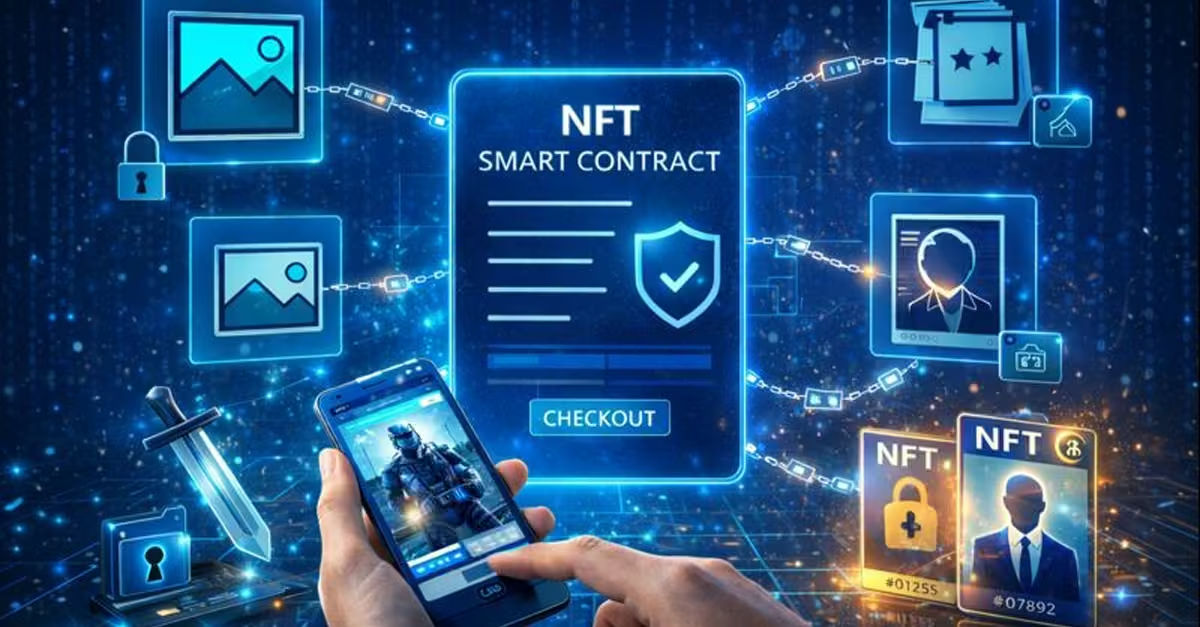
Smart contracts are designed to serve different purposes depending on business needs. They can automate payments, secure transactions, manage approvals, or support decision-making processes. Understanding the main types of smart contracts allows business owners to choose the right solutions for their operations. A study by Kate (2025) highlights the types of smart contracts described below.
- Payment Contracts-they are smart contracts that automatically transfer funds between parties when agreed conditions are met. They help businesses automate payment processes and ensure funds are released only after specific requirements are met.
- Escrow Contracts- these are contracts that hold funds or assets securely until all parties meet their obligations. They act as a neutral digital middle layer that protects both buyers and sellers in a transaction. Once the agreed conditions are fulfilled, the contract releases the funds or assets automatically. This type of contract is especially useful in peer-to-peer transactions, online marketplaces, and cross-border trade.
- Governance Contracts– these smart contracts support decision-making within blockchain-based organizations. They allow members or token holders to vote on proposals, policy changes, and system upgrades in a transparent, structured manner. By recording votes and outcomes on the blockchain, governance contracts promote fairness, accountability, and decentralized control.
- Multi-Signature Contracts-Multi-signature contracts are type of smart contracts that require approval from more than one party before a transaction can be executed. This added requirement improves security and reduces the risk of unauthorized actions. Businesses often use multi-signature contracts in situations where shared control and joint ownership approval are necessary, such as corporate accounts.
- Non‑Fungible Token (NFT) smart contracts– These smart contracts are specifically designed to manage unique digital assets. Each NFT is unique and cannot be exchanged one-to-one like regular tokens. These contracts store ownership details and important information directly on the blockchain, making them ideal for proving authenticity and scarcity. They are commonly used in areas such as digital art, gaming, licensing, and ticketing.
How Smart Contracts Work

Smart contracts operate through a clear, step-by-step process that allows them to function as self-executing digital agreements. While the underlying technology is advanced, the overall lifecycle can be explained in simple, business-friendly terms.
- Identify the Agreement
The first step in creating a smart contract is clearly defining the agreement between two or more parties. This could be a simple arrangement, such as paying a supplier after goods are delivered, or a more complex process, such as managing shareholder voting. At this stage, all parties agree on the goal and clearly outline their expectations.
- Set the Conditions
Once the agreement is defined, the next step is setting the conditions that trigger the contract. These conditions follow simple “IF–THEN” logic, making the process easy to understand. For example, IF delivery is confirmed, THEN payment is released. These conditions form the rules that the smart contract will enforce automatically.
- Code the Business Logic
After the conditions are agreed upon, developers convert them into computer code. This code is written in a blockchain programming language so that the blockchain network can understand and execute the rules. Accuracy at this stage is important, as the contract will perform exactly as written.
- Encryption and Blockchain Storage
Once coded, the smart contract is encrypted and stored on the blockchain. This makes it secure and tamper-resistant, meaning the contract cannot be altered. All authorized participants can view the contract, which promotes transparency and accountability.
- Execution and Processing
When the agreed conditions are met, the blockchain network verifies them. If everything is valid, the smart contract executes automatically. For instance, once goods are delivered, payment is released instantly. This removes the need for intermediaries, saving time and reducing costs.
- Network Updates
Finally, the blockchain updates the contract status across all its nodes. Every computer in the network records the outcome, ensuring everyone sees the same version of events. This shared record prevents disputes and guarantees consistency and reliability.
Benefits of Smart Contracts for Businesses
Smart contracts offer clear and practical advantages that help businesses solve common operational challenges. By automating agreements and enforcing them through blockchain technology, organizations can work more efficiently, reduce costs, and strengthen trust in a digital business environment. The following are the benefits a business gets according to research by Rahul (2024)
Cost Reduction
Smart contracts help reduce costs by limiting the need for intermediaries such as lawyers, brokers, and banks in routine transactions. Because contracts execute automatically and verify outcomes independently, businesses spend less on administrative work, legal fees, and manual reconciliation. This makes contract management more affordable for both small and large organizations.
Faster Execution and Improved Efficiency
Smart contracts execute automatically once their conditions are met. As a result, transactions that might normally take days or even weeks can be completed within minutes. This speed reduces paperwork, improves cash flow, and shortens approval cycles, allowing businesses to respond more quickly to opportunities and operational demands.
Improved Accuracy
Smart contracts improve accuracy by automating contract execution. Because they execute exactly as programmed, they reduce errors linked to manual data entry or misinterpretation of contract terms. By following predefined rules precisely, they minimize human errors and ensure that contract terms are applied consistently and reliably.
Security
Smart contracts are secured by blockchain technology, making them highly resistant to tampering and fraud. Once recorded on the blockchain, the contract cannot be changed, ensuring that the terms remain exactly as agreed. This immutability creates a reliable, transparent system for all parties, enabling businesses to conduct transactions with greater trust and security.
Increased Trust and Transparency
All authorized participants have access to the same contract terms and execution results in real time. This shared visibility helps prevent disputes, improve accountability, and build trust between stakeholders. These benefits are especially valuable in supply chains, partnerships, and cross-border business relationships.
Read Also: How Kenyan Businesses Can Boost Sales and Efficiency with Digital Payments
Uses of Smart Contracts in Business

Smart contracts are already being used across many industries to automate processes, reduce costs, and improve transparency. Below are some of the most common and practical ways businesses apply smart contracts today, as per Sophie (2025)
- Finance and Payments
Smart contracts are widely used in financial operations to automate payments and settlements without intermediaries. They are specifically used in decentralized finance so as to support activities such as lending, borrowing, and trading without relying on traditional banks. This leads to faster transactions and lower fees.
- Supply Chain Management
In supply chains, smart contracts improve efficiency by tracking goods and automating payments when agreed conditions are met. For example, payment can be released automatically once goods arrive and are verified. Every step of the process is recorded on an immutable ledger, helping businesses improve transparency, reduce disputes, and ensure product authenticity and compliance.
- Real Estate and Property Transactions
Smart contracts simplify real estate transactions by automating key steps, such as releasing payments and transferring ownership, once contract terms are fulfilled. Compared to traditional processes that involve heavy paperwork and multiple intermediaries, smart contracts reduce transaction time, lower costs, and increase transparency.
- Insurance Claims and Policy Management
Insurance processes are often slow and complex. Smart contracts can automate claims handling by releasing payouts automatically when predefined conditions are met, such as weather data triggering crop insurance payments. They can also manage policy updates and renewals with less manual effort, improving efficiency and customer experience.
- Retail, E-Commerce, and Vendor Agreements
In retail and e-commerce, smart contracts can automate vendor payments and manage loyalty programs. Payments can be released automatically upon delivery confirmation, reducing delays and disputes. Loyalty rewards can also be tracked and issued transparently across multiple partners without manual processing.
- Digital Rights, Royalties, and Intellectual Property
Smart contracts are increasingly used in creative industries to manage royalties and protect intellectual property. They can distribute payments instantly to rights holders whenever content is sold or used. In addition, they provide a permanent and verifiable record of ownership and licensing terms, reducing reliance on intermediaries.
The Limitations of Smart Contracts
While smart contracts offer significant advantages, they also come with limitations that business owners should understand before adoption. These are factors that require careful planning, risk assessment so as to use the smart contracts appropriately. Below are the common limitations of smart contracts as per Harshdeep (2024).
- Immutability– Once a smart contract is deployed on the blockchain, it cannot be easily changed. This ensures security, but also means any mistakes in the code are permanent and cannot be fixed.
- Security Loopholes-Although blockchain technology is generally secure, smart contracts can have vulnerabilities. Hackers may exploit these weaknesses, resulting in financial losses. Regular audits and testing are essential to minimize risks.
- Dependence on Programmer Expertise-The effectiveness of smart contracts depends on the skill of the developers who create them. Poorly written contracts may fail to function correctly, so experienced and trustworthy programmers are critical.
- Limited Legal Recognition– In many countries, smart contracts may not be fully recognized as legally enforceable agreements. Due to this the businesses may still need traditional contracts to ensure legal protection.
- Integration Challenges-Implementing smart contracts with existing systems in the business, such as accounting software, supply chains, or payment platforms, can be difficult and require additional resources, making adoption more difficult for some organizations.
Read Also: Smart Ports & Autonomous Shipping: Redefining maritime Trade Logistics
Conclusion
Smart contracts represent a significant change on how businesses create, manage, and enforce agreements in the digital age. By combining automation with blockchain technology, they address long-standing challenges such as high costs, slow execution, limited transparency, and reliance on intermediaries, while enabling more efficient and trustworthy transactions. Different industries are now using smart contracts in their operations, such as insurance companies releasing payments when set conditions have been met, real estate to facilitate transactions, e-commerce to release payments once goods have been received, finance, and the supply chain. There are different types of smart contracts used worldwide; the most common are payment contracts, escrow contracts, multi-signature smart contracts, Governance contracts, and non-fungible token smart contracts. Despite the benefits of smart contracts, they have limitations that one must understand before using them. These limitations includes, difficulties in integrating with systems used in a business, these contracts cannot be altered once deployed, the contracts are created only by someone with computer skills, and these contracts may be vulnerable to cyber-attacks.