
Kenya’s business scene is growing quickly; thus, choosing the right business structure is a key decision for any entrepreneur. Your choice affects how your business is owned, managed, taxed, and regulated. In Kenya, common business structures are sole proprietorships, partnerships, limited liability companies, and public companies. Each one fits different business needs, depending on size, risk, and future plans. Many entrepreneurs in Kenya begin with sole proprietorships because they are simple and cheap to set up. This structure is common among small traders, freelancers, and startups since it gives the owner full control and has few legal requirements. But as the business grows, challenges like higher income, more customers, personal liability, legal contracts, and financial risks can make a sole proprietorship unsuitable to operate. Many entrepreneurs are choosing to convert their businesses into private limited companies and this article will highlight the steps on how to convert a sole proprietorship to a private limited company. This business structure separates the owner’s personal assets from the business. It also improves the business’s image, making it easier to work with investors, lenders, and large clients. Additionally, government bodies like the Kenya Revenue Authority (KRA) and the Business Registration Service (BRS) now expect businesses to comply with well-defined legal and compliance rules.
Understanding Business Structures in Kenya
A sole proprietorship is the simplest and most widely used business structure in Kenya. It is owned and run by one person. The law does not separate the owner from the business; hence, they are treated as one and the same. As a result, the liability of the business can be settled by the owner’s properties. The owner has full control over the business and keeps all the profits. However, this structure also has major drawbacks. The owner is personally responsible for all business debts, meaning personal property can be used to pay business obligations. Sole proprietorships may also struggle to attract investors, win large contracts, or expand beyond a small scale.
A private limited company (Ltd.), on the other hand, is registered under the Companies Act, 2015. The company is a separate legal entity from its owners. Under the law, hence, the owners and the company are treated as two separate persons. It can be owned by one or more shareholders and managed by directors. Because the company is legally separate from its owners, it can own property, sign contracts, and take legal action in its own name. One key benefit of this structure is limited liability, which protects shareholders’ personal assets if the business incurs debts or legal claims, as per Sahil (2024).
Differences Between Sole Proprietorship and Private Limited Company
Before start to convert a sole proprietorship to a private limited company, you have to understand that a sole proprietorship and a private limited company differ in many ways; understanding these differences will help business owners determine when it may be the right time to move to a more formal, growth-focused business structure. A study by Swati (2025) illustrates the key differences between sole proprietorship and a private company, as outlined below.
A. Legal Identity and Liability
In a sole proprietorship, the business and the owner are treated as a single legal entity. This means the owner is personally responsible for all business debts and legal obligations; on the other hand, a private limited company is legally separate from its owners. If the business runs into debt or legal issues, shareholders only risk the money they invested in the company, not their personal assets.
B. Ownership and Business Continuity
A sole proprietorship is owned by one person and usually stops operating if the owner withdraws or dies. A private limited company, on the other hand, can have one or more shareholders and continues to exist even if one shareholder dies, which makes it more stable in the long term.
C. Credibility and Business Opportunities
Due to their informal structure, Sole proprietorships may find it difficult to work with banks, large companies, or government agencies. Private limited companies are generally seen as more trustworthy and professional, making it easier to secure loans, attract investors, and enter formal contracts.
D. Compliance and Regulation
The reporting requirements and legal responsibilities of a Sole proprietorship are few. This makes this business structure easier and cheaper to manage. Private limited companies must follow the Companies Act, which includes keeping proper records and filing annual returns.
Benefits of Converting to a Private Limited Company
As a business grows, its needs often become too complex for a sole proprietorship to handle comfortably. Converting to a private limited company is usually a deliberate decision for a business owner to support growth, reduce risk, and guarantee sustained stability. Below are the main reasons many Kenyan entrepreneurs choose to make this change, as per Shalini (2023)
- Limited Liability Protection-One of the biggest advantages of becoming a private limited company is the protection of personal assets. This business structure is treated as a separate legal entity, meaning the owner’s personal property is generally not at risk if the business incurs debt or legal problems. This gives entrepreneurs peace of mind and allows them to take business risks more confidently.
- Better Access to Capital and Investors: Private limited companies can raise capital more easily than sole proprietorships. Financial institutions such as Banks and even investors prefer businesses with clear ownership structures. As a result, it’s easy to raise capital to support growth and expansion. Additionally, incorporation enables companies to raise funds by selling shares and applying for business loans.
- Improved Credibility with Clients and Suppliers-Running a business as a private limited company often makes it appear more professional and reliable. Many large clients, suppliers, and government institutions prefer to work with incorporated businesses. This can lead to opportunities with bigger contracts, better payment terms, and stronger business relationships.
- Business Continuity –A private limited company can continue operating even if the owner steps away, brings in new partners, or transfers ownership. Unlike a sole proprietorship, the business does not depend entirely on one individual. This ensures the business can survive in the long term.
- Tax Planning Opportunities-Registration grants a more structured way to manage taxes and finances. Private limited companies may access allowable business deductions and enjoy a clear separation between personal and business income. Although compliance requirements are higher, many growing businesses find the benefits worthwhile as their income increases.
Step-by-Step Conversion Process to Convert a Sole Proprietorship to a Private Limited Company
Converting a sole proprietorship into a private limited company in Kenya involves several clear and important steps. Each step helps change your business from a personally owned business to a formally registered company with its own legal identity and limited liability. By following the correct process, you ensure that the new company is legally compliant and properly separated from you as an individual. A study done by Maina (2025) highlights the process below.
Step 1: Deregister the Sole Proprietorship

- Accessing the business registration services
The first step in deregistering your business is to access the business registration services found in e eCitizen, an official government platform where all business registration and deregistration processes are handled. You will log in to your e-Citizen account and access the Business Registration Service (BRS) portal.
- Make an application.
After you log in to the e-citizen account, you will then select “Make Application,” then choose “Cessation of Business Name.” After clicking this option, it will formally notify the government that you intend to close your sole proprietorship. So as to allow them to delete your business name from the records.
- Filing and submitting notice of cessation.
After notifying the government of your intention to cease the sole proprietorship business, you are required to complete and submit the Notice of Cessation (Form BN6). This form provides basic details about the business being closed, such as the business’s name and registration number, the details of the proprietor, Reasons for cessation, the effective date of cessation, and the declaration of the business owner. Additionally, you may also need to upload your existing business name registration certificate for verification.
- Payment and receipt of the certificate of cessation.
After you have submitted all the above documents, you will be required to pay KSH 150, which is the official fee charged for processing the cessation of a business name. You will then wait until your documents have been verified, and after that, you will receive the Certificate of Cessation. This certificate confirms that your sole proprietorship has been legally deregistered, allowing you to proceed with registering a private limited company.
Read Also: Customer Retention Strategies That Drive Long-Term Business Success
Step 2: Register Your New Private Limited Company
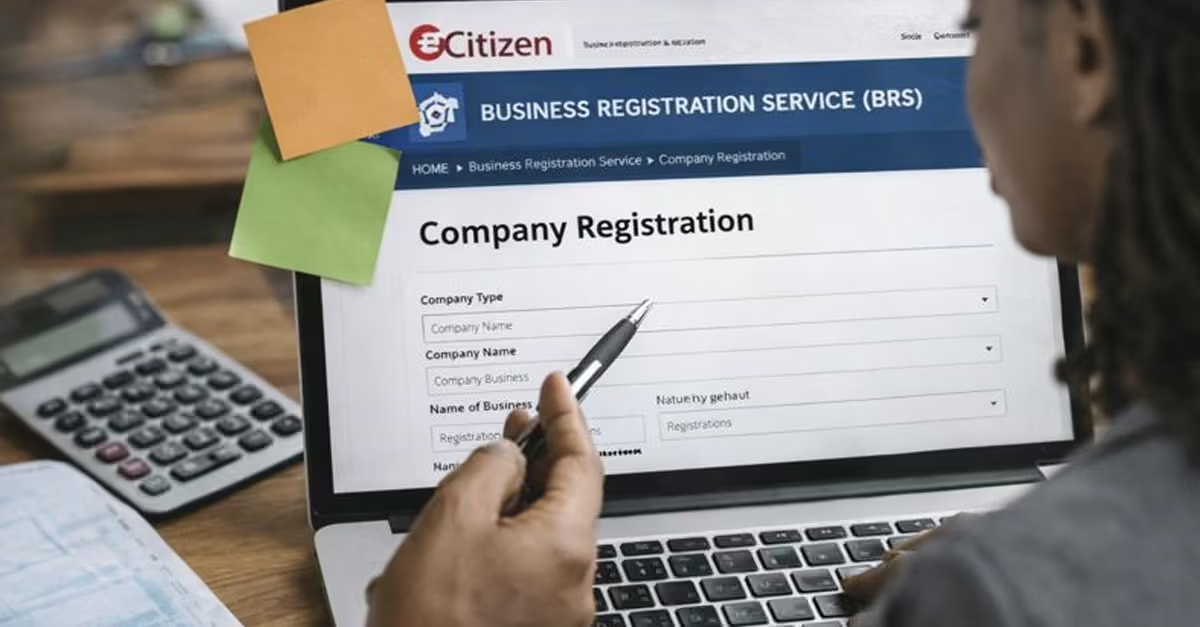
After deregistering your sole proprietorship, the next step is to register your new private limited company. This process is still done through the e-Citizen platform.
- Registering and name preservation.
To register the new company, you must log in to your e-citizen account. After logging in, you access the business registration service portal (BRS), select “Register a New Private Limited Company.” At this point, you will be required to propose three to five names in the order of your preference under which you would like your company to be registered. Your preferred name must be unique and should include “Limited” or “LTD.” You may retain your old business name if it is available.
- Uploading of registration forms.
This step requires you to complete and upload all the required forms to officially register your private limited company. These forms collect important details such as the company’s name, ownership, directors, and how the business will operate. You will be required to provide the following details as per Capita registrars.
- Form CR1– this is the main application form used to register a company in Kenya under the Companies Act, 2015. It is the first and most important document submitted to the Registrar of Companies when creating a new company.
- Form CR2- this form is also known as the Memorandum of Association. It used to explain the company’s objectives, name, structure, and initial shareholders. The form also shows how much each shareholder has agreed to invest in the company.
- Form CR8 is used to inform the Registrar of Companies of a company director’s residential address or any changes to it. The form records key details, including the director’s full name, identification information, nationality, and both residential and postal addresses.
- Articles of Association– these are the internal rules that explain how a company will be run. They set out how decisions are made, the roles of directors and shareholders, and how the company operates on a day-to-day basis. Rules governing how the company will operate
- A Statement of Nominal Share Capital is a document that shows how the company’s ownership is divided into shares. It states the total number of shares the company will issue, their value, and the number of shares each shareholder will own.
- Register Directors and Shareholders
At this stage, you will need to provide the details of directors and shareholders. At least one director and one shareholder are required. You will need to provide their full names, upload identification documents and passport-sized photos, their email address, and their Kenya Revenue Authority personal identification PIN. Additionally, the details of the beneficial owner must also be included.
- Finalize Documentation and Payment of fees.
After all the registration forms are generated, download them and sign where required. Once signed, upload the documents back to the portal for review and approval. To complete the registration process, pay the KES 10,750 government fee. After payment and approval, your private limited company will be officially registered. This fee covers name approval and company incorporation.
- Certificate of incorporation.

Once your application is approved, you will receive a Certificate of Incorporation from the Registrar of Companies. This certificate confirms that your business is now officially registered as a private limited company and is legally allowed to operate under its new company status.
Read Also: How to Register a Sole Proprietorship Business in Kenya
Common Mistakes to Avoid As You Convert a Sole Proprietorship to a Private Limited Company
Although converting a sole proprietorship into a private limited company has many benefits, the process can be challenging if not handled carefully. Identifying typical mistakes in advance can help business owners avoid delays, fines, and unnecessary expenses.
- Not Properly Closing the Sole Proprietorship-Many business owners assume that registering a company automatically replaces their sole proprietorship. This is not the case as the old business must be formally closed or updated with the relevant authorities. Failure to do so can result in duplicate tax obligations and compliance problems.
- Incomplete or Incorrect Documents-Errors such as missing details, mismatched business names, or incorrect shareholder and director information can delay or even block the registration. One is required to provide all information, which should be accurate and consistent across systems such as the Business Registration Service (BRS), the Kenya Revenue Authority (KRA), and banks, to facilitate a smooth transition.
- Delays in Government Approvals-The time the government takes to verify your information varies, especially when many applications are being processed simultaneously. Delays often occur when documents are unclear or incorrect; hence, you must be careful with the information provided.
- Failing to comply with tax requirements-Failing to update tax records or understand new tax responsibilities can lead to penalties. Business owners must register the new company for applicable taxes and properly close or update the sole proprietorship’s tax profile to remain compliant.
- Underestimating Governance and Compliance Duties-Private limited companies have ongoing responsibilities such as keeping company records, filing annual returns, and meeting director obligations. Treating these requirements lightly can result in long-term compliance issues and penalties; thus, one must understand and comply with them.
Conclusion
To convert a sole proprietorship to a private limited company is an important step for businesses that want to grow, appear more credible, and operate more securely in the long term. Unlike a sole proprietorship, a private limited company offers limited liability, a separate legal identity, better access to funding, and greater confidence from investors, partners, and clients. One can easily convert his business from a sole proprietorship to a private company by following simple step-by-step instructions, which include first closing the sole proprietorship, registering the new company, completing the required forms, paying the necessary fees, and finally receiving the Certificate of Incorporation. Business owners should pay close attention to common problems such as incomplete documents, incorrect details, missed deadlines, and failure to meet legal requirements, which hinder most people while or even after converting their business structures, resulting in avoidable consequences and penalties. It prepares your business for growth, improves its professional image, and creates a strong foundation for long-term success in a competitive market.