Virtual Reality (VR) has long been associated with gaming and entertainment, but its potential applications stretch far beyond these realms. In education, particularly in STEM (Science, Technology, Engineering, and Mathematics), VR is poised to become a transformative tool. As educational institutions embrace digital innovation, VR offers the ability to revolutionize learning experiences, making abstract and complex subjects more engaging and accessible. In this article, we delve into the role of virtual reality (VR) in enhancing STEM education: how to get started, challenges and what the future holds for VR in education setting. To dive deeper into the potential of VR in education, check out EdTech Magazine’s feature on VR in classrooms.
What is Virtual Reality?
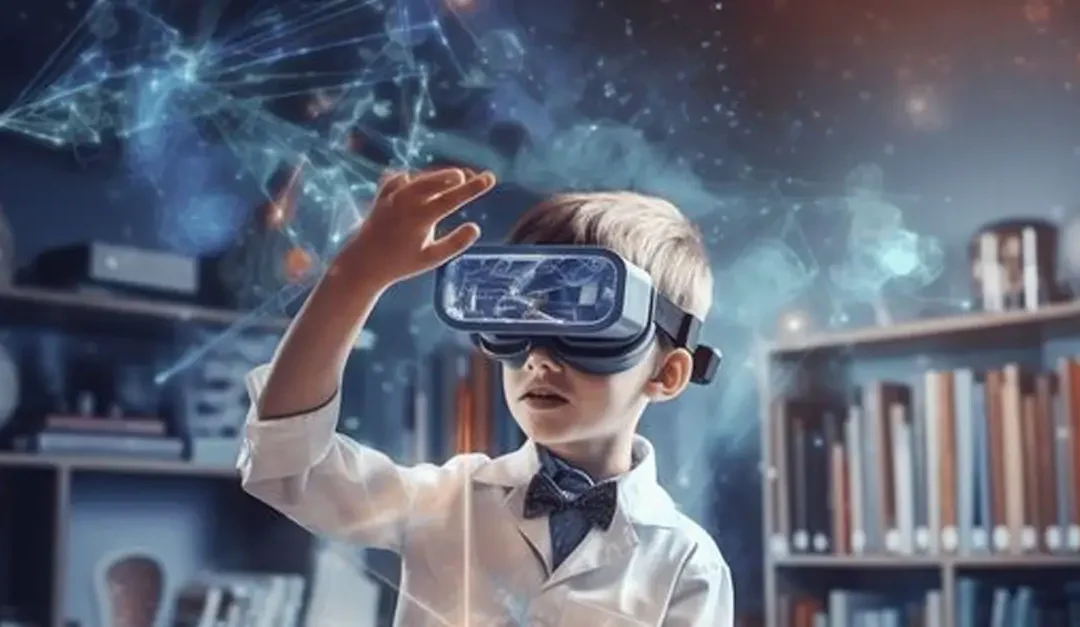
VR refers to a computer-generated simulation that immerses users in a three-dimensional, interactive environment. Utilizing VR headsets, students can interact with and manipulate digital environments as if they were real. This immersive quality allows users to feel present in the simulation, which opens up new possibilities in fields like education, where experiential learning can significantly improve comprehension.
For an in-depth look at how VR works, visit Immersive Learning Research Network.
The Growing Importance of STEM Education
STEM fields are at the forefront of innovation, driving global advancements in technology, healthcare, and environmental science. As industries become more dependent on skilled STEM professionals, schools must equip students with the necessary tools and knowledge. Unfortunately, many students find STEM subjects intimidating due to their abstract nature, making traditional learning methods insufficient in fostering a deeper understanding.
To explore the rising importance of STEM education, you can read Google for Education’s take on STEM and digital tools.
How VR is Enhancing STEM Education
1. Making Abstract Concepts Tangible
Many STEM concepts are abstract, which makes them hard for students to fully comprehend. For instance, in physics, students may struggle to visualize gravitational forces or subatomic particles. VR helps by turning these intangible ideas into 3D models that students can manipulate, explore, and understand. For example, VR can allow students to “walk” through a chemical compound or explore outer space, thereby making learning more engaging and effective.
Explore how VR is helping students in STEM subjects for more examples.
2. Simulating Real-World Environments
STEM education often involves real-world applications, whether it’s engineering models, biological systems, or environmental science. Unfortunately, bringing students to actual labs or sites can be costly or impractical. VR, however, can simulate these environments at a fraction of the cost, giving students the ability to interact with complex systems and even conduct experiments. For example, VR can simulate a cleanroom environment in biotechnology, offering students a real-world lab experience without leaving the classroom.
Visit The Tech Advocate’s VR education review for a deeper understanding of VR simulations in education.
3. Enabling Safe Experimentation
Many STEM experiments are either too expensive or too dangerous to be carried out in a traditional classroom setting. Whether it’s handling volatile chemicals or testing the tensile strength of materials in engineering, VR allows students to safely experiment with these concepts without real-world consequences. In a VR environment, students can alter variables, view outcomes, and even “redo” experiments, giving them the freedom to explore and learn through trial and error.
Check out more on how VR supports safe experimentation in education from EdSurge.
4. Promoting Collaboration in Virtual Spaces
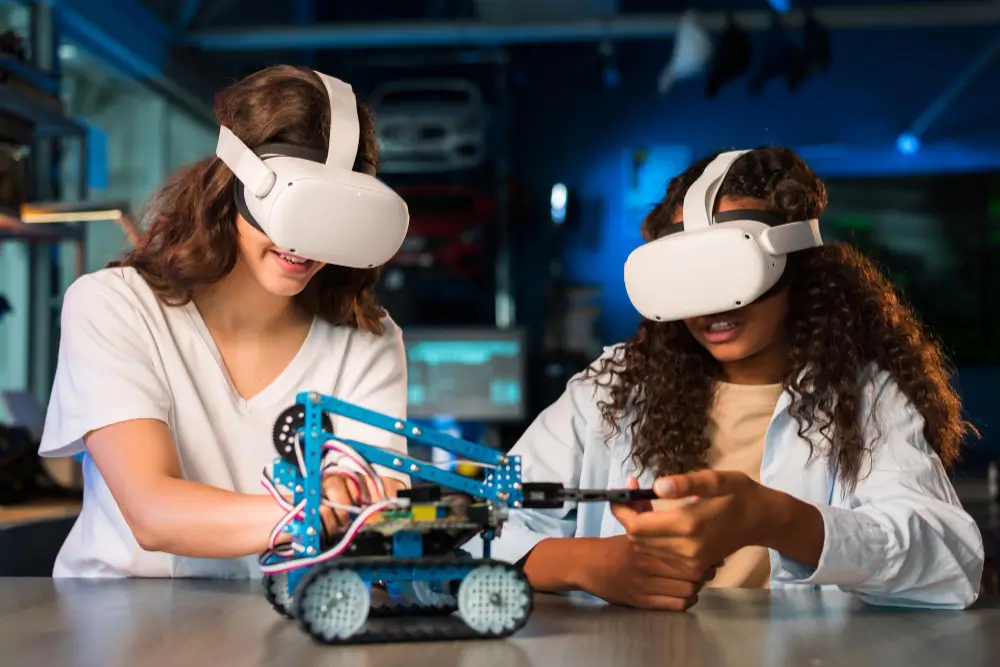
Collaboration is essential in STEM, and VR takes this to another level by enabling students to work together in shared virtual environments. Imagine students from different parts of the world collaborating on a 3D engineering project, discussing and manipulating the same virtual models in real-time. This not only makes STEM education more interactive but also reflects the collaborative nature of STEM careers, where professionals often work in teams across borders.
For more insights into how VR facilitates collaborative learning, visit EdTech Review’s guide to VR collaboration.
Advantages of VR in STEM Education
1. Increased Engagement and Motivation
VR can turn passive learning into an active, immersive experience. This increase in engagement is especially important in STEM subjects, where traditional lectures might not fully capture students’ interest. By interacting with 3D models, simulations, and environments, students become active participants in the learning process, which leads to higher levels of motivation and retention.
Discover the benefits of active learning through VR from XR Today.
2. Enhanced Critical Thinking and Problem-Solving Skills
One of the hallmarks of STEM education is the focus on critical thinking and problem-solving. VR encourages students to approach problems from multiple angles, allowing them to test hypotheses, experiment with different variables, and learn from their mistakes in a hands-on manner. For example, in a virtual engineering lab, students can design a prototype, test it under different conditions, and analyze their results in real-time, thus enhancing their problem-solving skills.
Read more: How VR fosters critical thinking .
3. Accessibility and Inclusivity
VR can help democratize access to high-quality education. STEM labs and physical equipment can be costly, meaning not every student has the same opportunities for hands-on learning. However, VR can level the playing field by providing virtual labs and simulations that are equally accessible to all students, regardless of location or school funding. VR also supports students with disabilities, offering them immersive, tailored learning experiences that accommodate their needs.

4. Preparation for Future Careers
With industries like engineering, architecture, and healthcare increasingly using VR for training and prototyping, students familiar with VR technology will have an advantage in their future careers. By incorporating VR into the curriculum, schools can prepare students for the evolving job market, where these technologies are becoming indispensable.
Check out how VR is preparing students for future careers.
Challenges of Implementing VR in STEM Education
1. High Costs of Equipment
The major hurdle for widespread adoption of VR in STEM education is cost. High-end VR headsets and computers capable of running VR software can be expensive, making it challenging for underfunded schools to implement VR programs at scale. However, as the technology matures, costs are expected to decrease, and many institutions are exploring partnerships with tech companies to fund VR initiatives.
For insights into funding and scaling VR in education, visit Immersive Learning Research Network.
2. Technical Limitations and Infrastructure
Apart from the cost, technical limitations can also pose challenges. Schools need fast internet, powerful computers, and sufficient IT support to implement VR successfully. Moreover, many educators require training on how to integrate VR effectively into their curriculum.
Learn more about the infrastructure required for VR from EdSurge.
3. Potential for Distraction
VR can be so immersive that it becomes a distraction, pulling students away from the lesson content. Educators will need to carefully plan VR lessons to ensure they stay focused on learning objectives and avoid overwhelming students with unnecessary stimuli.
4. Health and Safety Concerns
Extended VR use can lead to motion sickness, eye strain, or even physical accidents if students lose awareness of their real surroundings. It’s important to establish guidelines for safe VR usage, including regular breaks and proper supervision.
Read more: Health and safety guidelines in VR education
The Future of VR in STEM Education
While challenges remain, the future of VR in STEM education is bright. As costs decrease and technology improves, VR will likely become a staple in educational institutions worldwide. We can also expect more integration with other emerging technologies, such as Artificial Intelligence (AI) and Augmented Reality (AR), to further enhance learning.
Explore predictions about the future of VR in education from Immersive Learning Research Network.
Conclusion
The role of virtual reality (VR) in enhancing STEM education is immense and undeniably beneficial. VR holds the potential to revolutionize STEM education, making abstract concepts tangible, fostering collaboration, and preparing students for careers in a tech-driven world. Although challenges such as cost and technical limitations remain, the advantages of VR—enhanced engagement, critical thinking, and accessibility—make it an invaluable tool for the future of learning.
For further reading, visit these resources: