Electricity is an essential part of everyday life in Kenya. Households, businesses, schools, hospitals, and other institutions depend on reliable electricity for lighting, communication, refrigeration, cooking, entertainment, and economic activities. One of the most common ways Kenyan households pay for electricity is through the prepaid token system operated by Kenya Power and Lighting Company (Kenya Power). Unlike a traditional postpaid electricity account, where customers receive a bill after consuming electricity, prepaid customers purchase electricity in advance and load the resulting token into their meters: electricity tokens.
A Kenya Power prepaid token is a unique 20-digit code issued after a customer purchases electricity. The code is entered into the prepaid meter, adding electricity units measured in kilowatt-hours (kWh) to the customer’s meter. As electricity is consumed, the available units decrease until the customer purchases another token.
In this article, we discuss:
How Kenya Power Electricity Tokens Work
The prepaid system works in a relatively simple sequence. First, a customer purchases electricity using an authorized payment method. Kenya Power currently provides a prepaid service through the *977# USSD platform for Safaricom users. Customers can dial *977#, select prepaid services, choose the option to buy a token, enter their meter number and specify the amount they want to purchase. The customer is then redirected to M-Pesa to complete the payment.
Another official payment method involves the Kenya Power prepaid PayBill number 888880. Customers enter their prepaid meter number as the account/reference information and complete the M-Pesa transaction. The token is subsequently sent to the customer by SMS.
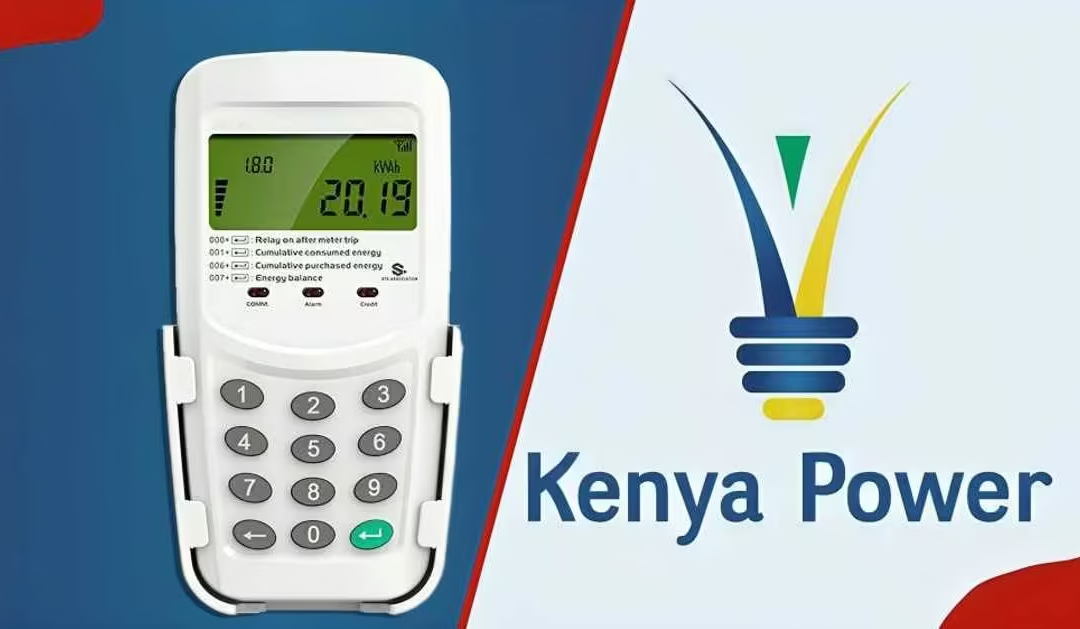
Once the customer receives the token, the 20-digit number is entered into the Customer Interface Unit (CIU), which communicates with the prepaid meter. After the token is accepted, the purchased electricity units become available for consumption.
Read Also: The Role of Technology in Boosting Business Efficiency
| Stage | Customer action | Result |
| 1 | Obtain the prepaid meter number | Correct meter is identified |
| 2 | Purchase electricity | Payment is processed |
| 3 | Receive the 20-digit token | Electricity credit is issued |
| 4 | Enter token into CIU | Token is transferred to the meter |
| 5 | Use electricity | Available kWh decrease |
| 6 | Buy another token when necessary | Electricity balance is replenished |
Table 1: Basic Kenya Power Token Process
Understanding Units and Token Amounts
It is important to distinguish between the amount of money paid and the electricity tokens received. The amount paid is the monetary value of the purchase, while units represent the electricity credited to the meter in kWh. Kenya Power explains that the final amount of electricity received can be affected by applicable charges and, in some cases, outstanding debt associated with the meter.
Consequently, two customers who spend the same amount of money may not necessarily receive exactly the same number of units if their circumstances differ. Kenya Power advises customers who believe they are receiving unusually few units to check their tariff and whether their meter has debt deductions.
The wider electricity pricing structure is regulated by the Energy and Petroleum Regulatory Authority (EPRA). EPRA’s tariff framework considers costs associated with electricity generation, transmission, distribution, and supply when determining retail electricity tariffs.
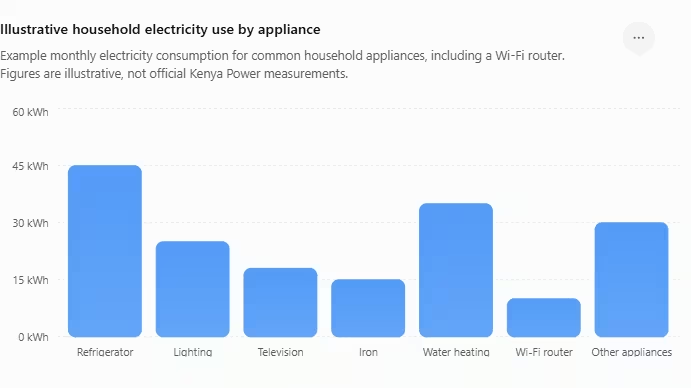
Illustrative Household Electricity Tokens Consumption
The following table demonstrates how a household might use electricity purchased through prepaid tokens. These figures are illustrative, rather than official Kenya Power averages.
The example demonstrates an important advantage of prepaid electricity: consumers can monitor their electricity usage and adjust their behavior. For example, switching off lights when rooms are unoccupied, using energy-efficient bulbs, reducing unnecessary appliance use, and avoiding leaving devices on standby can help extend the available units.
Advantages of the Prepaid Electricity Token System
- One major advantage of prepaid electricity is budget control. Customers decide how much money they want to spend rather than waiting for a monthly bill. This can make electricity expenses easier to plan, particularly for households managing limited or irregular income.
- Prepaid meters also eliminate the need for routine meter-reading visits. Kenya Power identifies reduced meter-reading, billing, disconnection, and re-connection costs among the advantages of prepaid metering.
- Another advantage is transparency. Customers can see their available electricity balance and receive warnings when their units are becoming low. The warning system can help customers purchase electricity before their supply runs out.
- The system can also encourage energy conservation. Because customers see their units decline as they consume electricity, they have a direct indication of how their consumption affects their remaining balance.
Challenges Associated with Kenya Power Tokens
Despite these advantages, prepaid electricity can create challenges. A customer who forgets to purchase a token or does not have sufficient funds may experience an interruption in electricity supply when available units are exhausted.
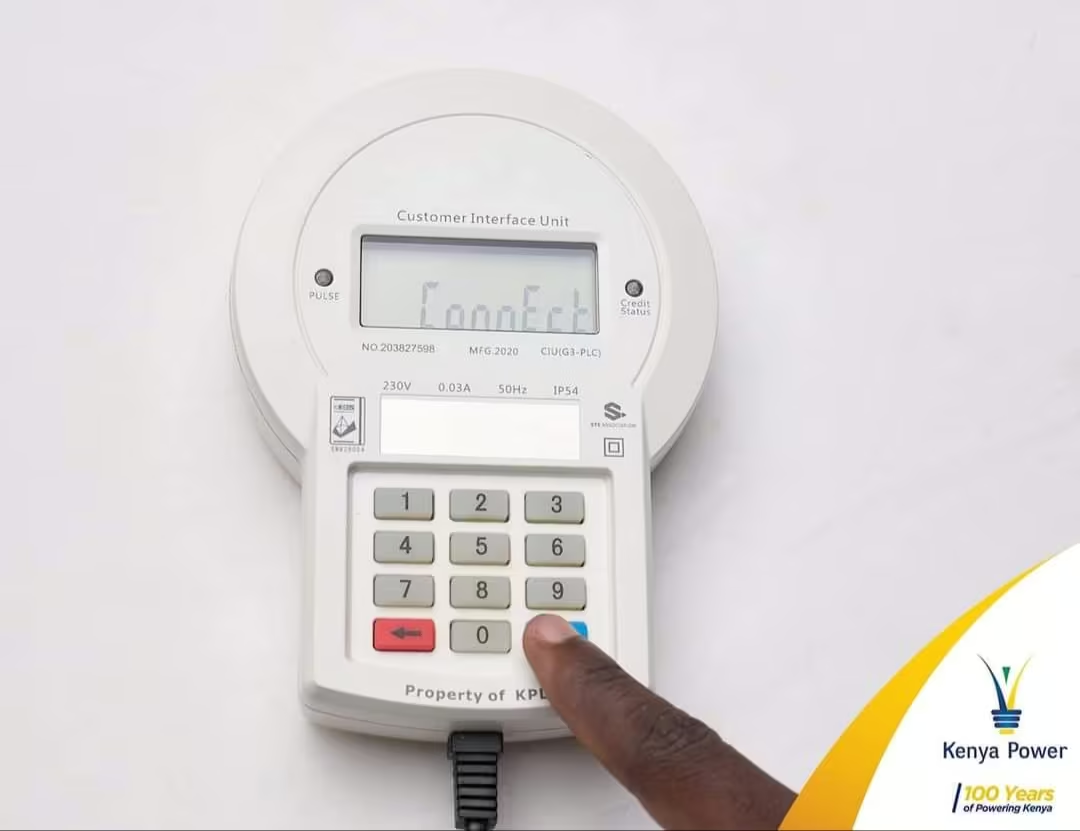
Technical problems can also occur. Kenya Power notes that customers may encounter rejected tokens, connection problems, faulty meters, or situations in which a token does not arrive after payment. The company advises customers to verify the meter number and token information and contact its customer service channels when problems persist.
Customers should also be careful about fraud. Kenya Power states that its personnel will not ask customers to send money to private numbers. Customers should use official payment channels and contact Kenya Power through its recognized customer-service channels when they have concerns.
Using Kenya Power’s Self-Service Options
Technology has made prepaid electricity management easier. Customers can use *977# to purchase tokens, retrieve recently purchased tokens, obtain token details, and manage meters. Kenya Power also provides the MyPower app for customers who want to access electricity-related services digitally.
If a customer does not receive a token after payment, Kenya Power recommends contacting its customer service. Customers can also retrieve recent token information through the *977# service.
Read Also: The Role of Technology in Boosting Business Efficiency
Conclusion
Kenya Power’s prepaid electricity token system has changed the way many electricity consumers manage their electricity expenses. Instead of receiving a bill after consumption, customers purchase electricity in advance, receive a 20-digit token, and enter the code into their prepaid meters. The system provides greater control over electricity spending and allows households to monitor consumption more directly.
However, understanding how tokens work is important because the amount paid does not simply translate into a fixed number of units under every circumstance. Tariffs, applicable charges, and possible meter debt can affect the units received. Customers can reduce their electricity costs by monitoring consumption, using efficient appliances, and purchasing tokens through official channels.
Ultimately, prepaid electricity tokens are more than just a payment method. They are a tool for managing household electricity consumption. When customers understand their meters, monitor their units, protect their payment information, and use Kenya Power’s official self-service channels, they can make more informed decisions about how they consume and pay for electricity.