As businesses grow, managing daily operations becomes more complex. As businesses often increase the number of products offered, handle more customer orders, sell through multiple channels, and serve a broader customer base. Methods that once worked well when a business was small may no longer work as the business grows; as a result, they become inefficient and prone to errors. This shows the need for effective inventory management in your business, as it can easily affect profitability, customer satisfaction, and the ability to achieve sustainable growth. Growing businesses often face operational and technological challenges in inventory management. These businesses are required to keep accurate stock records to avoid problems such as excess Inventory, frequent stock shortages, and unnecessary pressure on cash flow. They also needed to have systems that handle real-time information, predict demand, and connect smoothly with sales, purchasing, and accounting activities. As a result, manual inventory methods often struggle to meet these demands, leading to inefficiencies, missed sales opportunities, and increased operational risks.
As businesses grow, customers expect more from businesses than ever before. Because of this, using technology for inventory management is now essential. Digital tools like inventory software, cloud systems, and data analytics help your business see its stock clearly, make better decisions, and stay in control as it grows. These solutions give the accuracy and structure needed to grow without losing efficiency or reliability.
Understanding Inventory Management
Inventory is often one of a business’s highest costs. Yet, it does not generate revenue until the goods are sold and delivered. Until that point, managing Inventory can be more complex than it appears, particularly for businesses with complex supply chains, those dealing with fragile and perishable goods, and those growing.
Inventory management refers to the process of planning, purchasing, storing, tracking, and controlling a business’s stock. The primary purpose is to ensure that the right products are available in the right quantities and at the right time to meet customer demand, as per Abby (2025). Inventory may include raw materials used in production, partially completed goods, and finished products ready for sale.
When Inventory is managed effectively, it helps the business reduce the risk of stock shortages that frustrate customers and of excess stock that ties up capital, increases storage costs, and reduces profitability. It also helps businesses remain flexible in the face of changing demand, supply chain disruptions, and other unexpected challenges that can interfere with smooth operations, for instance, by the use of buffer stocks.
Types of Inventories That are Managed In Your Business
For a business to manage Inventory effectively, it needs to understand the different types of inventories that it needs to operate. Each category influences the operations of the business, how well cash flow is managed, and how reliably services are delivered to the customers. A study by Richard (2025) highlights the following inventory types you may have in your business.
- Stock Raw Materials
Stock raw materials are mainly managed when your business is involved in the production of goods and services; thus, they are basic inputs that are used to produce goods. For manufacturing and production-focused businesses, maintaining a constant supply of raw materials is necessary to avoid production delays. Poor management can lead to buying too much, which ties up cash and increases storage costs, or buying too little, which can interrupt production.
- Work-in-Progress (WIP)

Work-in-progress Inventory refers to the items of goods that are partly completed but not yet ready for sale. This Inventory is also being used when your business focuses on the production of goods. WIP is money you have already put into the production process, so it needs careful management to prevent losses. High WIP levels often indicate an inefficient production process, leading to delays and poor coordination between departments. As your business grows, managing WIP well can help you reduce production time and boost efficiency.
- Finished Goods
Finished goods are products ready for sale to customers. This Inventory plays a key role in sales and customer satisfaction. Keeping enough finished goods helps fill orders on time and keeps customers happy. But if you have too much, storage costs go up, and products may become outdated. As your business grows, you must carry out demand forecasting to balance the amount of finished goods available on your premises.
- Safety Stock
Safety stock is extra Inventory kept to protect a business from running out of products due to unexpected increases in demand or supply delays. It helps ensure operations continue smoothly even when forecasts are inaccurate or deliveries are delayed. When the safety stock is appropriately managed, these inventory types support business growth by improving flexibility, reducing risk, and strengthening supply chain flexibility.
- Maintenance, Repair, and Operating (MRO) Inventory
Maintenance, Repair, and Operating (MRO) inventory refers to items used to support daily business operations rather than being included in the final product, and they are not intended for resale. These supplies help maintain equipment, facilities, and work processes, ensuring the business continues to operate without interruptions.
Key Inventory Costs Every Business Must Understand
As businesses grow, the costs associated with Inventory become more complex and have a greater impact on overall profitability. Many growing enterprises underestimate these, which can lead to poor pricing decisions and weaker financial performance. Below are the major costs associated with Inventory.
- Ordering Costs – Ordering costs include all expenses involved in sourcing and purchasing Inventory. These may include supplier negotiations, processing purchase orders, administrative work, transportation, and quality checks.
- Holding Costs – Holding costs are the expenses associated with storing Inventory over a period of time. These typically include warehouse rent, utilities, insurance, security, handling labor, depreciation, and losses caused by damage or obsolete stock.
- Stock-Out and Shortage Costs-Stock – out costs occur when a business is unable to meet customer demand because Inventory is unavailable. Although these costs may not always be obvious, they can be highly damaging. They include lost sales, urgent replenishment expenses, production delays, and damage to the company’s reputation. Frequent stock-outs can push customers toward competitors and reduce brand loyalty.
- Opportunity Costs of Tied-Up Capital – these are the funds that are tied up in Inventory that could otherwise be used for marketing, technology, hiring, or business expansion. When a business holds too much stock, it limits the cash available for other growth activities.
Inventory Management Techniques for Growing Businesses
As a business grows, informal ways of managing Inventory may no longer work well. Using formal inventory management methods helps companies stay organized, keep things clear, and grow smoothly by ensuring stock matches daily demand. Based on a study by Chinnapa (2025), the following are methods that are widely used to help growing businesses manage Inventory efficiently while supporting sustainable growth.
a) Economic Order Quantity (EOQ)
Economic Order Quantity (EOQ) is an inventory management technique that is used to determine the most efficient quantity of products a business should order. The goal of EOQ is to ensure that customer demand is met without holding too much stock or placing orders too frequently. By ordering the correct quantity at the right time, businesses can reduce storage costs, minimize ordering expenses, and avoid unnecessary financial strain.
b) Just-In-Time (JIT) Inventory
Just-in-Time (JIT) is an inventory management system that focuses on ordering, producing, or delivering goods only when they are required. Instead of keeping large amounts of stock, businesses use just-in-time to maintain minimal Inventory and rely on timely deliveries from suppliers.
The main goal of JIT is to reduce storage costs and improve operational efficiency. With this approach, businesses can avoid overstocking and reduce the risk of unsold goods. To make JIT work well, you need accurate demand forecasts, dependable suppliers, and good teamwork throughout the supply chain. This method can be used for growing businesses to improve cash flow and efficiency. Still, it also requires careful planning to prevent stock-outs and supply disruptions.
c) Safety Stock Calculations
Safety stock refers to additional Inventory held by a business to reduce the risk of running out of products. It acts as a buffer against uncertainties such as sudden increases in customer demand, supply chain disruptions, or inaccurate demand forecasts. By maintaining safety stock, businesses can continue to meet customer orders even when deliveries are delayed or demand exceeds expectations. This approach helps to protect sales, maintain customer satisfaction, and ensure smoother operations.
d) ABC Inventory Analysis
ABC Analysis is an inventory classification technique that helps businesses prioritize their Inventory by value and operational impact. Instead of treating all items the same, this approach divides the Inventory into categories according to their level of importance.
- A items– these are the most valuable products. Although they are usually few in number, they contribute the most to revenue or profit and require close monitoring.
- B items– are of moderate value and importance. They need regular management, but not as much attention as an item.
- C items– are the least valuable individually, but they often make up a large portion of the total Inventory. These items can be managed using simpler and less costly controls.
ABC Analysis helps businesses allocate time, effort, and resources more effectively. By focusing more on high-value items and applying simpler controls to low-value ones, companies can improve efficiency and reduce inventory management costs. In larger or more complex inventories, some businesses expand beyond three categories to achieve more precise control.
e) Demand Forecasting
Demand forecasting is the process of estimating how many products a business should keep in stock to meet customer needs. Established businesses often look at past sales to spot patterns and trends. New businesses might use industry data, market research, and educated guesses until they have enough sales history. Getting demand forecasts right helps businesses avoid having too much or too little Inventory. It also helps them decide when to reorder and get ready for changes in demand.
Read Also: Data-Driven Decision-Making for Businesses
Tools and Technologies for Inventory Management

Without the right tools, managing Inventory effectively can be one of the biggest challenges a growing business may experience. Modern inventory management systems provide practical solutions that make it easier to track, order, and analyze stock. Research conducted by Billie (2025) highlights the most common tools that businesses use to keep operations efficient and well-organized.
- Barcode Scanners
Barcode scanners are essential tools for efficient inventory management. Its ability to automate the capture of product information helps eliminate human errors during stock intake, inventory checks, and order fulfillment.
This technology is especially useful in large warehouses, where keeping track of thousands of items by hand would be slow and prone to errors. Today, barcode systems typically integrate with inventory management software to provide real-time stock updates. This setup helps businesses keep a close eye on products from start to finish, make better decisions, reduce errors, and run more smoothly.
- Inventory Location Tracking
Inventory location-tracking tools are essential for efficiently managing stock, especially as warehouses and storage facilities grow. These systems assign each storage area, bin, or shelf a unique identifier so that employees can find items quickly. Some advanced inventory systems use GPS technology to track items in real time across large warehouses. This approach is common in industries like e-commerce, where speed and accuracy matter most.
- Serial Number, Batch, and Expiry Tracking
Tracking serial numbers, batches, and expiry dates is an essential inventory management practice for businesses handling perishable goods, pharmaceuticals, or high-value items. This system links each product to its manufacturing details, batch number, and expiration date, allowing for precise traceability and quality control. In addition to improving operational efficiency, tracking serial numbers and expiry dates is often required by industry regulations and legal standards. Implementing this practice demonstrates due diligence, ensures compliance, and protects both the business and its customers.
- Low Stock Alerts
Low stock alerts help businesses by letting them know when a product’s quantity drops below a certain level. If a business runs out of stock, it can lose sales, disappoint customers, and disrupt daily operations. These alerts give companies time to reorder supplies before they run out, helping keep operations running smoothly and ensuring products are always available. Implementing low-stock alerts helps companies reduce stock-outs, improve customer satisfaction, and avoid revenue losses from unavailable products.
- Purchase Order Management
Purchase order management tools streamline the procurement process by automating the creation, tracking, and approval of purchase orders. These systems ensure that orders are accurate, sent to the correct suppliers, and aligned with actual inventory needs.
When integrated with other inventory management tools, purchase order systems help prevent over-ordering or under-ordering, reducing waste and maintaining optimal stock levels. By improving procurement accuracy and efficiency, these tools support smooth operations, better cash flow, and consistent product availability.
- Dashboards for Inventory Analysis
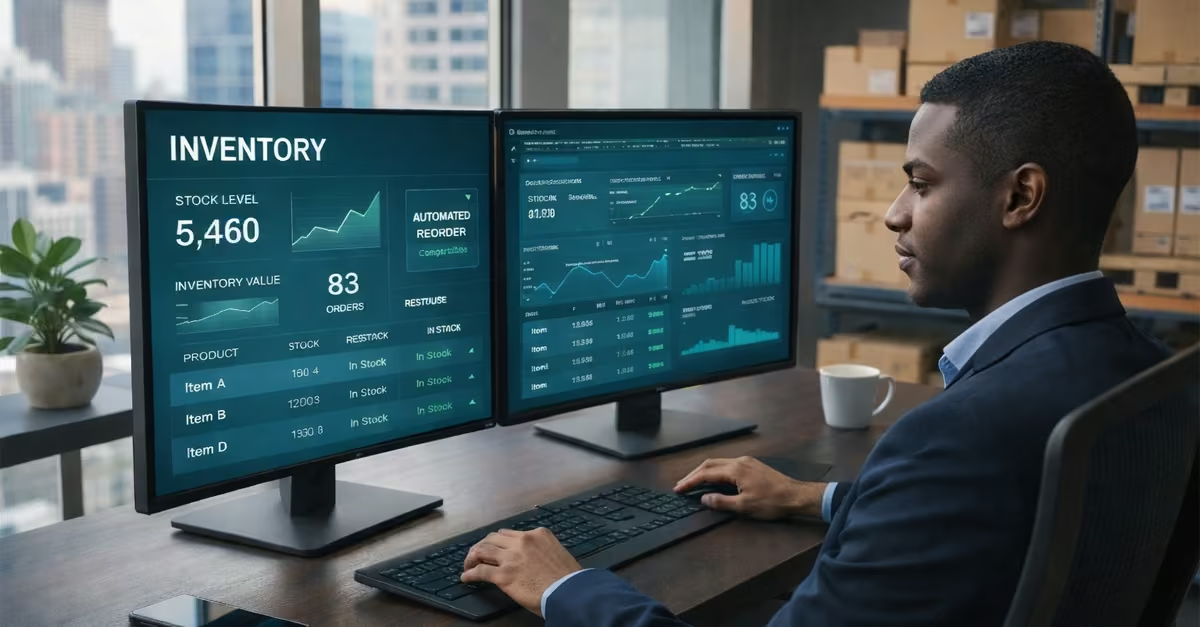
Inventory dashboards are modern tools that give a clear visual summary of important inventory management indicators. They display key metrics such as stock levels, sales trends, and inventory turnover rates, making it easier for managers to monitor operations. Customizable dashboards can be tailored to a business’s specific needs, offering real-time insights into performance and helping teams respond quickly to changes in demand.
Read Also: Risk Management in Business Investments: How to Protect Your Capital
Common Inventory Management Challenges Growing Businesses Face
As businesses expand, inventory management becomes more complex due to operational, financial, and external pressures. While growth brings opportunities, it also exposes weaknesses in systems and processes that were manageable at a smaller scale. Recognizing these challenges helps businesses anticipate risks and implement more effective inventory strategies.
- Overstocking and Understocking – One of the biggest challenges in inventory management is finding the right balance between having too much and too little stock. If you overstock, you tie up money, pay more for storage and insurance, and risk products going out of date or spoiling. If you understock, you might miss out on sales, disappoint customers, and hurt your brand’s reputation. As your business grows, it gets harder to predict demand, so it’s important to use reliable forecasting and monitoring systems to keep things in balance.
- Supply Chain Disruptions – external factors such as transportation delays and unreliable suppliers can disrupt inventory flows. Growing businesses are often more vulnerable to these disruptions because they may have fewer suppliers. Without alternative sourcing strategies, these disruptions can quickly cause stock shortages and operational downtime.
- Seasonal and Demand Fluctuations – Seasonal trends and sudden changes in customer demand make inventory management more challenging. When businesses face busy seasons, promotions, or market shifts, they need to plan Inventory carefully to avoid having too much stock when sales are slow or running out when demand is high. If forecasting is off or restocking isn’t flexible, these seasonal changes can hurt cash flow and disrupt daily operations.
- Inaccurate Records and Poor Data Visibility – Errors in inventory records often arise from manual data entry, inconsistent processes, or disconnected systems. Even small mistakes can accumulate over time, resulting in stock inconsistency, poor purchasing decisions, and unreliable financial reports.
- Limited Resources – Many small and medium-sized businesses operate with tight budgets and limited access to skilled staff and advanced systems. This can restrict investment in modern inventory technologies. As a result, inventory management may rely heavily on manual processes, leading to inefficiencies and limiting the ability to expand operations.
Conclusion
Inventory management is a strategic function that directly affects cash flow, profitability, customer satisfaction, and long-term growth. As businesses expand their operations, increase product offerings, and reach broader markets, managing Inventory becomes more complex. As a result, your business can use various methods to manage Inventory, such as economic order quantity, just-in-time, safety stock, demand forecasting, and ABC inventory analysis. Without structured systems and informed decision-making, Inventory can quickly turn into a source of inefficiency and risk instead of supporting growth, as a lot of costs like ordering costs, storage costs, opportunity costs, stock outs, and holding costs are associated with Inventory, which can affect the cash flow of the business. Technology can also be applied in inventory management to help your business manage Inventory effectively as it grows and reduce errors associated with manual processes. You can apply methods such as barcode scanning, dashboard inventory analysis, inventory location tracking, low-inventory alerts, and purchase order management. Manage your Inventory using the above methods and leverage tools to enable your business to achieve operational flexibility and better cash flow management.