Running a small business often means managing many tasks at the same time. You may need to serve customers, manage your finances, answer questions, and ensure daily operations run smoothly. Although these tasks are important, they can take up a lot of time and energy, leaving you with less time to grow your business. Fortunately, a new generation of artificial intelligence (AI) tools is making it easier for small businesses to work more efficiently by automating repetitive tasks and simplifying everyday processes.
AI agents are becoming powerful digital assistants that can work 24 hours a day to handle tasks such as customer support, appointment scheduling, data processing, content creation, and much more. By taking over routine work, reducing operating costs, and improving efficiency, AI agents enable small businesses to accomplish more with fewer resources.
What are AI Agents?
AI agents are smart software programs that can complete tasks, make decisions, and carry out actions for a user with very little human supervision. Unlike traditional software, which only follows preset instructions, AI agents can understand what needs to be achieved, analyze information, learn from data, and decide the best way to complete a task, according to Kate (2026). They use technologies such as artificial intelligence (AI), machine learning, and natural language processing to communicate with people and adapt to different situations.
In business, an AI agent can be referred to as a digital employee that works 24 hours a day, 7 days a week, without getting tired. It can answer customer questions, schedule appointments, manage emails, create content, analyze business information, and automate repetitive tasks. Instead of spending valuable time on routine work, business owners can let AI agents handle many of these tasks, giving them more time to serve customers, increase sales, and focus on growing their businesses.
Read Also: Understanding AI Agents: The Digital Minds Behind Modern Technology
10 Practical Ways You Can Use AI Agents in Your Businesses
AI agents can be applied in many areas of your daily business operations. They can provide customer support, manage appointments and bookings, automatically reply to emails, create marketing content, manage social media accounts, help find potential customers, and follow up on sales leads.
a) Managing Emails

Managing emails is one of the most time-consuming tasks for many small business owners. Every day, businesses receive many emails, including customer questions, quotation requests, invoices, complaints, orders, appointment requests, and messages from suppliers. Going through all these emails manually can take a lot of time and increase the chances of missing important messages that need a quick response.
An AI agent can automatically sort incoming emails into different categories, making it easier to see which ones need immediate attention. For example, it can separate customer complaints from sales inquiries, highlight high-priority emails, send invoices to the accounting team, and forward appointment requests to the scheduling system. This helps ensure that important messages are handled quickly and efficiently without requiring someone to monitor the inbox constantly.
For instance, a study from Rafael (2026) highlights that “the business can use AI agents to write professional email drafts, summarize long email conversations, and suggest suitable replies based on previous discussions.” Instead of spending hours reading and responding to every email, business owners can review the AI-generated draft, make any necessary changes, and send it in seconds. This saves valuable time, improves response speed, increases customer satisfaction, and helps businesses maintain professional communication even during busy periods.
Examples of AI Email Agents You Can Use
- Microsoft Copilot for Outlook
- Google Gemini for Gmail
- Superhuman AI
- HubSpot AI Email Assistant
b) Scheduling Meetings
In business, scheduling meetings can take more time than you might imagine, as a simple meeting may involve several emails or messages while people try to agree on a suitable date and time. Questions like, “Are you available on Tuesday?” or “Would Thursday afternoon work?” can lead to unnecessary back-and-forth communication, especially when arranging meetings with customers, suppliers, business partners, or employees.
AI scheduling agents remove much of this hassle by automatically checking your calendar, finding available time slots, and booking meetings for you. Instead of coordinating schedules manually, the AI can send meeting invitations, reserve time on your calendar, and ensure there are no scheduling conflicts. Thus, AI scheduling assistants make the meeting-planning process easier by automatically managing calendars and reducing the time and effort required to book appointments, as per Sam (2026).
In addition to scheduling meetings, AI agents can send automatic reminders to attendees, follow up on confirmations, and even reschedule meetings when conflicts arise. This helps reduce missed appointments and keeps everyone informed. By automating the entire scheduling process, small business owners can spend less time managing their calendars and more time serving customers, growing their businesses, and focusing on other important tasks.
Examples of AI Scheduling Agents
- Calendly AI
- Motion
- Reclaim AI
- Clockwise
- Scheduler AI
- Microsoft Copilot for Calendar
c) Marketing and Content Creation
Marketing is very important for attracting new customers and keeping existing ones interested, but creating content regularly can be difficult for small business owners. Writing social media posts, planning marketing campaigns, generating blog ideas, designing newsletters, and posting content across different platforms all take a lot of time and effort. As a result, many small businesses struggle to remain active and consistent online.
AI agents can help automate many marketing tasks and speed up content creation. For example, an AI agent can write Facebook posts, create LinkedIn content, suggest blog topics based on popular searches, prepare email newsletters, and even schedule posts for automatic publishing. Instead of spending hours thinking of ideas and writing content, business owners can use AI-generated drafts and edit them before posting.
Examples of AI Marketing Agents
- ChatGPT
- Jasper AI
- Copy.ai
- HubSpot AI
- Buffer AI Assistant
d) Conducting Market Research
Market research is important because it helps business owners make better decisions. However, collecting and analyzing information manually can take a lot of time and money. Small business owners often spend hours searching for information on competitors, product prices, customer reviews, and emerging market trends. This valuable time could instead be used to improve products, serve customers, or grow the business.
AI agents can automate much of the market research process by collecting information from different sources in real time. Instead of manually searching websites, reports, and customer feedback, an AI agent can gather details about competitors, compare prices, analyze customer reviews, identify market trends, and monitor industry changes. A study by Okara highlights that AI agents are used in modern businesses to enhance market research by automatically collecting and analyzing data, helping businesses gain useful insights more quickly.
Once the information has been collected, the AI agent can organize the results into clear, easy-to-understand reports that highlight important opportunities, potential risks, and market changes. This allows business owners to make informed decisions without spending countless hours on research.
Examples of AI Agents for Market Research
- ChatGPT
- Perplexity AI
- Claude
- Browse AI
e) Automating Sales Follow-Ups
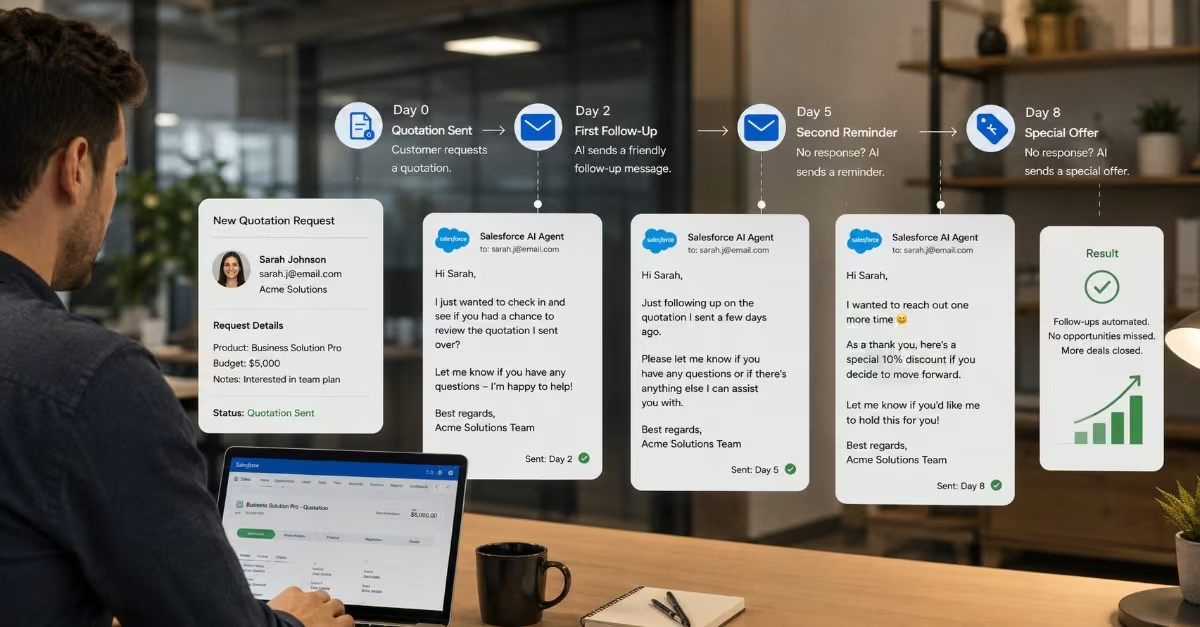
One of the biggest challenges for small businesses is consistently following up with potential customers. A customer may request a quotation, show interest in a product, or ask for more information, but business owners are often busy with day-to-day operations and may forget to follow up. When this happens, valuable sales opportunities can be missed, leading to fewer conversions and lower revenue.
AI agents help automate the entire follow-up process, ensuring no potential customer is overlooked. For example, if a customer requests a quotation today, the AI can automatically send a friendly follow-up message a few days later, asking if they have had time to review it. If the customer does not respond, the AI can send another reminder after a few more days and even offer a special discount or promotion later.
Applying this in your business, you can maintain regular contact with potential customers, as AI agents help ensure your business stays top of mind without requiring constant manual effort. As a result, businesses can improve response rates, create more sales opportunities, and convert more prospects into loyal customers.
Examples of AI Agents for Sales Follow-Ups
- HubSpot AI
- Salesforce Agentforce
- Zoho Zia
- Artisan AI
- Drift AI
f) Customer Analysis and Retention
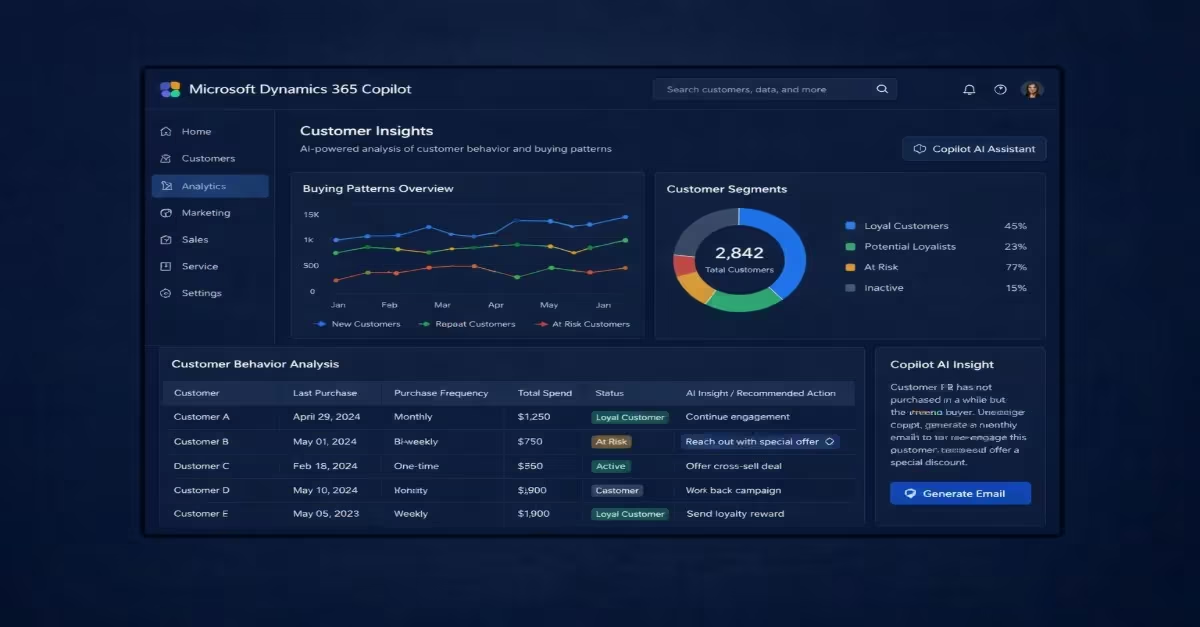
Understanding how customers behave is very important for growing a business, but tracking buying patterns manually can be challenging, especially as the number of customers increases. Many business owners may know their regular customers, but noticing changes in purchasing habits often requires reviewing large volumes of sales data, which can take time and may be easily overlooked.
AI agents analyze customer data and automatically detect important patterns. For instance, the AI may notice that Customer A buys every month, while Customer B, who used to buy regularly, has not purchased in several months. Instead of waiting until the customer is completely lost, the AI can alert the business owner and suggest actions such as sending a personalized message, offering a special deal, or giving a discount to encourage the customer to return. According to the Operator Collective, in modern business, AI agents analyze customer behavior patterns and provide personalized recommendations, helping businesses improve customer engagement and retention and make proactive decisions rather than reacting only after customers have stopped buying.
Examples of AI Agents for Customer Analysis
- Salesforce Einstein
- HubSpot AI
- Zoho Zia
- Microsoft Dynamics 365 Copilot
- Adobe Customer Journey Analytics
g) Inventory Management
Managing inventory manually can be difficult, especially for businesses that deal with many different products. Business owners often have to regularly check stock levels, monitor sales, and decide when to restock items. If products run out unexpectedly, businesses can lose sales, and customers may turn to competitors. Also, ordering too much stock can lock up money and take up valuable storage space.
AI agents have simplified inventory management by tracking stock levels in real time and identifying products that need restocking. In today’s world, AI-powered inventory systems can analyze stock data, automate routine tasks, and help businesses maintain the right inventory levels while reducing waste and inefficiencies, as highlighted by Ranjan (2025).
In addition to tracking stock, AI agents can also predict future demand by analyzing past sales data, seasonal patterns, and customer buying behavior. This helps businesses prepare for busy periods and avoid problems like running out of stock or holding too much inventory.
Examples of AI Agents for Inventory Management
- Zoho Inventory AI
- Microsoft Dynamics 365 Supply Chain
- Oracle Inventory Management Cloud
- SAP Integrated Business Planning
- NetSuite Inventory Management
h) Customer Support
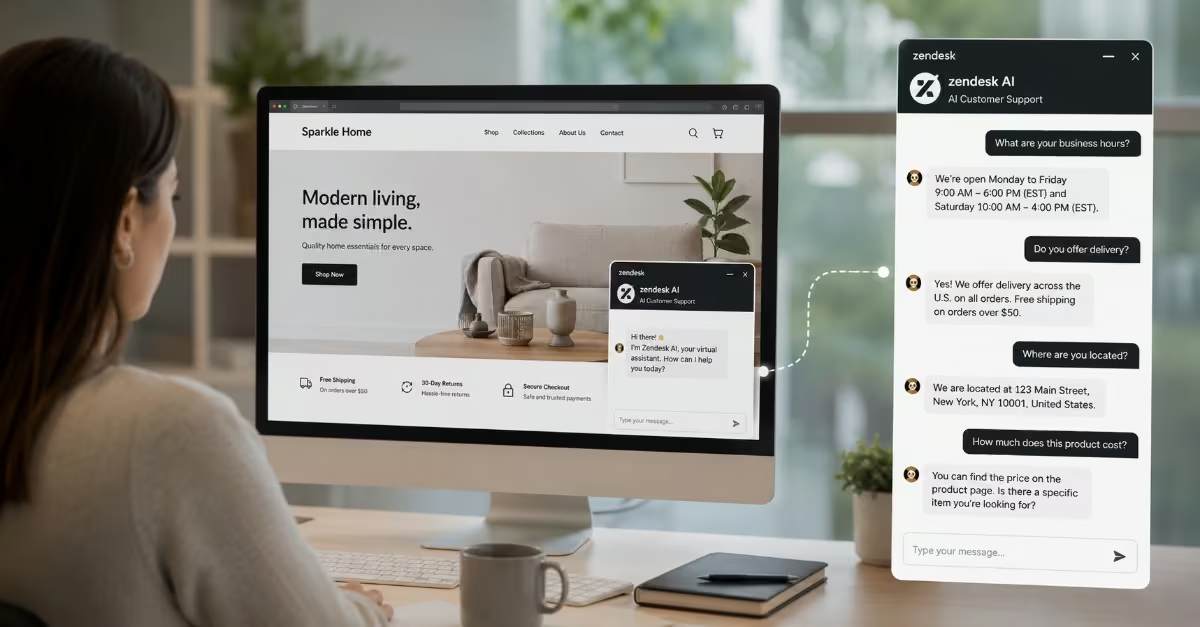
Providing good customer support is very important for any business, but answering the same questions over and over can take a lot of time. Many businesses often receive common questions such as “What are your business hours?” “Where are you located?” “Do you offer delivery?”, or “How much does this product cost?” Answering these questions repeatedly can reduce productivity and delay responses to more complex customer issues.
AI agents can handle these routine questions automatically through platforms such as website chat, WhatsApp, Facebook Messenger, and Instagram. When a customer asks a question, the AI agent can instantly respond with accurate information without needing human involvement. This ensures that customers get quick answers even outside normal working hours.
Examples of AI Customer Support Agents
- Intercom AI Agent
- Zendesk AI
- Freshdesk Freddy AI
- ManyChat
i) Human Resource (HR) Management
Managing employees can be time-consuming, especially for businesses without a dedicated HR department. Tasks such as reviewing job applications, screening CVs, scheduling interviews, answering employee questions, and handling onboarding often require significant administrative effort. As a business grows, these responsibilities can quickly become overwhelming for owners and managers.
AI agents automate many HR processes and help businesses manage their workforce more efficiently. They can shortlist qualified candidates based on job requirements, automatically schedule interviews, answer common employee questions about company policies or benefits, and guide new employees through the onboarding process. By reducing the time spent on routine HR tasks, AI agents allow business owners and managers to focus on building strong teams, improving employee performance, and growing the business.
Examples of AI Human resource management Agents
- HireVue
- Eightfold.ai
- Chronus
- Paradox Olivia
j) Accounting Assistance
AI agents are not meant to replace accountants, but to help them work more efficiently. Many business owners spend a lot of time organizing financial records, tracking expenses, preparing reports, and following up on unpaid invoices. These tasks are important, but they are often repetitive. They can take time away from planning, decision-making, and business growth.
AI agents can automate many of these accounting tasks by categorizing expenses, preparing financial reports, identifying unusual transactions, and sending reminders for unpaid invoices. According to StackAI, AI agents are increasingly used in accounting and auditing to automate routine financial work, improve accuracy, and help businesses detect issues more quickly.
Examples of accounting software have been elaborated here: How to Choose the Right Accounting Software for Your Business
Read Also: How AI Meeting Assistants Are Replacing Traditional Note-Taking
Challenges of Using AI Agents in Small Businesses

While AI agents provide many benefits, they also come with certain challenges. Business owners should understand these limitations before adopting AI tools to plan effectively and use the technology more effectively.
- Privacy and Data Security: AI agents often need access to business and customer data to perform their tasks effectively. If strong security measures are not in place, sensitive information may be exposed to unauthorized access or cyber risks.
- Incorrect Decisions and Responses-Although AI systems are improving, they are not always perfect. An AI agent may misunderstand a customer request, give incorrect information, or make suggestions based on incomplete or outdated data.]
- Setup and Implementation Costs-Some AI tools require initial investment for setup, customization, and integration. For very small businesses, these upfront costs can be challenging, especially when adopting more advanced systems.
- Employee Training Requirements-Employees may need training to use AI tools effectively. Businesses might need to invest time and resources to ensure staff understand how to work with AI agents and manage them properly.
- Over-Reliance on AI-Depending too much on AI can create problems if the system fails or produces inaccurate results. Human oversight remains important, especially when making critical business decisions or handling sensitive customer interactions.
Conclusion
AI agents are becoming powerful tools that can help businesses operate more efficiently by saving time, reducing costs, and improving productivity across many areas such as customer support, marketing, sales, accounting, and inventory management. By automating repetitive tasks and providing quick, data-driven insights, they allow business owners to focus more on growth and customer relationships rather than routine work. However, successful use of AI still requires careful planning, as it requires employee training, upfront setup costs, and understanding that your data may be exposed to unauthorized access when strong cybersecurity measures have not been employed. Human oversight is also needed to avoid errors, as AI agents can make mistakes.